What To Wear On A Dubrovnik War Tour?
A practical packing and clothing guide for Dubrovnik war history tours: Old Town walking routes, Mount Srd summits, museum visits and what the tours actually include.
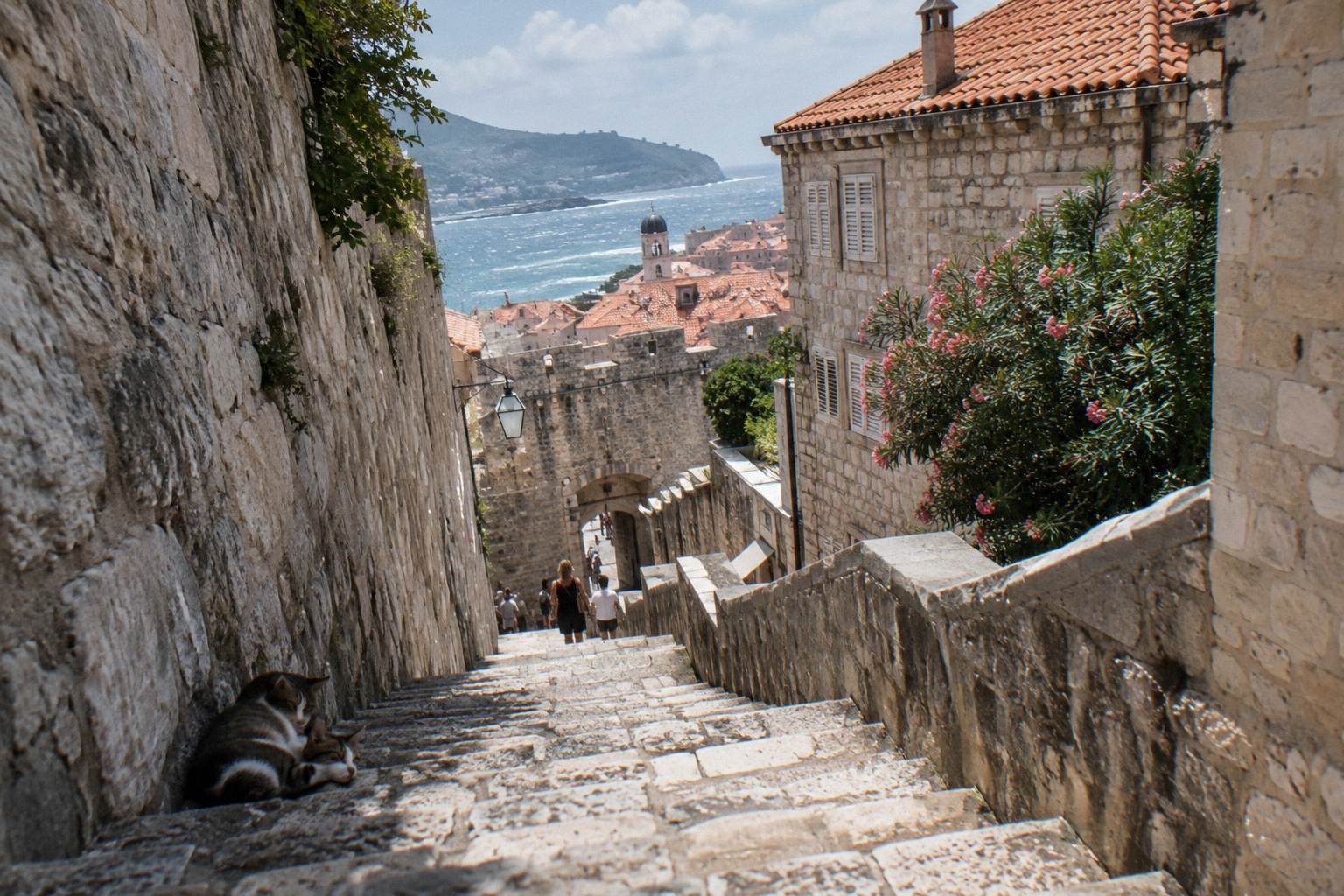
Wear broken-in walking shoes with real grip, light layers you can add or remove, and cover for both strong sun and sudden rain. Old Town routes spend two to three hours on polished limestone steps and slopes, while Mount Srd sits higher and more exposed than the harbour below, so a warm layer earns its place there even on a mild day.
No operator on this site publishes a dress code, and none of the verified tour details impose a footwear rule, so treat everything below as planning advice rather than a requirement. What can be stated plainly is where the tours actually take you, because the place dictates the outfit better than any packing list copied from a generic travel article.
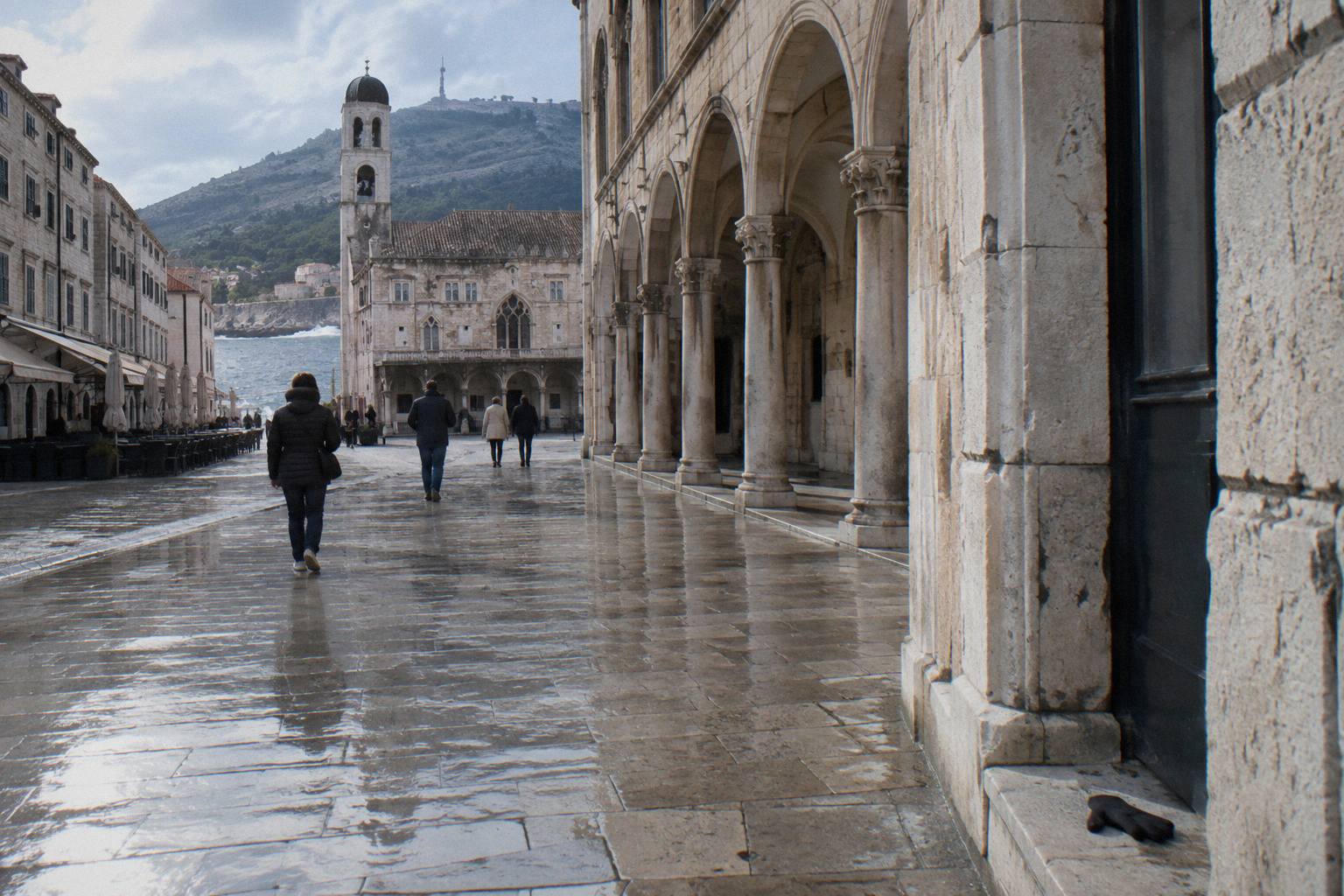
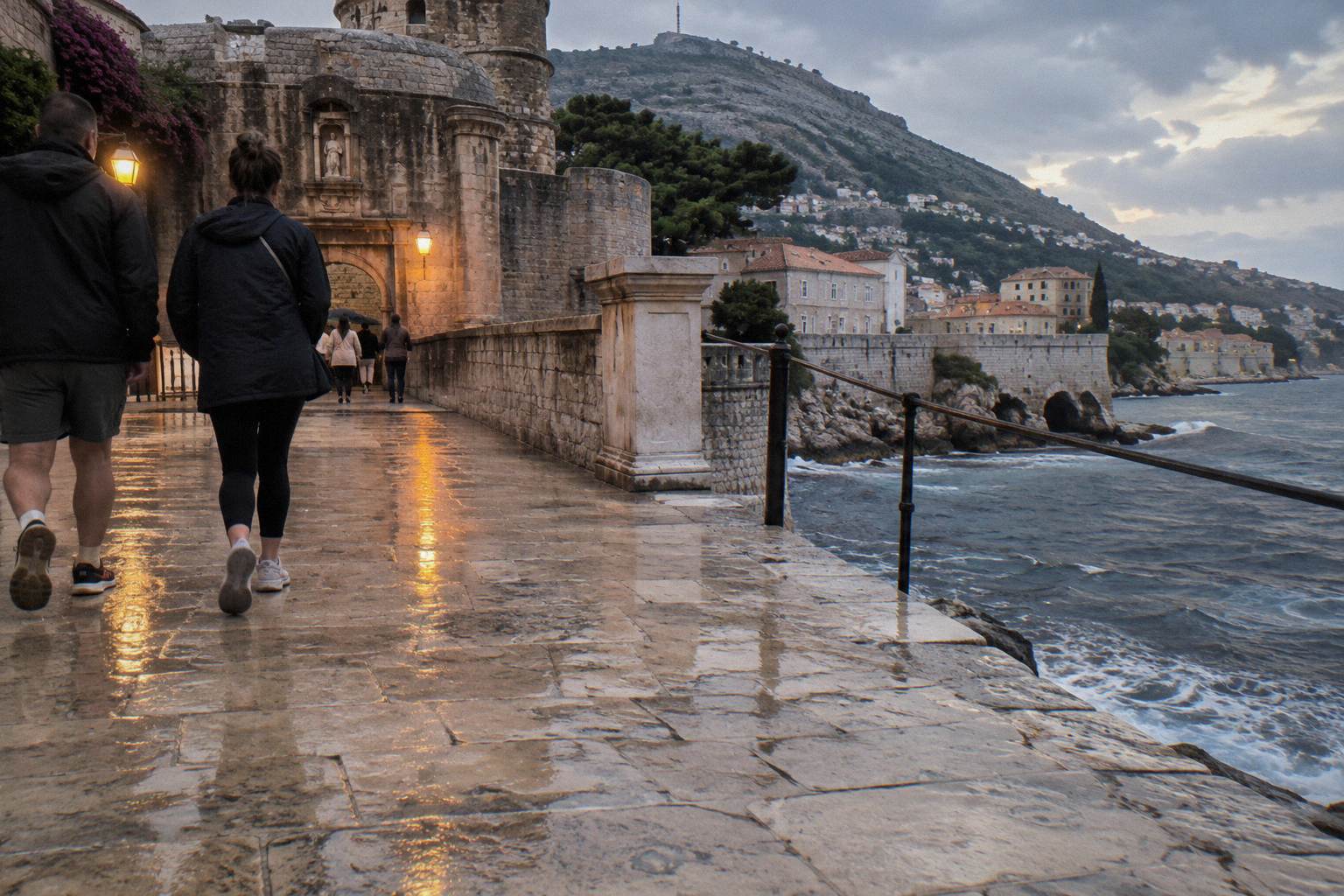
The private walking tours stay inside the Old Town walls. The Private Walk, 2h30 by My Dubrovnik Tours runs from the Pile side of the Old Town to the Ploce side, calling at war-damage sites and the Memorial Room of Dubrovnik Defenders, with entrance to the Memorial Room included and a booked length of 2 hours 30 minutes. Walk With Vesna, Group Rate by Walk with Vesna covers restoration traces across the Old Town over 2 hours, priced from €235 per group. Those routes mean one surface above all others: Dubrovnik's limestone, worn smooth by centuries of feet, which turns slick when wet and throws glare and heat back at you when it is dry.
The driving tours change the equation. The Driving Tour, Per Vehicle by INtours Dubrovnik (from €180 per vehicle) climbs to the Homeland War Museum inside Fort Imperial on Mount Srd and then out to front-line defence points of the siege. The Half-Day Yugoslav War History by Amico Tours runs 4 hours from €178 per person with pickup included, linking the Red History Museum, the Homeland War Museum, the Ombla River source and optional Belvedere and War Photo Limited stops. Less walking, more time outdoors at elevation, and museum interiors in between. For a fuller route-by-route breakdown, see the guide to what a Dubrovnik war tour actually shows you.
The context matters too, because it explains why these routes are outdoors and exposed in the first place. Croatia was one of the republics of socialist Yugoslavia, which Josip Broz Tito led after the Second World War; Croatia declared independence on 25 June 1991, and the siege of Dubrovnik followed, running from 1 October 1991 until it was lifted on 31 May 1992. The heaviest shelling of the Old Town came on 6 December 1991, and about two thirds of the Old Town's buildings were damaged across 1991 and 1992. The city's own record of that destruction and the restoration that followed is published by the City of Dubrovnik at dubrovnik.hr, and the Old Town, inscribed by UNESCO in 1979, spent 1991 to 1998 on the World Heritage in Danger list, as the UNESCO State of Conservation record documents.
The damage sites you stop at are, almost without exception, exteriors: repaired rooftiles, patched walls, memorial plaques on street corners, museum rooms in adapted historic buildings. You will be outside for most of every tour hour, on stone, in whatever the sky is doing. That is the whole argument for the packing list below.
Which Shoes Work Best On Dubrovnik's Old Town Stone?
Closed-toe walking shoes or trail shoes with a rubber grip pattern and a sole you have already walked several kilometres in work best on Dubrovnik's Old Town stone. The limestone streets and stairways are polished smooth by foot traffic and become slippery within minutes of rain, and tours such as the 2-hour Walk With Vesna, Group Rate or the 2 hours 30 minutes Private Walk, 2h30 by My Dubrovnik Tours, stay on foot the whole time.
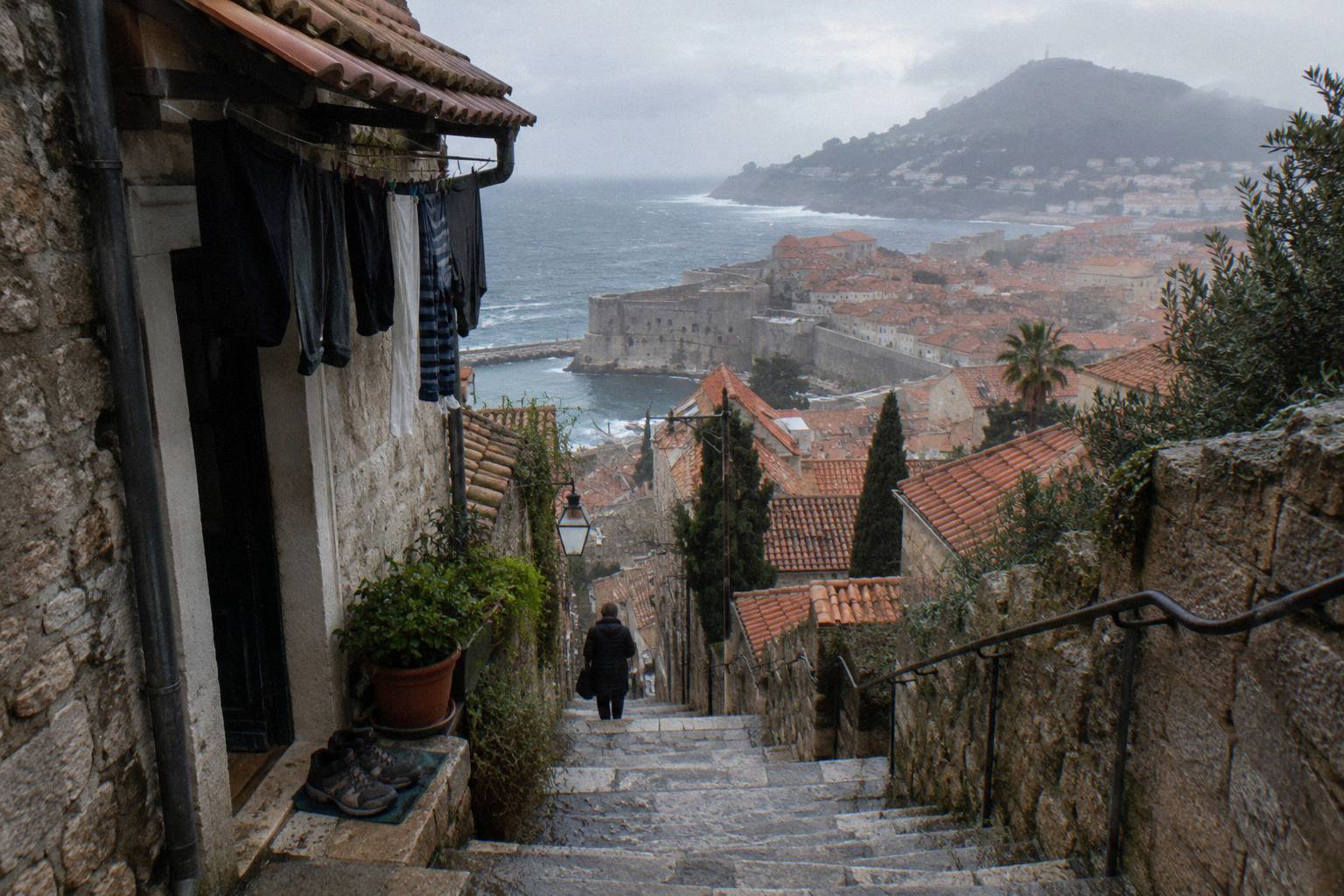
Flip-flops are the single most common footwear mistake on these routes. The Old Town's east-to-west axis, from the Pile Gate side to the Ploce Gate side, climbs and descends repeatedly, and the same stone that shines beautifully in photographs offers very little purchase to a flat foam sole. Smooth leather soles behave almost the same way after rain.
New shoes are the second mistake. A two-and-a-half-hour private walk is not the occasion to break in a fresh pair, and blisters on limestone steps are miserable in a way that a city park stroll never reproduces. Wear whatever you plan to bring for at least a few full days before the trip.
Sandals deserve a qualified pass. A secure sport sandal with a strap at the heel and a treaded sole copes acceptably with dry stone, and plenty of summer visitors do the Old Town in exactly that. The qualifications: no rain in the forecast, no long museum queue standing, and no expectation of grip on wet patches. If any of those fail, choose the closed shoe.
The driving tours relax the footwear question considerably without eliminating it. The Half-Day Yugoslav War History moves you between the Red History Museum, Fort Imperial and the Ombla River source in an air-conditioned vehicle, and the Homeland War Museum, Transport tour by ROSOTRAVEL Croatia (from €268) includes skip-the-line museum tickets and, in the 3-hour option, private transport to and from Mount Srd. You will still walk museum rooms, fort ramps and uneven fortification ground at the summit, so keep the grip requirement and drop only the endurance one.
| Tour type | Booked length on foot | Surface | Footwear that works |
|---|---|---|---|
| Old Town private walks (My Dubrovnik Tours, Walk with Vesna, ROSOTRAVEL Croatia) | 2 to 3 hours, all outdoors | Polished limestone steps and streets | Broken-in walking or trail shoes with rubber grip |
| Red History Museum Visit (Red History Museum) | 50 minutes to 1 hour 35 minutes, indoors | Museum floors | Any comfortable closed shoe |
| Driving tours (INtours Dubrovnik, Amico Tours, ROSOTRAVEL Croatia) | Short outdoor stretches at forts and viewpoints | Fort ramps, gravel, pavement | Walking shoes; grip still matters at Fort Imperial |
How Should You Dress For Mount Srd And Fort Imperial?
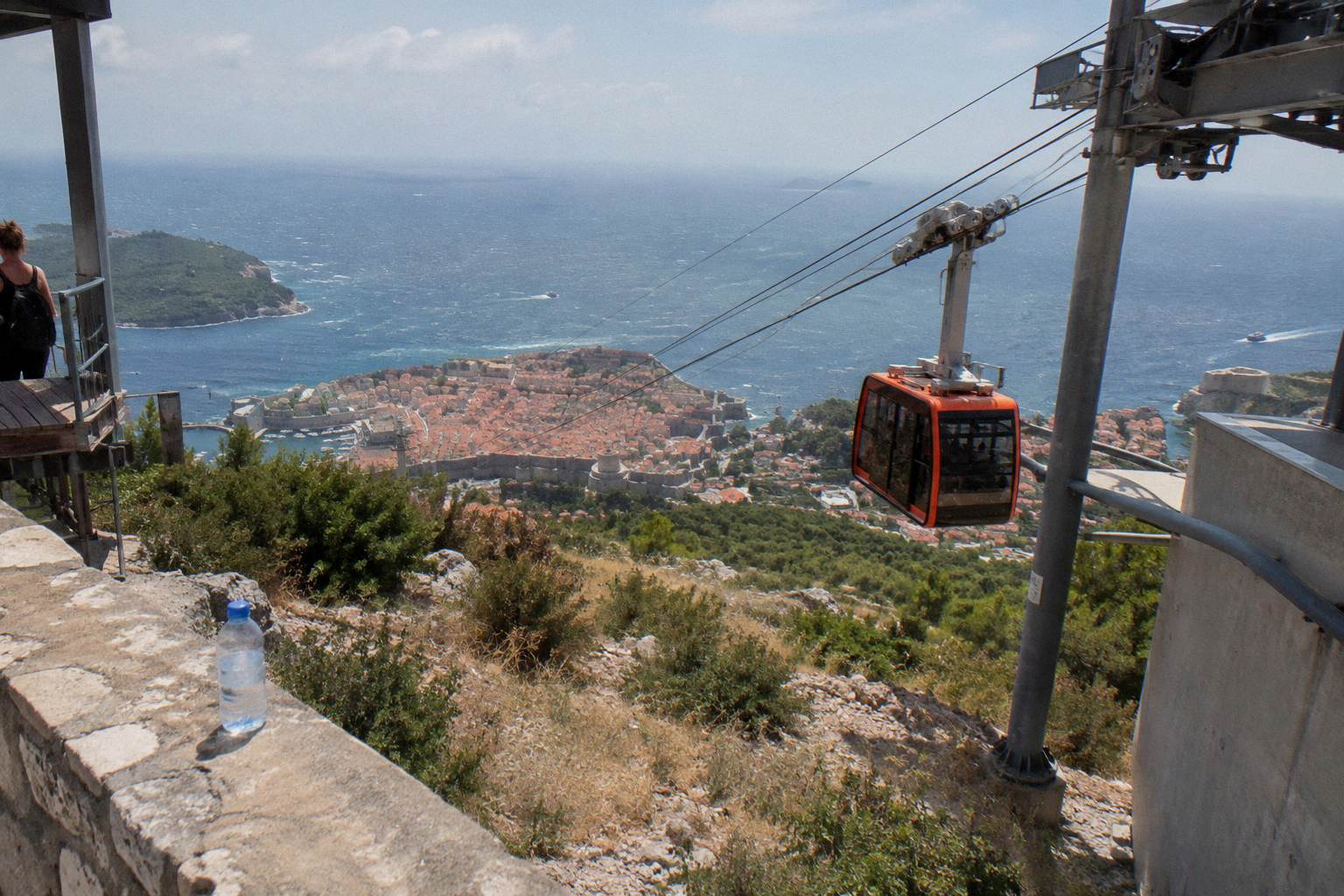
Pack one more layer for Mount Srd than the harbour temperature suggests, plus sun protection for the exposed sections. Fort Imperial and the Homeland War Museum sit on the summit above the cable car's upper station, the museum's own published hours run long in summer, and the driving tours that visit it, including the Driving Tour, Per Vehicle by INtours Dubrovnik, put you outside on open fortification ground for part of the visit.
The summit is exposed in every direction. Whatever the day feels like down by the Old Town harbour, plan on wind and open sky up there, and treat a light warm layer and a wind-resistant shell as standard kit rather than cold-weather specials. A hooded layer earns its keep more than an umbrella on the summit, where wind makes an umbrella a nuisance.
Sun cover matters as much as warmth. The fort's stone terraces and the ground around the museum offer limited shade, and a summer visit between the museum's 08:30 and 22:00 opening hours (1 April to 30 September) can put you in direct glare for the whole stop. A hat, sunglasses and sunscreen belong in the bag for any Srd itinerary. The museum inside Fort Imperial is run by the Museum of the Croatian War of Independence, whose official site at mdrd.hr carries the visiting details; the ticket desk charges adults EUR 5, students EUR 3, and children under 7 go free, and hours shift by season, so check the day before you go.
Two practical notes about the museum ticket. On the Driving Tour, Per Vehicle by INtours Dubrovnik, the museum entry is not included in the tour price; it is paid separately at EUR 5 per person, so keep a few euro in cash or a card on you. On the Half-Day Yugoslav War History by Amico Tours, entrance to both the Red History Museum and the Homeland War Museum is included in the price, which is one less thing to arrange on the day.
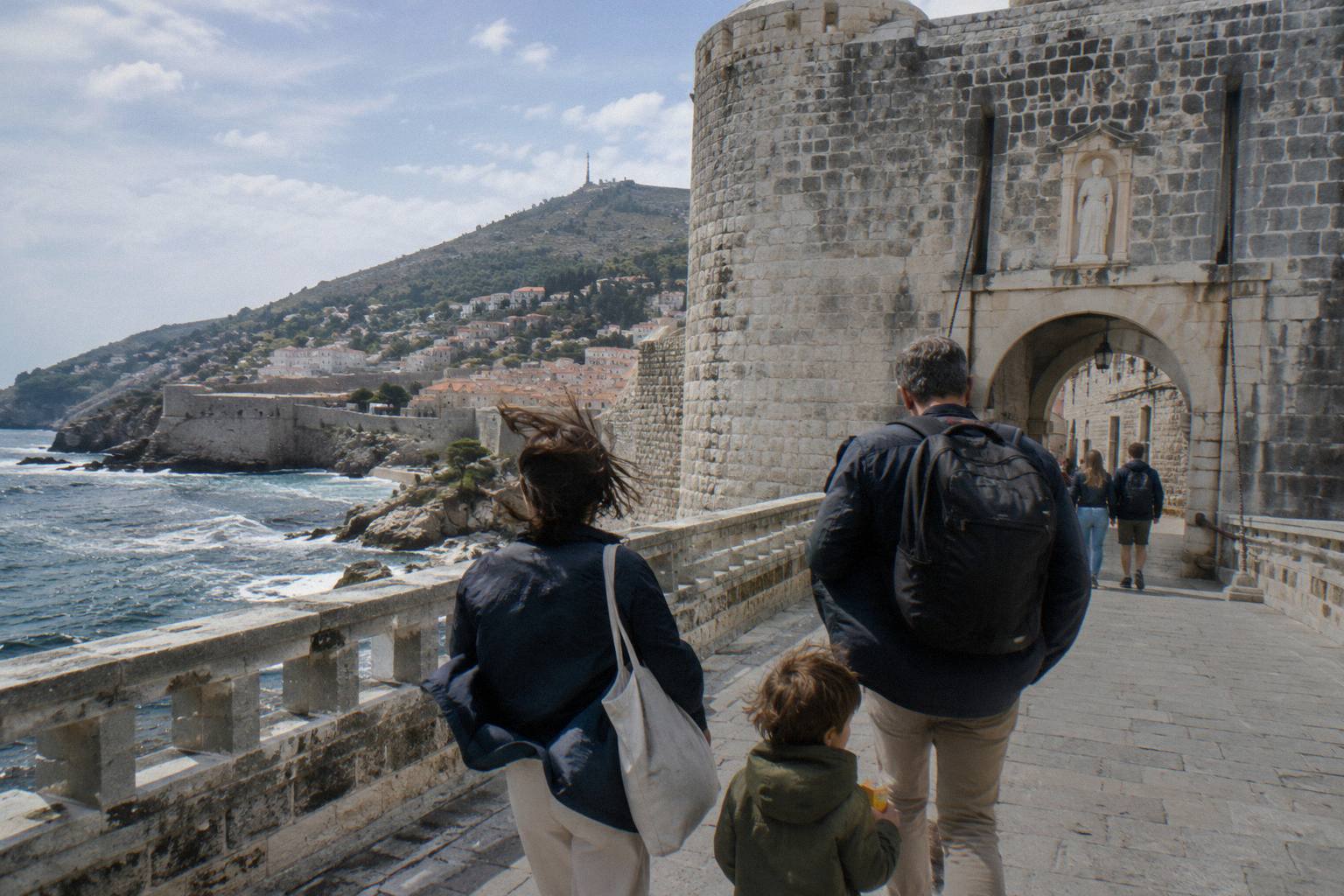
If your own plans involve riding the Dubrovnik Cable Car up independently, the operator's timetable and fares page lists the adult return at EUR 30, one way at EUR 17, and a child return (ages 4 to 12) at EUR 8, with a ride of about 4 minutes and seasonal hours including some winter closures; fares and timetables change, so confirm the day before you go. Dress for the wait at the lower station as much as for the summit.
The layering rule of thumb for the whole family of tours: dress for the harbour, then add one layer for the summit and one for the museum. Museum rooms, including the Homeland War Museum inside the fort's stone interior, run noticeably cooler than the terraces outside them in every season, so a layer you can shed and carry matters more than a single heavy piece.
What Should You Bring For Sun, Rain, And A Long Morning?
Carry a small day pack with a refillable water bottle, sunscreen, a compact rain layer and your museum money, because the tours run two to five hours, the walking routes have no shade plan, and Dalmatian weather can move from bright glare to a heavy shower inside a single booked tour. The Half-Day Yugoslav War History by Amico Tours runs a full 4 hours, the longest itinerary among the named tours, so its packing list is the strictest.
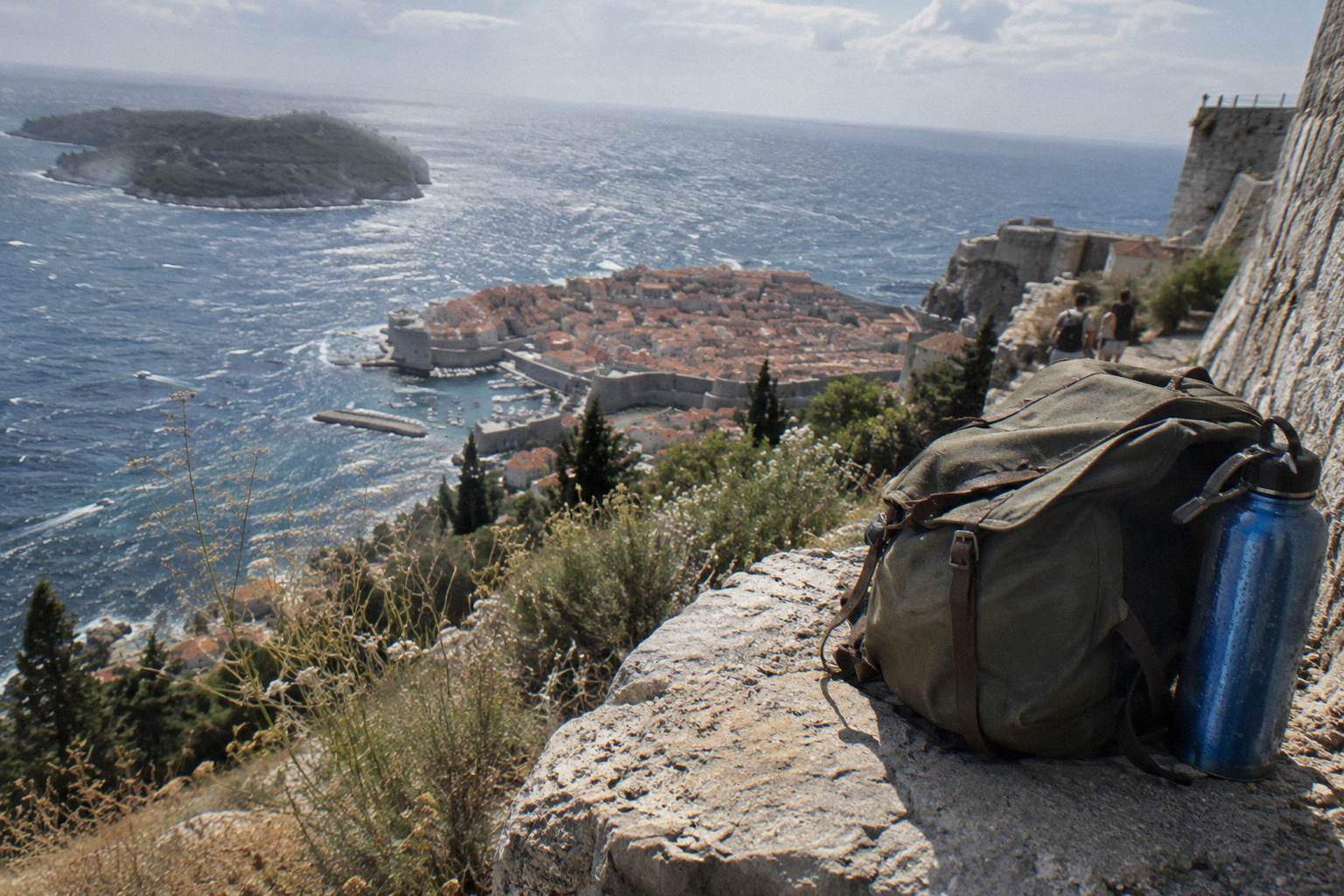
Water comes first. None of the listed inclusions on the walking tours cover food or drinks; the Private Walk, 2h30 by My Dubrovnik Tours states food and beverages among its exclusions, so a bottle in the bag is on you. Old Town fountains and cafes make refilling easy on the walking routes, but the summit stops on the driving tours have fewer options mid-visit, so start those with a full bottle.
Rain strategy differs by tour type. On a private walk there is no vehicle to duck into, so a packable rain jacket beats an umbrella: the narrow Old Town streets funnel wind in gusts, and one hand free is worth more than full coverage. On the driving tours the vehicle is the shelter, and the rain layer only needs to cover the short dashes between the car and the museum doors.
Sun kit belongs in the bag on every itinerary, including winter ones, because the glare off pale limestone is a year-round feature. Sunscreen, a hat and sunglasses cover it. Croatia has used the euro since 1 January 2023, so small cash needs such as the EUR 5 museum ticket on the driving tour are simple to cover.
One seasonal note affects the packing list directly. War Photo Limited, the exhibition space that appears on the ROSOTRAVEL Croatia War Photo Limited, Lovrjenac private tour (from €140 per person) and as an optional stop on the Half-Day Yugoslav War History, keeps seasonal hours: 10:00 to 17:00 in April and October, 10:00 to 22:00 from May to September, and it is closed November to March, per its own visiting page. If your tour includes it, you are travelling in the warmer half of the year, and the summer packing list applies in full: tickets there cost adults EUR 10 and students EUR 6 when bought separately. The deeper story of that exhibition is covered in the guide to War Photo Limited and what it holds.
Packing List By Tour Format
| Item | Old Town walks | Driving tours to Srd | Museum-only visit |
|---|---|---|---|
| Grip-soled walking shoes | Essential | Essential | Helpful |
| Warm or wind layer | Useful | Essential | Useful (cool interiors) |
| Rain jacket | Essential | Useful | Optional |
| Hat, sunscreen, sunglasses | Essential | Essential | Optional |
| Water bottle | Essential | Essential | Optional |
| Small cash for museum entries | Memorial Room included on the private walk | EUR 5 museum ticket on the driving tour | Red History admission included |
Is There A Dress Code At The Memorial Rooms And Museums?
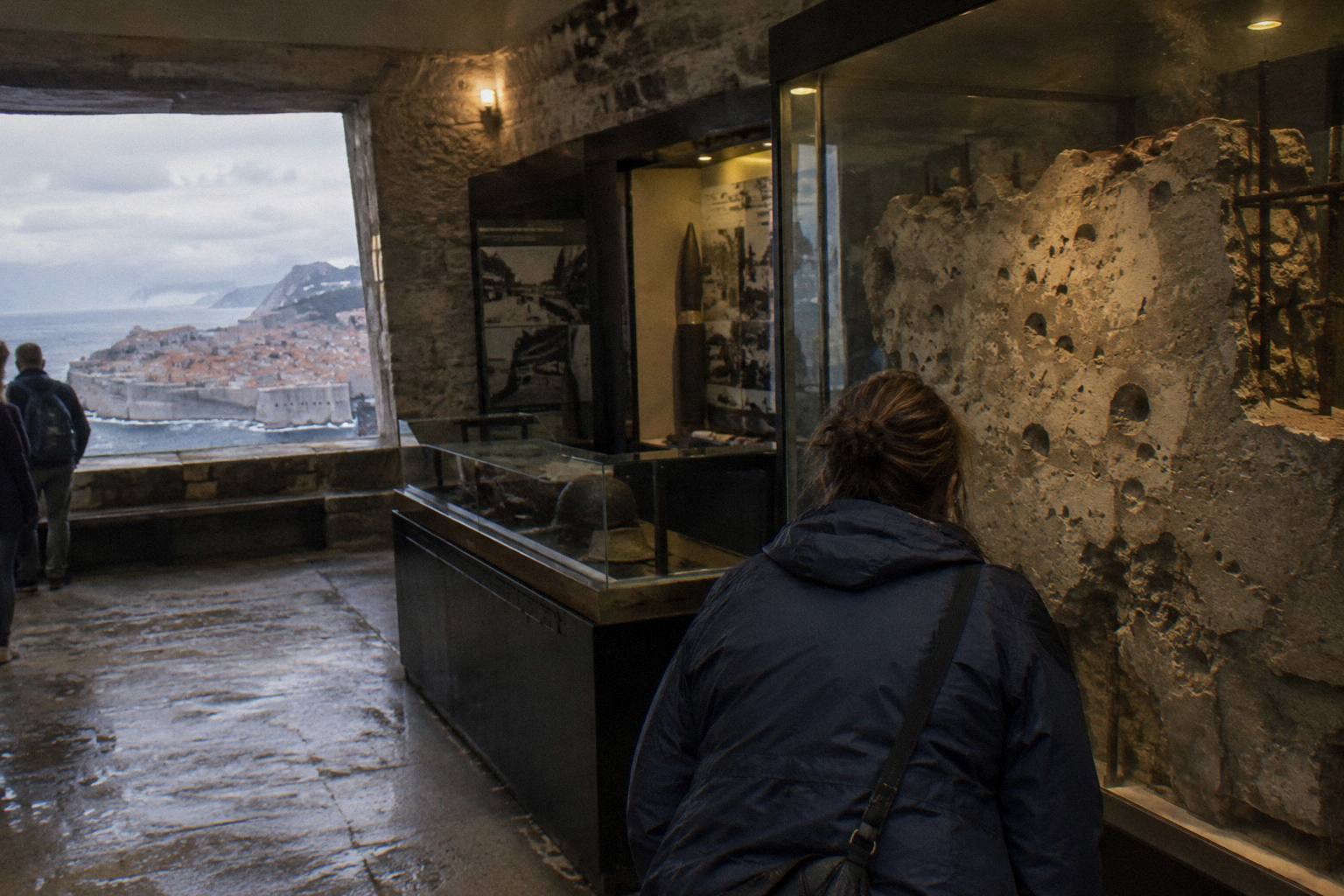
No published dress code applies at any stop on these tours, but modest, respectful clothing is the right choice at the Memorial Room of Dubrovnik Defenders and the Homeland War Museum, both of which function as commemorative spaces as much as exhibitions. Shoulders and knees covered, nothing with slogans, and hats off indoors is the standard that fits the setting.
The Memorial Room, included with entrance on the Private Walk, 2h30 by My Dubrovnik Tours, commemorates the city's defenders, and the Homeland War Museum inside Fort Imperial documents the siege from the fort that was itself at the centre of the fighting. Visitors read the rooms in silence more often than not, and beachwear or swim cover-ups would feel wrong there in a way that no sign needs to spell out. The tone guidance the whole city applies to this history is neutral and respectful, and clothing is part of that.
The Red History Museum Visit by Red History Museum sits at the other end of the formality scale. It is a bright, interactive museum visit of 50 minutes to 1 hour 35 minutes, admission included, priced from €10 per person, and rated 4.8 across 206 reviews, the most reviewed tour covered on this site. The museum's own site shows the space: casual clothing is entirely normal there. The same goes for War Photo Limited, within reason: it is a working exhibition gallery rather than a memorial room.
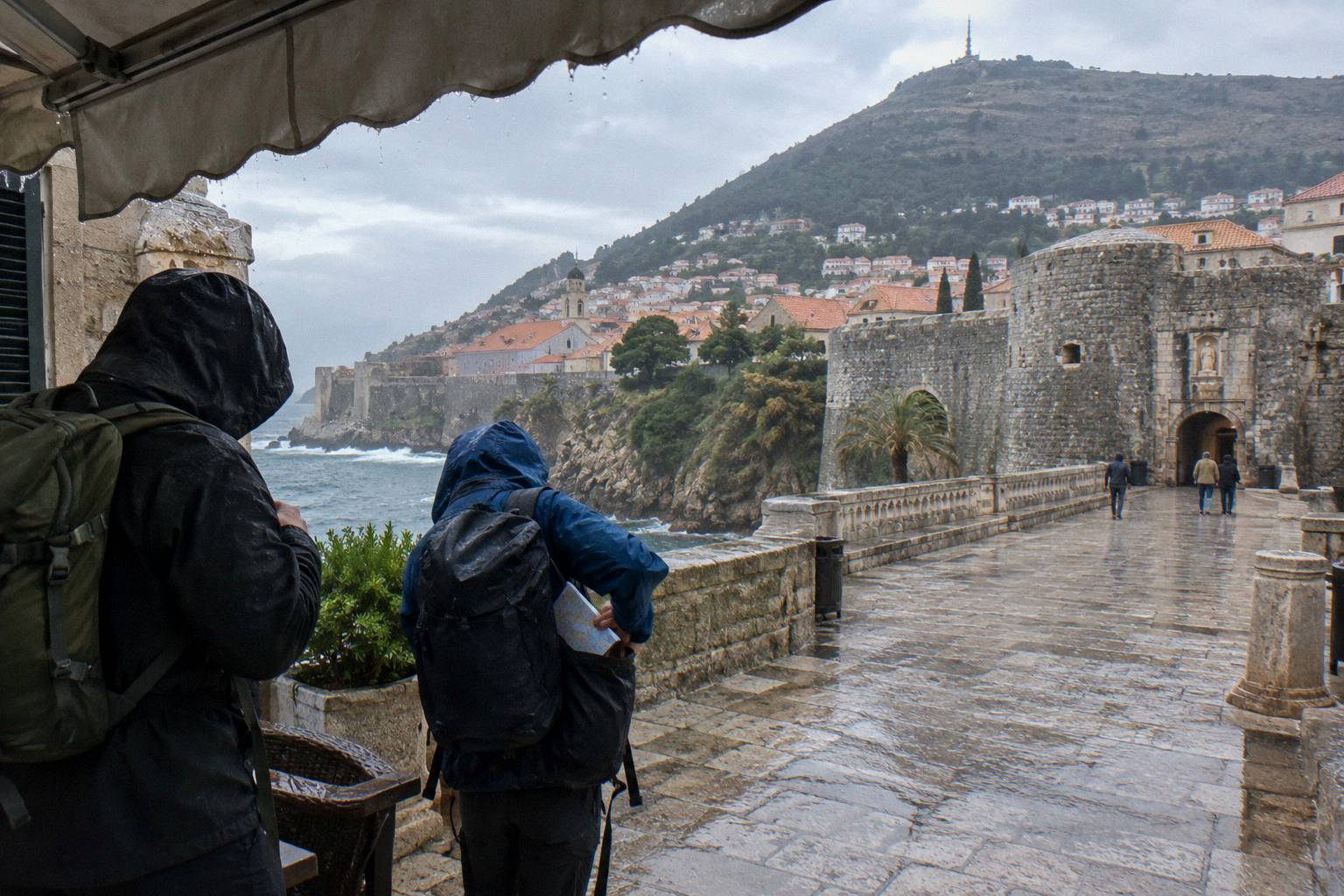
A practical wrinkle: if a single day combines a beach morning with a war tour afternoon, change before the tour. Several Old Town routes pass memorial plaques and damage sites within their first ten minutes, and the transition from swimwear to memorial space is not one to do mid-walk. If the whole family is coming, the question of whether the content suits children is separate from the clothing question, and it is answered in whether a Dubrovnik war tour works for kids.
What Changes The Outfit Between Seasons?
Summer itineraries need heat management, a hat and high-factor sunscreen; spring and autumn itineraries need layers you can shed twice in a morning; winter visits narrow the tour selection itself, because War Photo Limited closes November to March and the summit wind is a daily factor. The clothes matter less than matching the packing list to the season your booked tour actually runs in.
Summer is the simplest and the most demanding at the same time. Light, breathable clothing, serious sun cover and water cover the Old Town walks, whose 2 to 3 hours fall largely in open streets. The museums are the mid-day refuge: the Red History Museum's summer hours run daily into the evening per its own site, and the Homeland War Museum stays open until 22:00 between April and September, so a late-afternoon summit visit is a legitimate heat-avoidance tactic on the driving tours. Check the day before you go, since hours shift.
Spring and autumn are layering seasons. A morning that begins cool on the Pile side of the Old Town can be genuinely warm by the time a 2 hour 30 minute walk reaches Ploce, and the reverse happens in the afternoon. Two light layers beat one heavy one every time on these routes.
Winter changes the menu of tours more than the wardrobe. War Photo Limited's closure from November to March makes the ROSOTRAVEL Croatia War Photo Limited, Lovrjenac tour and that stop on the Half-Day Yugoslav War History effectively seasonal products. The Homeland War Museum drops to its 09:00 to 17:00 winter hours, and the cable car runs reduced schedules with some winter closures. What remains bookable year-round is the core: the Old Town private walks, the Red History Museum in its winter opening pattern, and the summit driving tours with a proper wind layer packed.
A note on one itinerary that needs care in any season. The Private War And Heritage Tour Of Mount Srđ by Adriatic Vision (from €150 per person, 4 to 5 hours, minimum age 10) lists Hotel Belvedere and the Kupari Resort among its stops. Kupari, the former Yugoslav People's Army military resort nicknamed "Tito's Hawaii", was damaged in 1991, and its ruins were largely demolished in 2025, with the protected Grand Hotel excepted, as The Dubrovnik Times reported; the site is under redevelopment with no public access, so expect to see these places from the road or a viewpoint, never inside, and dress for the standing-around-outdoors time that implies. That redevelopment story is told in full in why Kupari is still abandoned.
What Do People Get Wrong About Packing For These Tours?
The recurring mistakes are packing for a beach holiday rather than a walking itinerary, trusting smooth-soled fashion shoes on wet limestone, skipping the summit layer because the harbour feels warm, and assuming museum tickets are included when some tours charge them separately, as the driving tour's EUR 5 per-person museum entry shows.
The beach-holiday packing list is mistake number one, and it is understandable: most visitors come for the sea, and a war tour is one morning inside a coastal week. But the two longest walking products spend their entire booked duration outdoors on stone, and the difference between enjoying that and enduring it is mostly footwear and a water bottle.
The summit-layer mistake runs the other way. The harbour in summer feels like mid-thirties heat, and the temptation to ride up to Fort Imperial in a t-shirt is strong. The fort's exposed terraces catch wind off the open ridge, and the museum interior is stone-cool. A light layer in the day pack costs nothing to carry and rescues the visit.
The ticket assumption is the most avoidable. Inclusions vary by tour and the differences are concrete: the private walk by My Dubrovnik Tours includes Memorial Room entrance, the Amico Tours half-day includes both museum entries, and the INtours Dubrovnik driving tour lists the Homeland War Museum among its exclusions with the EUR 5 per-person ticket paid on site. Read the inclusions line before you pack the wallet.
Finally, there is the timing mistake: booking a tour that includes War Photo Limited for a winter week. It closes November to March, so those itineraries belong to the April to October window, and the rest of your packing follows from which window you chose. If you are still weighing walking against driving formats altogether, the comparison in a Dubrovnik war walking tour versus a jeep or driving tour settles the format question before the wardrobe question.
The private walks remain the format where clothing decisions weigh most, because there is no vehicle, no shelter and no shortcut home for 2 to 3 hours. The Private Walk, 2h30 by My Dubrovnik Tours is a private format led by a decorated war veteran, from €100 per person, with free cancellation up to 24 hours ahead, so a genuinely wet forecast is a reason to shift the date rather than to waterproof the family. You can check availability if that format fits your plans. The broader context of what these routes commemorate is laid out in the site's Dubrovnik Communism Tours hub, including the full siege of Dubrovnik 1991 explained guide.
Common Questions About What To Wear On A Dubrovnik War Tour
What To Wear On A Dubrovnik War Tour?
Broken-in walking shoes with real grip, layered clothing, sun cover (hat, sunglasses, sunscreen), a compact rain layer and a water bottle. Add a warm, wind-resistant layer for any tour that visits Mount Srd and Fort Imperial, and choose modest clothing for the Memorial Room and museum stops.
Are Sneakers Enough, Or Do I Need Hiking Shoes?
Everyday sneakers with a rubber grip pattern are sufficient for the Old Town walking routes and the summit stops. Proper hiking shoes are unnecessary; the real requirements are grip on polished limestone and a shoe you have already walked several kilometres in.
Do I Need A Jacket In Summer?
For the Old Town walks, no, beyond a packable rain layer. For any Mount Srd itinerary, yes: the summit is exposed and windy, and the museum interior inside Fort Imperial is stone-cool, so one light layer belongs in the bag even in July.
Is There A Dress Code At The Museums?
No tour publishes one. Modest clothing is the respectful choice at the Memorial Room of Dubrovnik Defenders and the Homeland War Museum, both commemorative spaces. The Red History Museum and War Photo Limited are casual galleries.
What Should I Carry With Me?
A small day pack with water, sunscreen, a rain layer and payment for any museum ticket not included in your tour: the driving tour by INtours Dubrovnik lists the EUR 5 per-person Homeland War Museum entry as an extra, while the Amico Tours half-day includes both museum entrances.
Does The Season Change What I Should Pack?
Yes. Summer calls for heat and sun management, spring and autumn for layers, and winter for a summit wind layer plus a narrower tour menu, since War Photo Limited closes November to March and the cable car runs reduced hours with some winter closures.