What Happened To Dubrovnik During The War, Stop By Stop On A Homeland War Tour?
The verified facts of the 1991 to 1992 siege, from the Old Town shell scars to Fort Imperial and Mount Srd, mapped to the Homeland War tours that actually visit each stop.
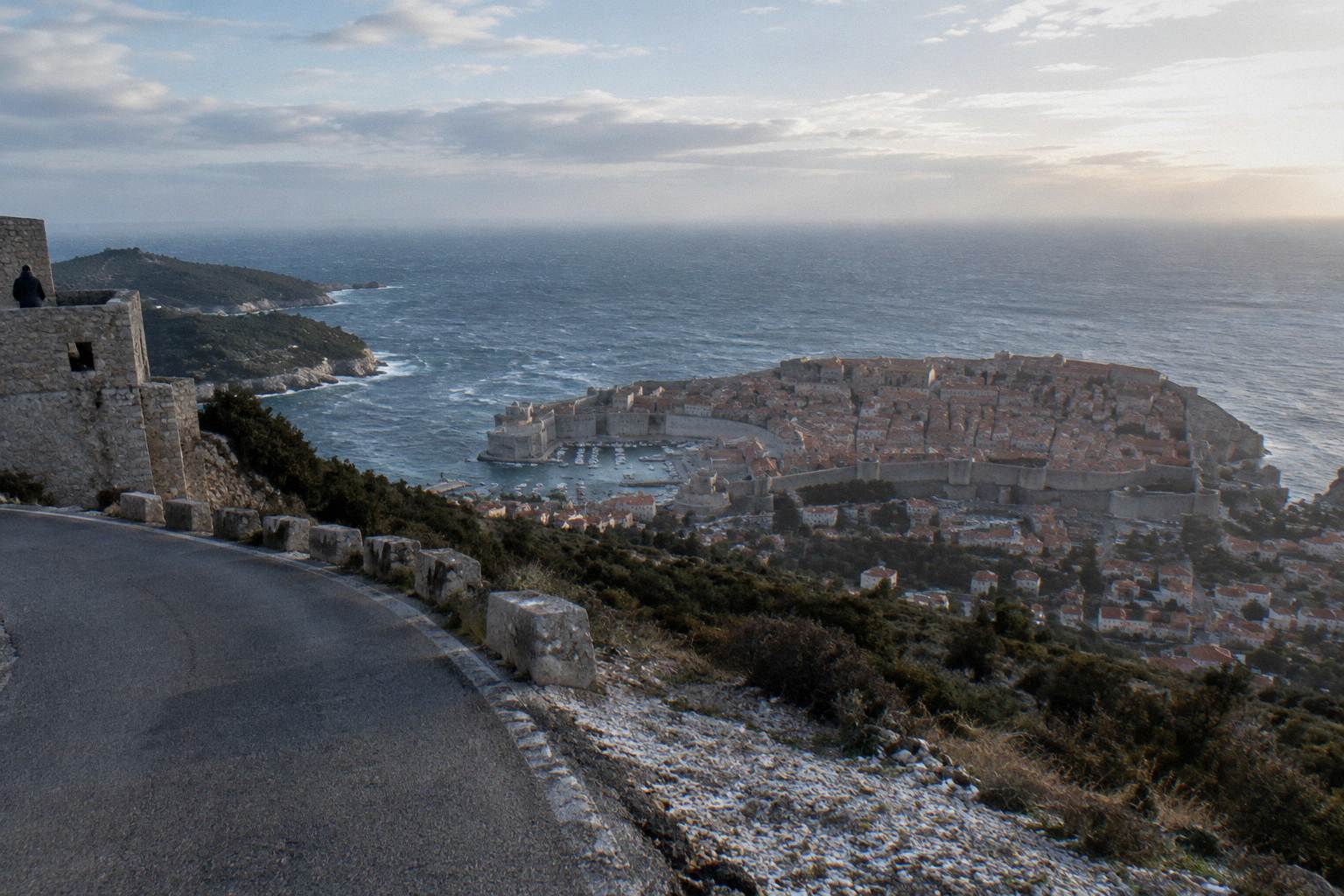
Croatia was one of the republics of socialist Yugoslavia, which Josip Broz Tito led after the Second World War. Croatia declared independence on 25 June 1991, and the siege of Dubrovnik followed. This page walks through what happened in the city during the war, stop by stop, exactly as the Homeland War tours present it: the shell scars in the Old Town, the Memorial Room of Dubrovnik Defenders, Fort Imperial on Mount Srd, the War Photo Limited gallery and the story of Kupari. Every tour named here is bookable, and each is described only as far as its own details go.
Dubrovnik was besieged from 1 October 1991 to 31 May 1992, when the siege was lifted, and the heaviest shelling of the Old Town came on 6 December 1991, with about two thirds of its buildings damaged. A Homeland War tour traces this stop by stop through shell scars on rooftiles and walls inside the gates, the Memorial Room of Dubrovnik Defenders, the Homeland War museum inside Fort Imperial on Mount Srd, and Kupari, seen only from the road.
The tour that tells this story on foot is the Private Walk, 2h30 by My Dubrovnik Tours, a private walking tour from €100 per person. It runs for 2 hours 30 minutes, east to west across the Old Town from the Ploce to Pile gates, pausing at the war-damage sites and with entrance to the Memorial Room of Dubrovnik Defenders, where the ticket is included. The listing states that the guide is a decorated war veteran who personally witnessed the war. It is rated 5 across 8 reviews, a small number of reviews, and it carries free cancellation with a 24 hour window. You can check availability if that format suits you.
A second private walk covers the same ground with a different voice: the Walk With Vesna, Group Rate by Walk with Vesna, a 2 hour private tour from €235 per group, led by a guide who was in the city during the siege, as the tour description states. It follows the restoration traces in the Old Town, with an optional cable car ride up to Srd and the Homeland War Museum inside Fort Imperial on request. That row is rated 5 across 5 reviews, again a small pool, and museum tickets are not included in the base price. This site, Dubrovnik Communism Tours, covers both walks in depth, and the background on why the city was attacked at all sits in the siege of Dubrovnik explained guide.
The record of the siege that can responsibly be printed is short and specific, and this page sticks to it. The dates, the damage to the Old Town, the UNESCO status and the places you can stand in today all come from the city's own account of the destruction and restoration of Dubrovnik. Anything beyond that, casualty figures, military units, the politics of the conflict, is not something a tour-booking page should paraphrase, and no number of that kind appears here. The tours themselves, led by people with their own relationship to those years, are where the human layer lives.
What Did The Siege Do To The Old Town?
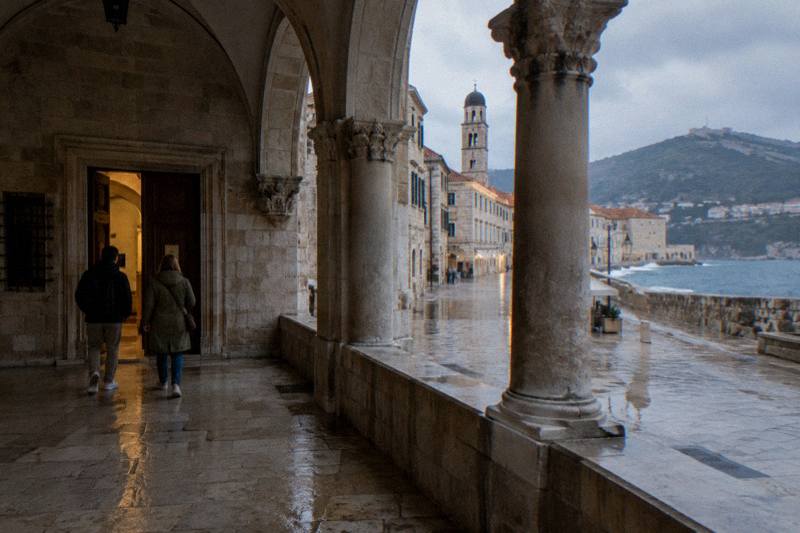
Dubrovnik's Old Town was inscribed as a UNESCO World Heritage site in 1979 and spent 1991 to 1998 on the World Heritage in Danger list. About two thirds of its buildings were damaged in 1991 and 1992, with the worst single day on 6 December 1991. The reconstruction that followed was a years-long effort, and the repaired rooftiles and patched walls are exactly what a war walking tour points out to you today.
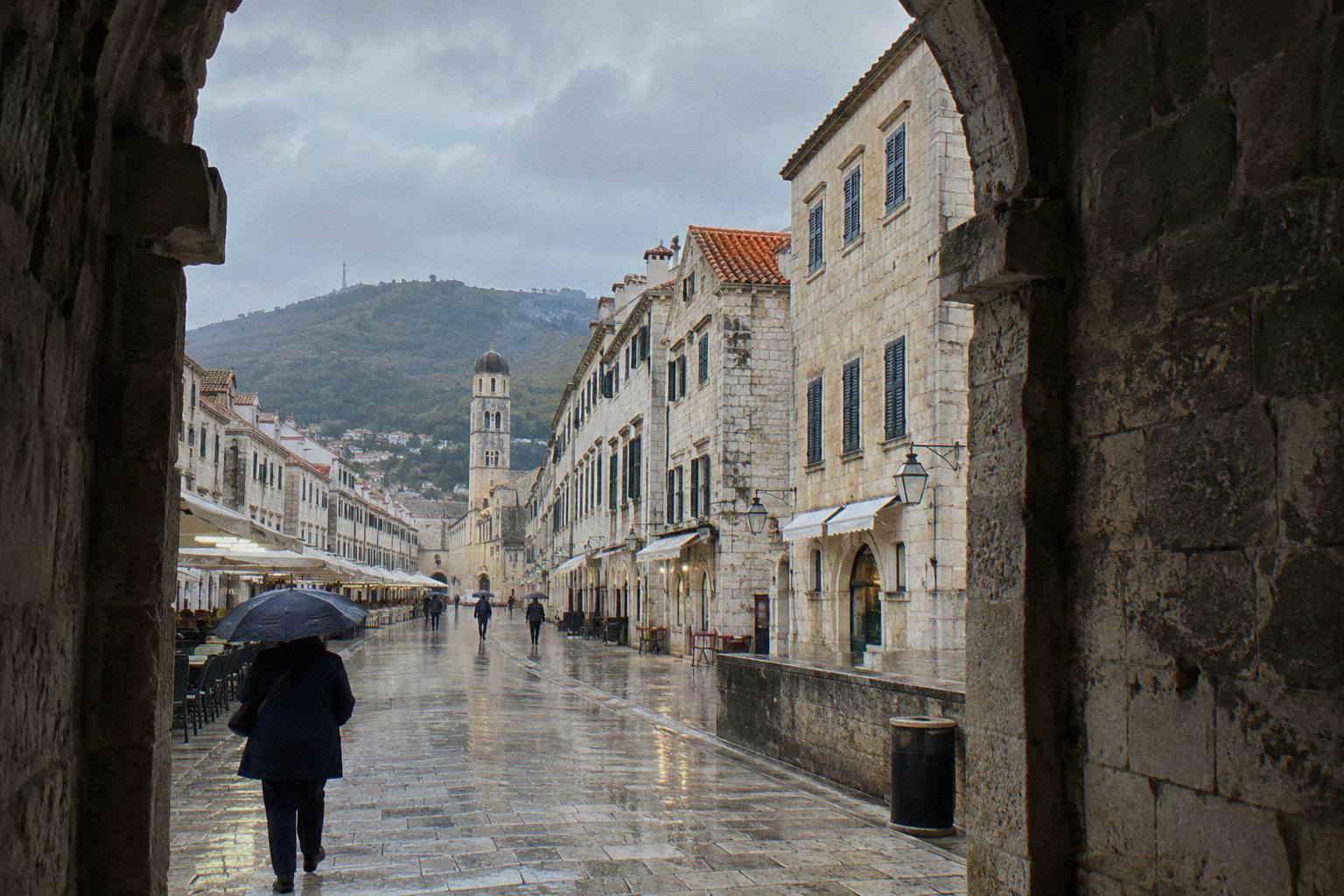
The UNESCO status matters twice over here. Inscription in 1979 recognised the medieval walled city as a world-class monument; the danger listing from 1991 to 1998 recorded that a protected site had come under attack. Coming off that list took seven years of restoration. Walk the Stradun today and the city looks whole, which is precisely why a guide helps: the damage is now a story told in details, new orange rooftiles against older pale ones, pockmarks filled on limestone facades, replaced rooflines seen from the walls.
Two tours in the roster read the Old Town this way. The Private Walk, 2h30 by My Dubrovnik Tours moves from Ploce Gate in the east to Pile Gate in the west, stopping at the war-damage sites along that axis before entering the Memorial Room of Dubrovnik Defenders with tickets included. The Controversial History Private Walk by ROSOTRAVEL Croatia, 2 hours and from €129 per person, focuses on the rooftiles and walls that still carry the scars of the 1991 shelling, with a licensed private guide fluent in your chosen language. It has no museum component and no rating is printed for it. Both are private, so the pace and the depth of the conversation bend to what you ask.
A third option, the War Photo Limited, Lovrjenac private tour by ROSOTRAVEL Croatia, from €140 per person, ties the Old Town's scar reading to the city's war photography gallery and, in its 3 hour version, to Lovrjenac Fortress with skip-the-line tickets. Because War Photo Limited closes from November to March, that tour is a seasonal one; the season question gets its own section below. Free cancellation with a 24 hour window applies to all three of these walks.
One honest caution before moving uphill: a walking tour shows you where damage happened and how it was repaired, not a battlefield. The Old Town stops are streets, gates and memorials, all in ordinary daily use, and the tone of the tours named here is respectful rather than theatrical. Families ask about this often, and the question of whether a war tour suits children has its own answer depending on the tour: the Controversial History Private Walk lists a minimum age of 1, while the Mount Srd driving tour further down sets a minimum age of 10.
What Is Inside Fort Imperial On Mount Srd?
Inside Fort Imperial, the Napoleonic fortress on top of Mount Srd, sits the Homeland War Museum, with entry at 5 EUR for adults, 3 EUR for students, and nothing for children under 7. Hours run from 08:30 to 22:00 between April and September but shorten to 09:00 to 17:00 from November to March, and while several tours in the roster drive you up to the fort, only some include the museum ticket.
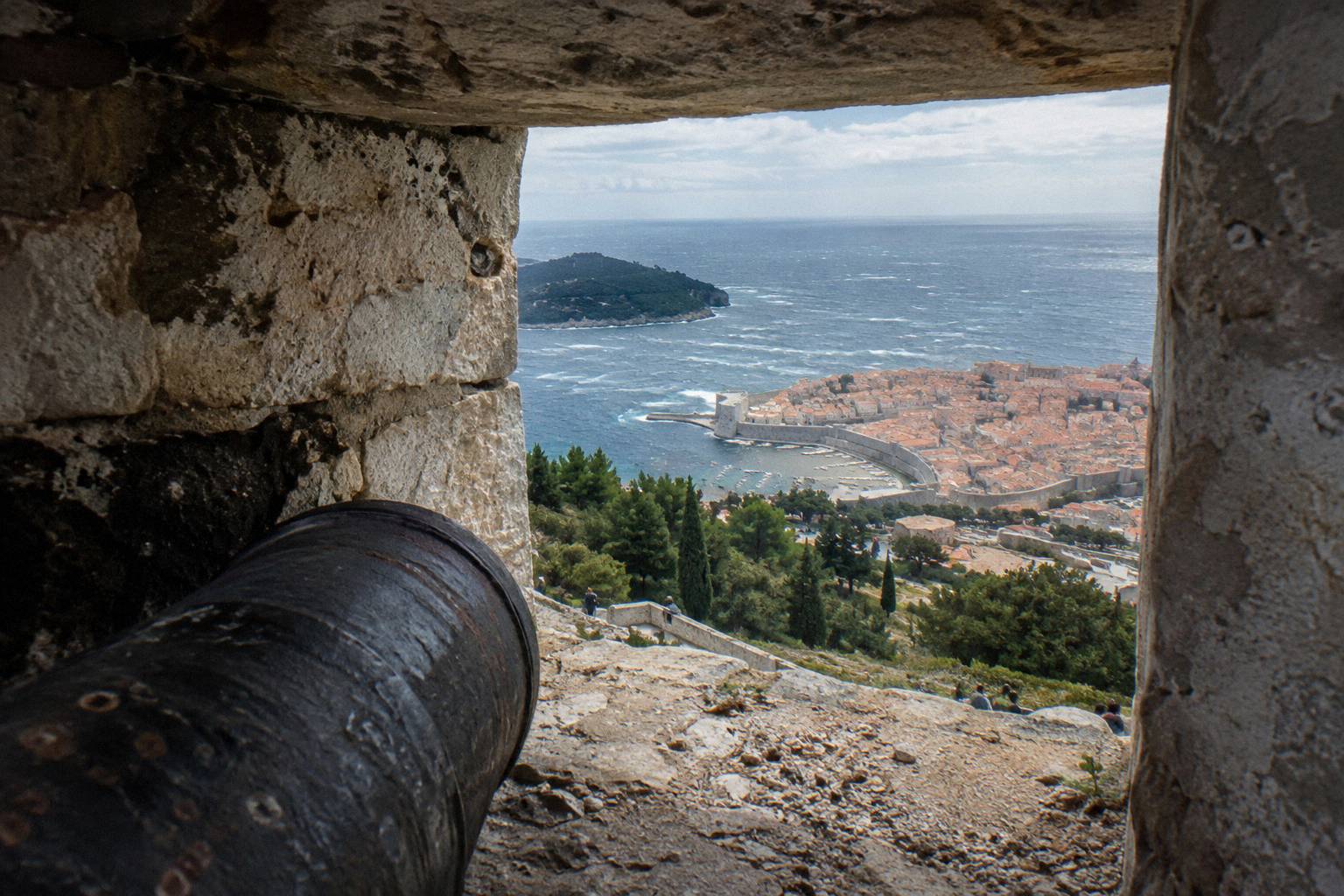
The museum's own site, mdrd.hr, is the place to confirm opening hours and the exhibition layout, since both shift with the season. The fortress sits at the top of the cable car line above the city, and the contrast is the point of the visit: the same hill that gives visitors the classic panorama is where the fight for the city was directed and withstood. The Dubrovnik Cable Car costs 30 EUR adult return, 17 EUR one way, 8 EUR child return for ages 4 to 12, and the ride takes about 4 minutes; hours are seasonal with some winter closures, and fares change, so check the day before you go.
Four tours take you to Srd, each with a different shape. The Driving Tour, Per Vehicle by INtours Dubrovnik, 2 hours and from €180 per vehicle, visits the Homeland War Museum and the front-line defence points of the siege, guided by a former Croatian soldier who defended Dubrovnik, as the tour description states. The museum ticket is not included in that price; the museum's own 5 EUR entry applies. The Homeland War Museum, Transport tour by ROSOTRAVEL Croatia, 3 hours, includes skip-the-line museum tickets and, in the 3 hour version, private transport up and down the mountain; it is priced from €268. The Private War And Heritage Tour Of Mount Srđ by Adriatic Vision, 4 to 5 hours and from €150 per person, is the widest sweep of the roster, combining Srd and the war museum with the Hotel Belvedere and Kupari Resort, Old Town memorials and War Photo Limited, with a minimum age of 10. And the Dubrovnik Panorama And War Bunkers Tour by Dubrovnik Tours & Transfers, 2.5 hours from €200 per group with pickup included, adds Mount Srd to the Franjo Tudjman Bridge, the Ombla River and historic war bunkers.
Deciding between them comes down to two questions. First, do you want the ticket handled for you? The ROSOTRAVEL transport tour includes skip-the-line entry; the INtours driving tour leaves the 5 EUR museum fee to you. Second, how much of the wider war geography do you want in one outing? The Adriatic Vision tour runs nearly twice as long as the others because it folds in the abandoned sites east of the city, which come with their own caveats, covered next.
What Happened At Kupari And The Hotel Belvedere?
Kupari was a military resort of the Yugoslav People's Army, nicknamed Tito's Hawaii, plundered and damaged in 1991. Its ruins were largely demolished in 2025, the protected Grand Hotel excepted, and the site is now under redevelopment with no public access. The Hotel Belvedere, a war-ruined hotel above Dubrovnik, is likewise closed. Tours that mention them describe the sites from the road or a viewpoint, never inside.
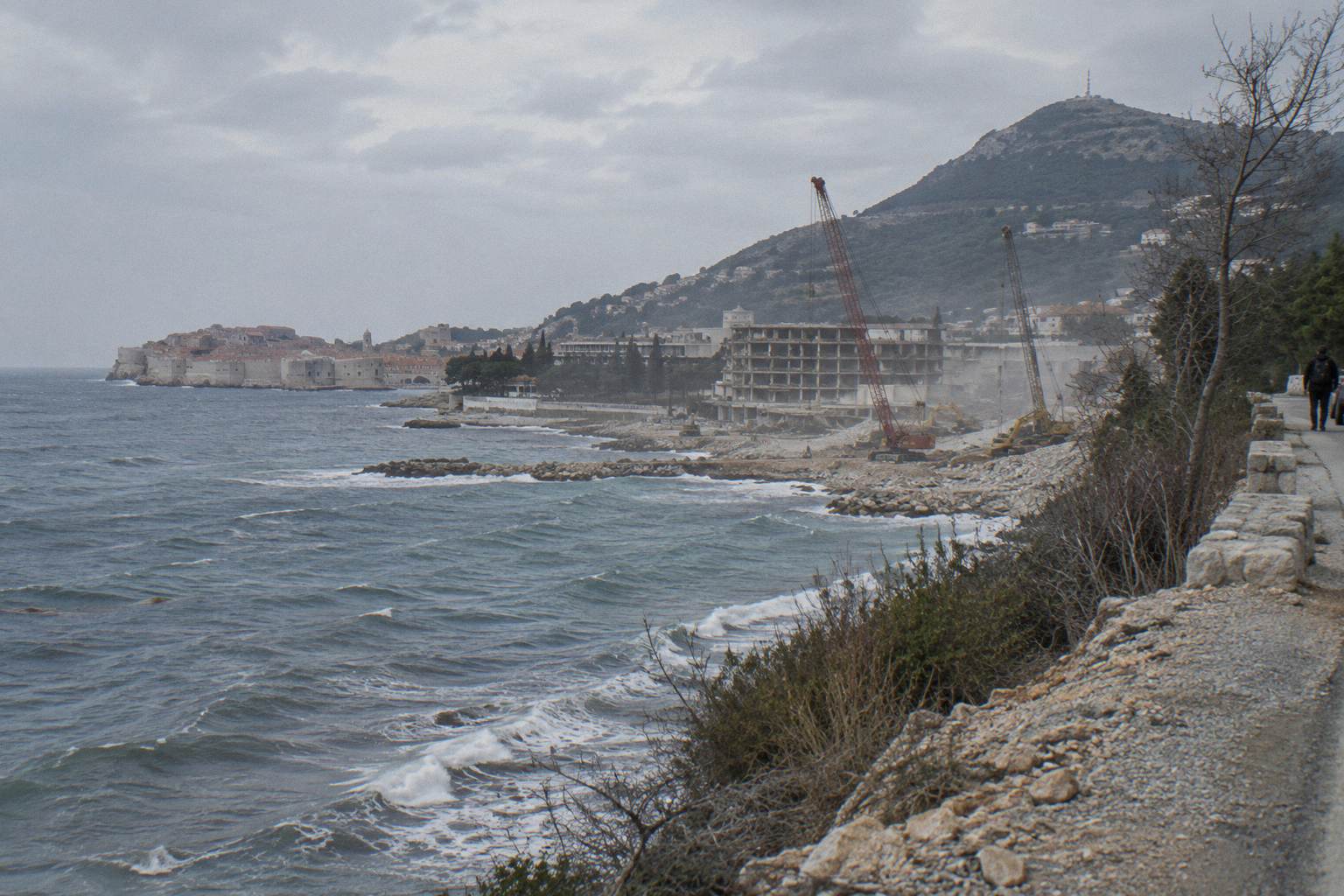
This is the part of the war story that changed most recently, and it is worth getting right. For years the ruined hotels of Kupari stood as they were left in 1991, and the transition now under way has swept most of them away in favour of a new resort. Only the protected Grand Hotel shell survives. Nothing at Kupari can be entered, walked through or approached closely, and no tour on this site promises otherwise. The Private War And Heritage Tour Of Mount Srđ by Adriatic Vision lists the Hotel Belvedere and Kupari Resort among its stops; read that as an explained view from outside the perimeter, which is exactly what a 4 to 5 hour driving tour can honestly offer.
The Hotel Belvedere has a parallel story, a modern hotel ruined in the war and left empty above the city, and its full account sits in the Hotel Belvedere abandoned hotels guide. What matters for this page is the practical rule: these are stories told from a distance, and any tour or article promising to take you inside the ruins is describing something that no longer exists. There is no urbex angle here and none is given.
If the ruins themselves are closed, the places where you can actually get inside the war story are the museums, and their opening hours are the detail most visitors miss. The Homeland War Museum sits in Fort Imperial at the top of Mount Srđ, the same hill the Adriatic Vision driving tour climbs, and it is open April to September from 08:30 to 22:00, in October from 09:00 to 20:00, and from November to March from 09:00 to 17:00 (details on the official site, mdrd.hr). The adult ticket is 5 EUR, and on private driving tours that stop at the fort the ticket is typically paid extra on arrival, so budget for it separately. The museum is the natural complement to a Kupari and Belvedere drive: the tour explains what you are looking at from the road, and the fort exhibition lets you go inside the same story.
War Photo Limited works on a stricter calendar. It closes entirely from November to March, so any tour that lists it as an included stop is genuinely seasonal; if you are visiting in winter, expect that element to be swapped or dropped. Timing matters in a second way here. The siege of Dubrovnik ran from 1 October 1991 until it was lifted on 31 May 1992, and the heaviest shelling of the Old Town came on 6 December 1991. Across the siege as a whole, about two thirds of the Old Town's buildings were damaged. Taking in that scale at Fort Imperial first is a fair way to understand what happened here, since the two ruined sites themselves are closed.
Which Tour Covers Which Stops?
Private walking tours cover the Old Town's war scars on foot, while driving tours climb to Fort Imperial or head east to the former front line. The Half-Day Yugoslav War History tour by Amico Tours, 4 hours from €178 per person with pickup included, is the only group format and bundles the Red History Museum, Fort Imperial and the Ombla source, with both museum entrances included.
Here is the full stop map in one table, built only from what each tour's own details state:
| Stop | Tours that visit it | Notes |
|---|---|---|
| Old Town war-damage sites, Ploce to Pile | Private Walk, 2h30 (My Dubrovnik Tours); Walk With Vesna, Group Rate; Controversial History Private Walk | All private walks inside the walls |
| Memorial Room of Dubrovnik Defenders | Private Walk, 2h30 (My Dubrovnik Tours) | Entrance included on that tour only |
| Homeland War Museum, Fort Imperial, Srd | Driving Tour, Per Vehicle (INtours); Homeland War Museum, Transport (ROSOTRAVEL); Private War And Heritage Tour Of Mount Srđ (Adriatic Vision); Half-Day Yugoslav War History (Amico) | Ticket included on two of the four; 5 EUR otherwise |
| War Photo Limited | War Photo Limited, Lovrjenac (ROSOTRAVEL); Private War And Heritage Tour Of Mount Srđ (Adriatic Vision) | Gallery closed November to March, so these tours are seasonal |
| Kupari and Hotel Belvedere | Private War And Heritage Tour Of Mount Srđ (Adriatic Vision) | Viewed from the road or a viewpoint; no access |
| Red History Museum | Half-Day Yugoslav War History (Amico); Red History Museum Visit | Covers the Yugoslav, pre-war chapter |
The Half-Day Yugoslav War History tour by Amico Tours deserves its own line because it is the only guided group departure in the roster and the only one that connects the two museums. In 4 hours it runs from the Red History Museum, which covers everyday life in communist Yugoslavia, up to the Homeland War Museum in Fort Imperial, past the Ombla River source, with optional stops at the Belvedere ruins and the War Photo Gallery. Both museum entrances are included, pickup is included, and free cancellation applies with a 24 hour window. It is priced from €178 per person, the highest per-person figure with a clear basis among the tours here, which is the price of covering two museums and a loop of the surrounding area with transport.
For the pre-war half of the story, the Red History Museum Visit by Red History Museum is the entry point: a guided museum visit from €10 per person, the lowest per-person price in the roster, with admission included and a run time of 50 minutes to 1 hour 35 minutes at the museum on Ulica Svetog Križa 3. It is rated 4.8 across 206 reviews, by far the most reviewed tour covered on this site, and it uses an augmented reality app alongside the exhibits. If the Yugoslavia chapter is what you are missing, this is the cheapest and most direct way to fill it before or after a war tour. The museum's own site is at redhistorymuseum.com.
Common Questions About Dubrovnik During The War
What Happened To Dubrovnik During The War, Stop By Stop On A Homeland War Tour?
A Homeland War tour tells the 1991 to 1992 siege through places: the shell scars and repaired rooftiles of the Old Town, the Memorial Room of Dubrovnik Defenders, the Homeland War Museum inside Fort Imperial on Mount Srd, and the closed sites at Kupari and the Hotel Belvedere, viewed only from outside. Private walks cover the Old Town; driving tours climb to Srd and the former front line.
How Long Did The Siege Of Dubrovnik Last?
The siege ran from 1 October 1991 to 31 May 1992, when it was lifted. The heaviest shelling of the Old Town came on 6 December 1991, and about two thirds of the Old Town's buildings were damaged across the siege. Croatia had declared independence on 25 June 1991, and the siege followed.
Can You Still See War Damage In Dubrovnik Old Town?
Yes, mainly as repaired damage: patched limestone facades and replaced rooftiles, pointed out by a guide. About two thirds of the buildings were damaged and the city was restored over the years after the siege, so the signs are subtle. The Private Walk, 2h30 by My Dubrovnik Tours and the Controversial History Private Walk by ROSOTRAVEL Croatia both specialise in reading them.
Can You Visit Kupari Or The Hotel Belvedere Ruins?
No. The Kupari ruins were largely demolished in 2025, apart from the protected Grand Hotel, and the site is under redevelopment with no public access. The Hotel Belvedere is also closed. Tours that include these stops, such as the Private War And Heritage Tour Of Mount Srđ by Adriatic Vision, describe them from the road or a viewpoint.
How Much Does The Homeland War Museum Cost?
Entry to the Homeland War Museum in Fort Imperial is 5 EUR for adults, 3 EUR for students, and free for children under 7. Some tours include the ticket: the Homeland War Museum, Transport tour by ROSOTRAVEL Croatia includes skip-the-line entry, while the Driving Tour, Per Vehicle by INtours Dubrovnik leaves the 5 EUR fee to you. Hours are seasonal, so check the day before you go.
Is War Photo Limited Open All Year?
No. The gallery is open 10:00 to 17:00 in April and October, 10:00 to 22:00 from May to September, and closed from November to March. Entry is 10 EUR for adults and 6 EUR for students. Any tour that includes it, such as the War Photo Limited, Lovrjenac private tour, is therefore a seasonal booking.
Whichever stop list appeals most, the private walks and the driving tours all allow free cancellation with a 24 hour window, so you can hold a place and adjust once you know your dates and the season.