Hotel Belvedere Dubrovnik: Why It Closed And What Happened To It
The Belvedere is one of the abandoned Yugoslav-era hotels on Dubrovnik's eastern approaches. Here is what is actually verified about it, what is not, and which guided tours bring you closest.
Short answer
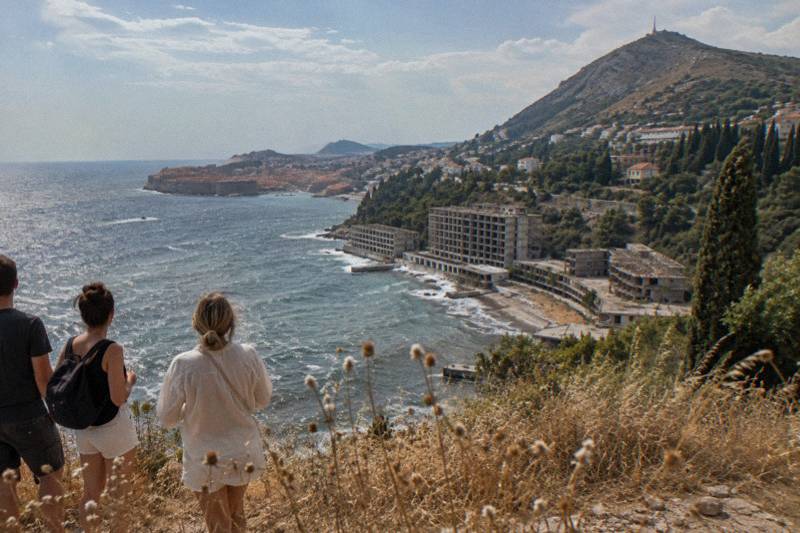
Hotel Belvedere Dubrovnik is an abandoned Yugoslav-era hotel that was damaged in 1991 and has stood empty since. Its ruins are closed to the public, with no entry possible. The closest you can get is a road or viewpoint pass on a guided war-history drive, such as the Private War And Heritage Tour Of Mount Srđ from €150 per person.
Search "hotel belvedere dubrovnik" and you will find a scatter of rumor: closing dates, owners, ghost stories, redevelopment plans. Almost none of it can be checked against a reliable record, and much of it is simply wrong. This page sticks to what is verified, says plainly where the record runs out, and then points you to the guided war-history trips that actually bring you near the site, because the Belvedere cannot be entered and is best understood as one stop in a wider story.
The wider story matters here. Croatia was one of the republics of socialist Yugoslavia, which Josip Broz Tito led after the Second World War. Croatia declared independence on 25 June 1991, and the siege of Dubrovnik followed, running from 1 October 1991 until it was lifted on 31 May 1992. The heaviest shelling of the Old Town came on 6 December 1991, and about two thirds of the Old Town's buildings were damaged in 1991 and 1992. The abandoned hotels on the city's eastern edge belong to that same period of destruction, which is why a war-history tour, such as the Private War And Heritage Tour Of Mount Srđ by Adriatic Vision, is the most honest way to see them.
Uplink: this page sits inside the Kupari and abandoned-hotels cluster of Dubrovnik Communism Tours; see the wider Kupari abandoned hotels guide for the neighbouring resort's fuller story.
| Question | Verified answer |
|---|---|
| What is it? | An abandoned Yugoslav-era hotel above Dubrovnik's eastern coast |
| Why is it abandoned? | Damaged in 1991, during the siege period; no further cause is verifiable here |
| Can you go inside? | No. The ruins are closed to the public |
| Closing year, owners, plans | Not on any verified record this site can print |
| How do you see it? | From the road or a viewpoint on a guided drive |
| Cheapest related tour | Red History Museum Visit from €10 per person (a museum visit, not a hotel stop) |
| Tour that lists it | Private War And Heritage Tour Of Mount Srđ, from €150 per person |
What Is Hotel Belvedere Dubrovnik?
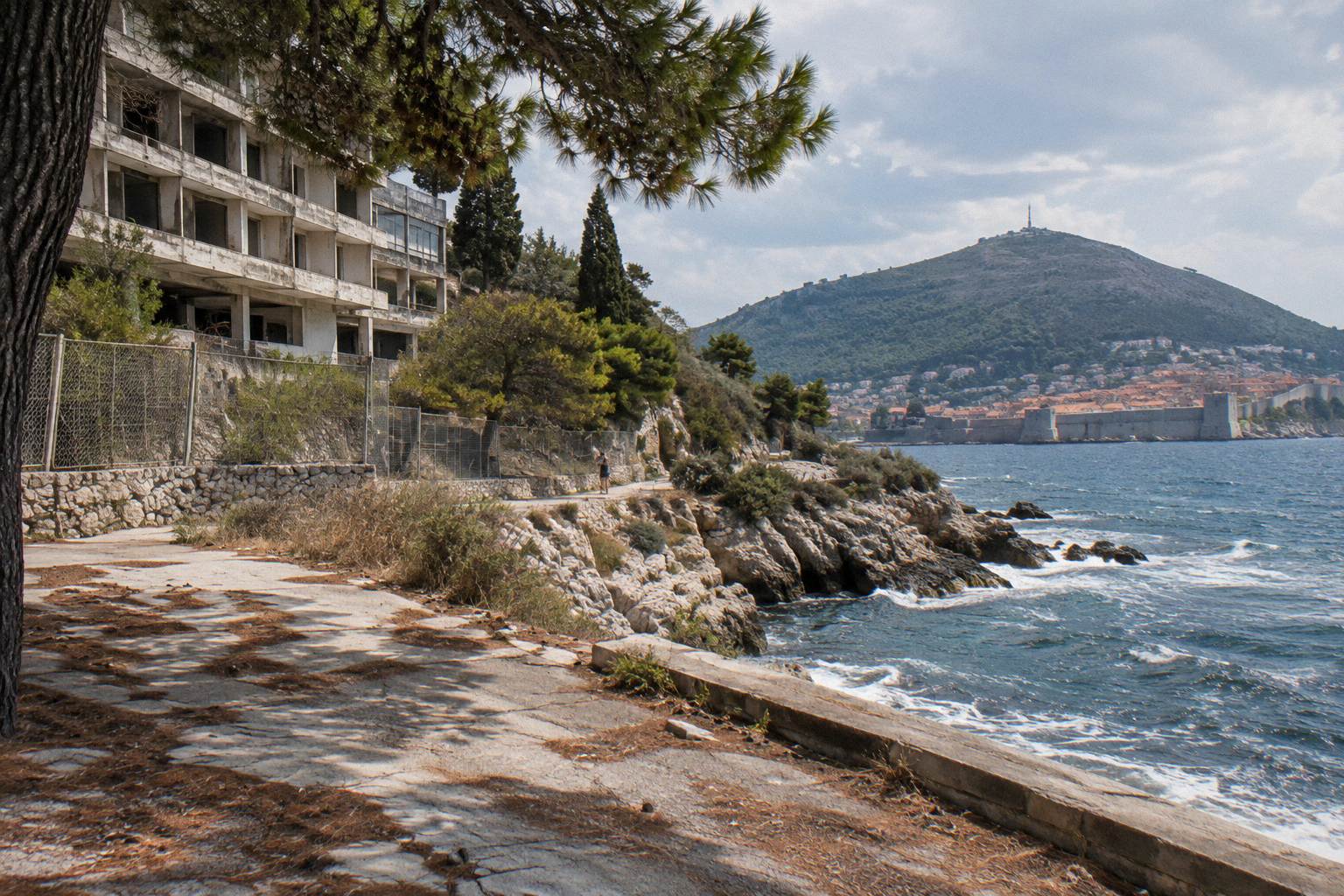
Hotel Belvedere is one of the abandoned Yugoslav-era hotels on Dubrovnik's eastern approaches, a concrete shell that was damaged in 1991 and has stood empty since. It sits in the same coastal stretch as the former Kupari resort, and the two names usually travel together in searches about Dubrovnik's war ruins. It cannot be entered: the ruins are closed to the public.
That last sentence is the one most pages bury. Whatever you have read about walking through the Belvedere's stairwells or photographing its empty pool deck, none of that is possible now, and no tour sold from Dubrovnik promises it. The one roster product that names the hotel, the Private War And Heritage Tour Of Mount Srđ by Adriatic Vision, lists Hotel Belvedere and Kupari Resort among its stops alongside Mount Srd, the Imperial Fortress war museum, the Old Town memorials and War Photo Limited. It is a driving tour, four to five hours in total, priced from €150 per person, with a minimum age of 10 and free cancellation up to 24 hours ahead. The stops are seen from the vehicle or from outside viewpoints, not from inside the buildings.
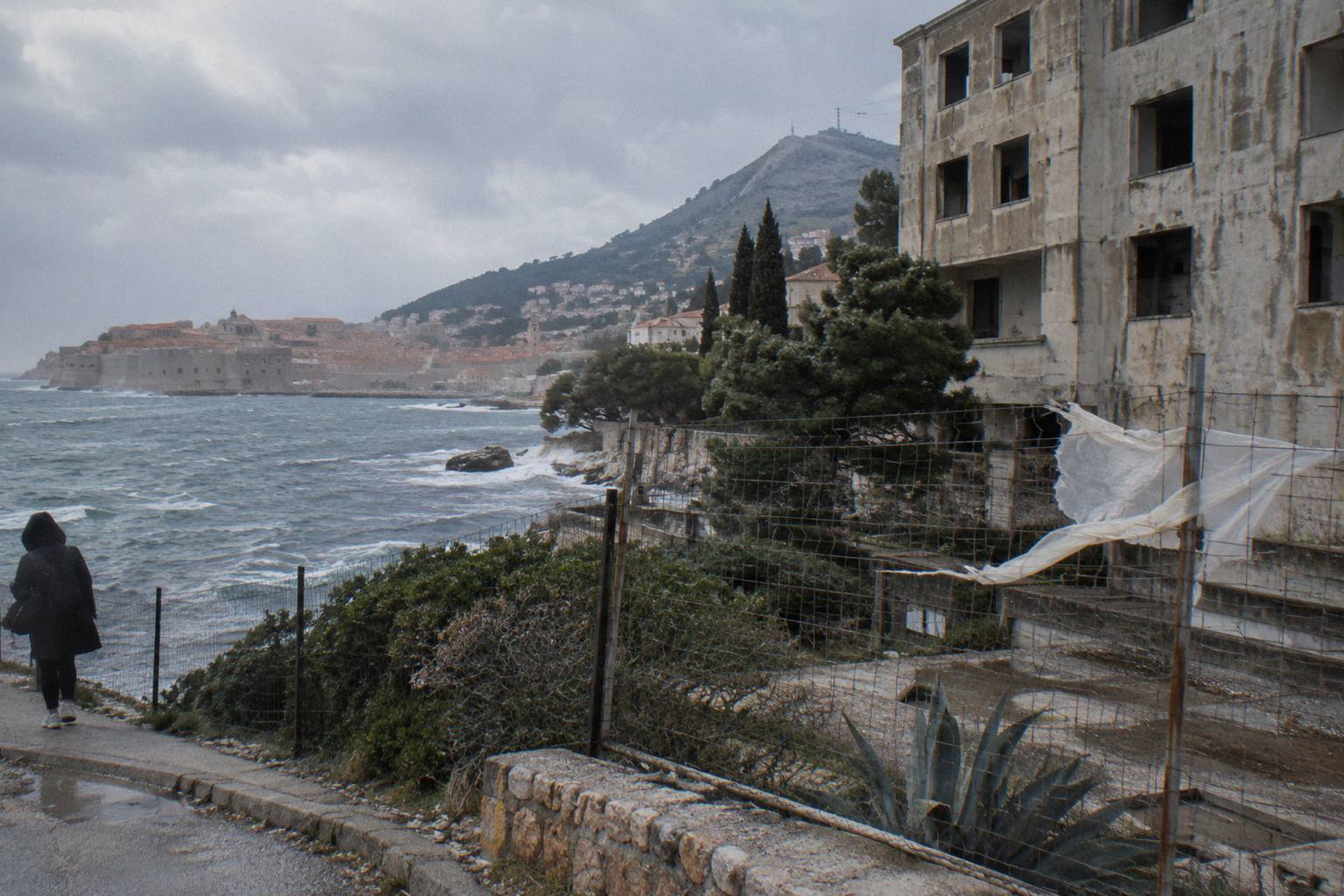
Why does a hotel ruin attract this much attention? Because the Belvedere is a physical piece of the break-up of socialist Yugoslavia. Hotels like this were built in the decades when Croatia was a republic inside that federation, and the damage they carry dates from 1991, the year independence was declared on 25 June and the siege began on 1 October. The Old Town, inscribed by UNESCO in 1979 and placed on the World Heritage in Danger list from 1991 to 1998, has since been restored; the city's own record of the destruction and restoration covers that repair work. The Belvedere was never part of that restoration. It was left as it was, and that contrast is exactly what a guided visit explains.
Why Did Hotel Belvedere Close?
The verified answer is short: the hotel was damaged in 1991, during the period of the siege of Dubrovnik, and it never reopened. No verified closing year before the damage, no ownership history, no redevelopment plan and no other cause can be printed here, because no reliable record of them exists that this site can point to. Anyone offering a more detailed story is filling the gap with rumor.
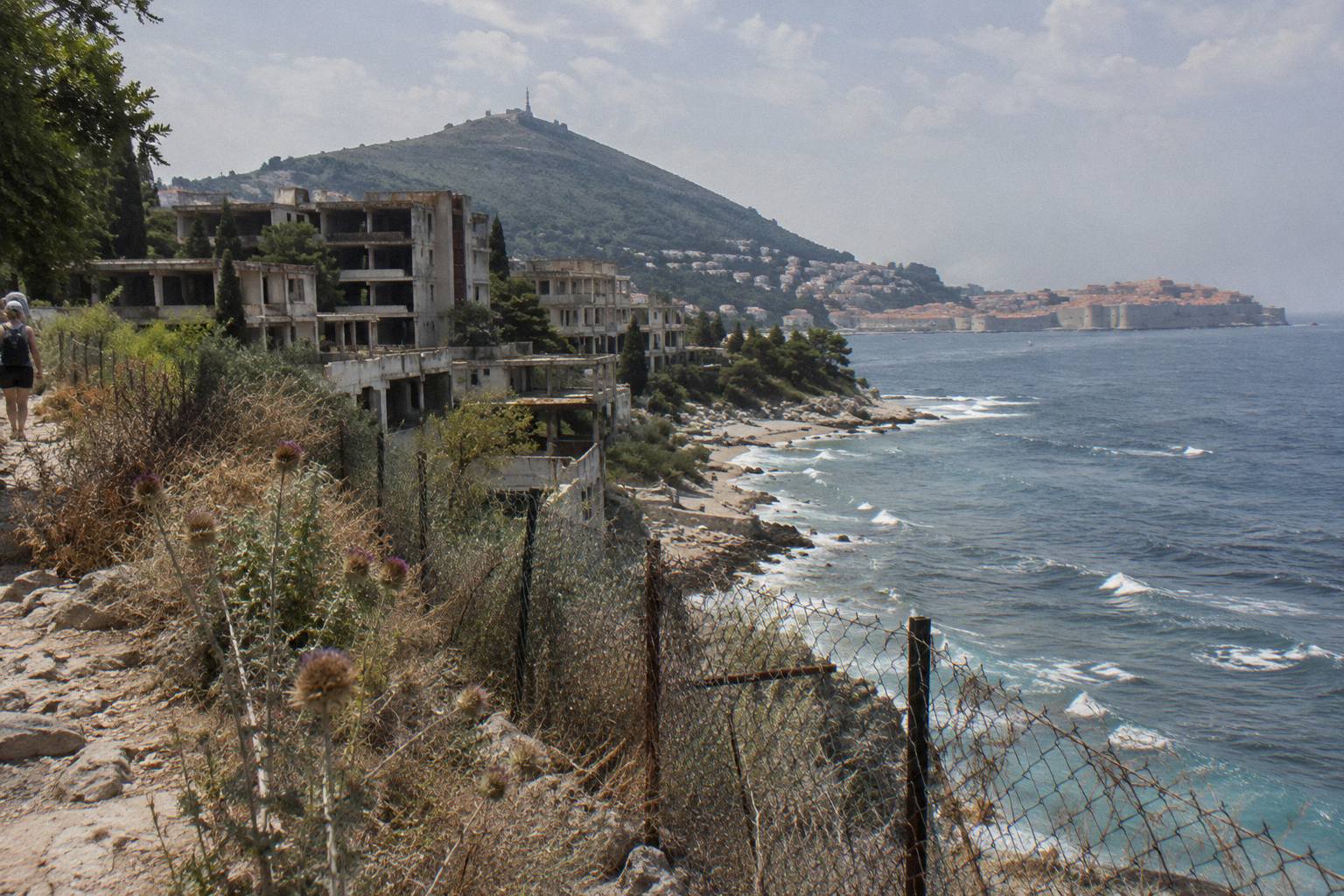
It is worth being blunt about the shape of the record. The siege of Dubrovnik ran from 1 October 1991 to 31 May 1992, and the heaviest shelling of the Old Town fell on 6 December 1991, damaging about two thirds of the Old Town's buildings, per the UNESCO state-of-conservation record and the city's restoration archive. The eastern coastal strip where the Belvedere and Kupari sit was hit in the same period. What happened to the hotel before 1991, who ran it, exactly when it last took a paying guest and what has been proposed for the land since: none of that is verified for this page, and rather than repeat forum claims this article simply says so.
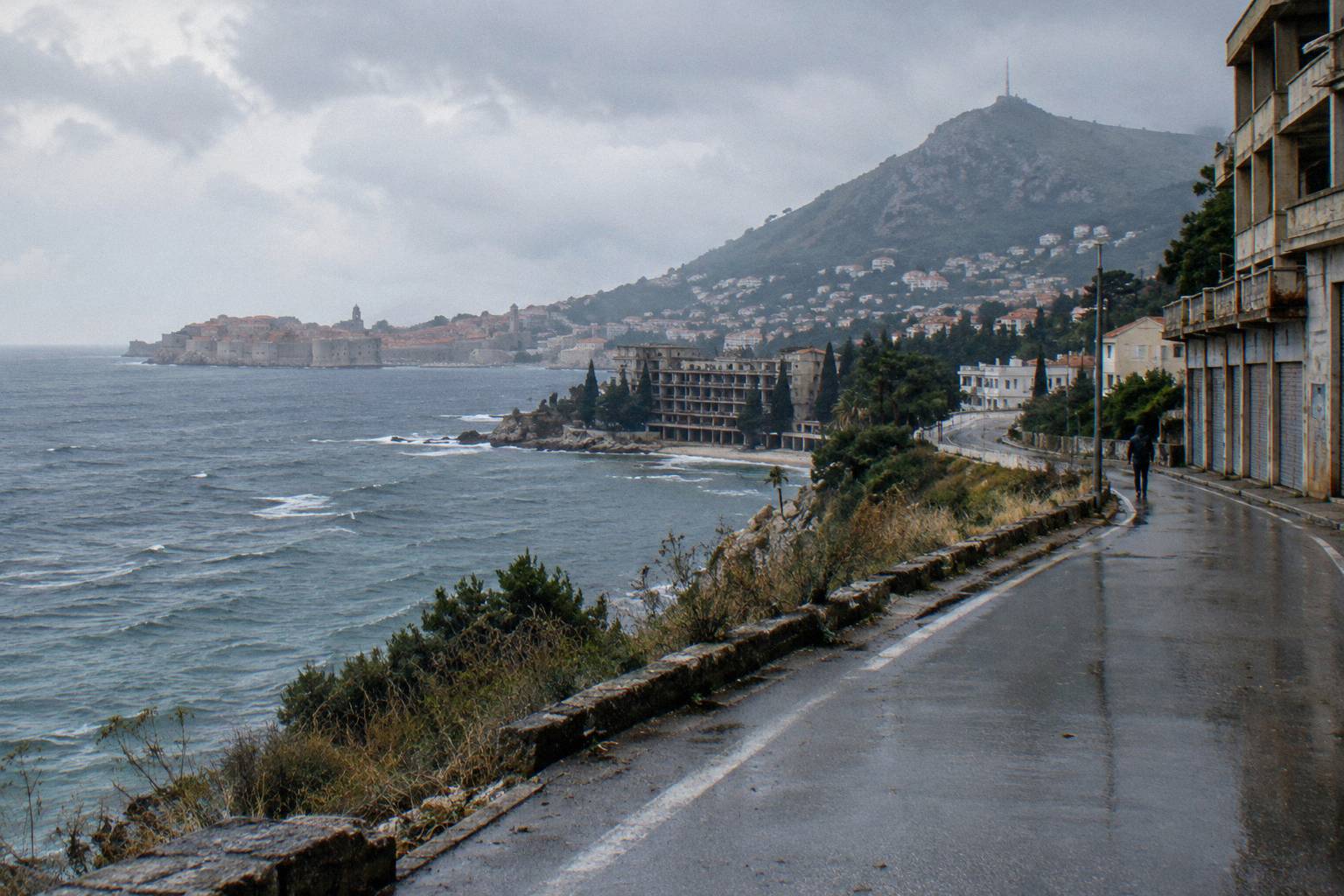
There is also no ghost story to tell, and no urbex advice to give. The site is closed to the public, the land around it is privately held and redeveloped, and a page that promised a way in would be inventing one. What can honestly be offered instead is context: the Half-Day Yugoslav War History tour by Amico Tours runs from €178 per person for four hours with pickup included, includes entrance to the Red History Museum and the Homeland War Museum in Fort Imperial, and lists optional Belvedere Hotel ruins and War Photo Gallery among its stops, with an audio guide in English, Spanish, French, Italian, Portuguese and German. It is a guided group drive, not a private trip, and the Belvedere element is optional and outside only.
The Private Driving Tour Of The Croatian Homeland War by INtours Dubrovnik takes a different route again: two hours from €180 per vehicle, with a former Croatian soldier who defended Dubrovnik as the driver-guide, visiting the Homeland War Museum in Fort Imperial and the front-line defence points of the siege. Museum entry is not included and costs €5 per person at the door. This one does not list the Belvedere, but it covers the defensive geography that explains why the coastal hotels were in the way in 1991.
Can You Visit Hotel Belvedere Dubrovnik Today?
No, not inside. The Belvedere ruins are closed to the public, and so is the neighbouring Kupari site, whose ruins were largely demolished in 2025 with the protected Grand Hotel excepted. The honest way to "visit" is a guided drive that stops at the road or a viewpoint outside the sites, and only one roster tour, the Adriatic Vision private drive, lists the Belvedere by name.
This is not a technicality. The Kupari resort, a former Yugoslav People's Army holiday complex nicknamed "Tito's Hawaii" that was plundered and damaged in 1991, has moved from ruin to building site: the remains were largely demolished in 2025 apart from the protected Grand Hotel, and the land is being redeveloped into a luxury resort with no public access, as reported coverage of the redevelopment describes. The Belvedere stands in the same corridor of coast, and the practical rule is identical: you see it from outside, with someone who can tell you what you are looking at.
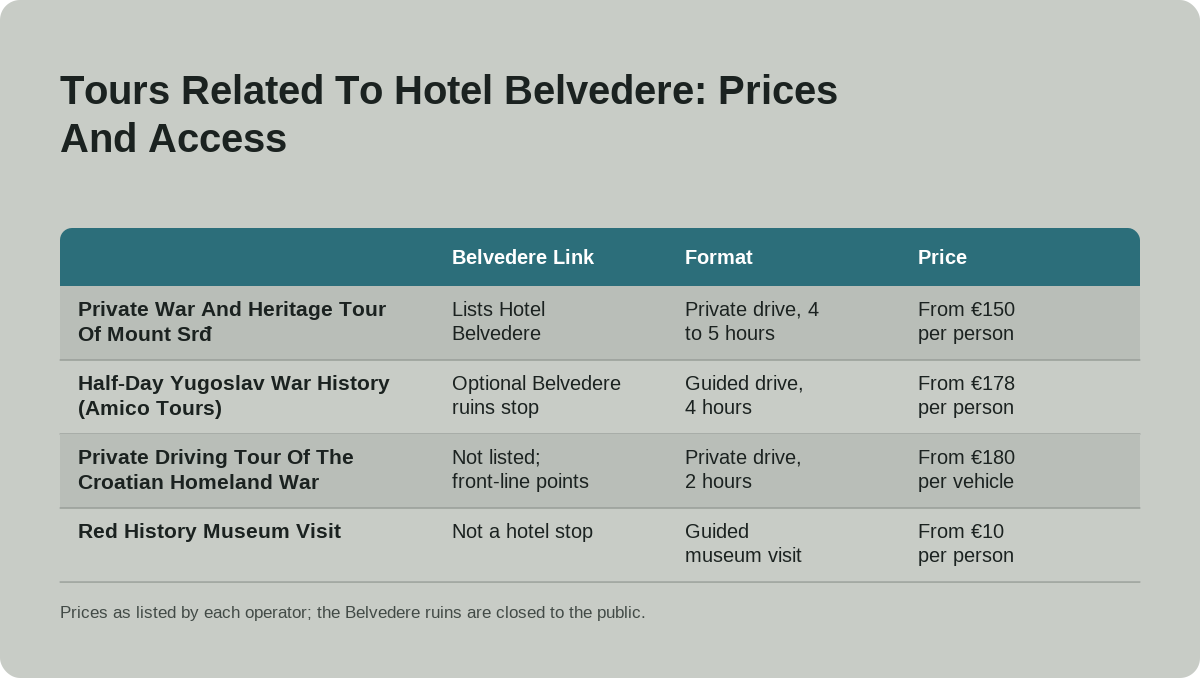
| Tour | Operator | Format | Belvedere link | Price |
|---|---|---|---|---|
| Private War And Heritage Tour Of Mount Srđ | Adriatic Vision | Private drive, 4 to 5 hours | Lists Hotel Belvedere among stops | From €150 per person |
| Half-Day Yugoslav War History | Amico Tours | Guided drive, 4 hours | Optional Belvedere ruins stop | From €178 per person |
| Private Driving Tour Of The Croatian Homeland War | INtours Dubrovnik | Private drive, 2 hours | Not listed; covers front-line points | From €180 per vehicle |
| Red History Museum Visit | Red History Museum | Guided museum visit | Not a hotel stop | From €10 per person |
For travelers who want the story rather than the shell, a museum visit can be the better spend. The Red History Museum Visit, run by the museum itself at Ulica Svetog Križa 3 in Nuncijata, costs from €10 per person with admission included, runs 50 minutes to 1 hour 35 minutes, and uses an augmented-reality app inside the museum. It is the most reviewed product this site covers, rated 4.8 across 206 reviews. Its subject is everyday life in communist Yugoslavia, the world that built hotels like the Belvedere in the first place, and the museum's own site at redhistorymuseum.com is the place to check opening times before you go.
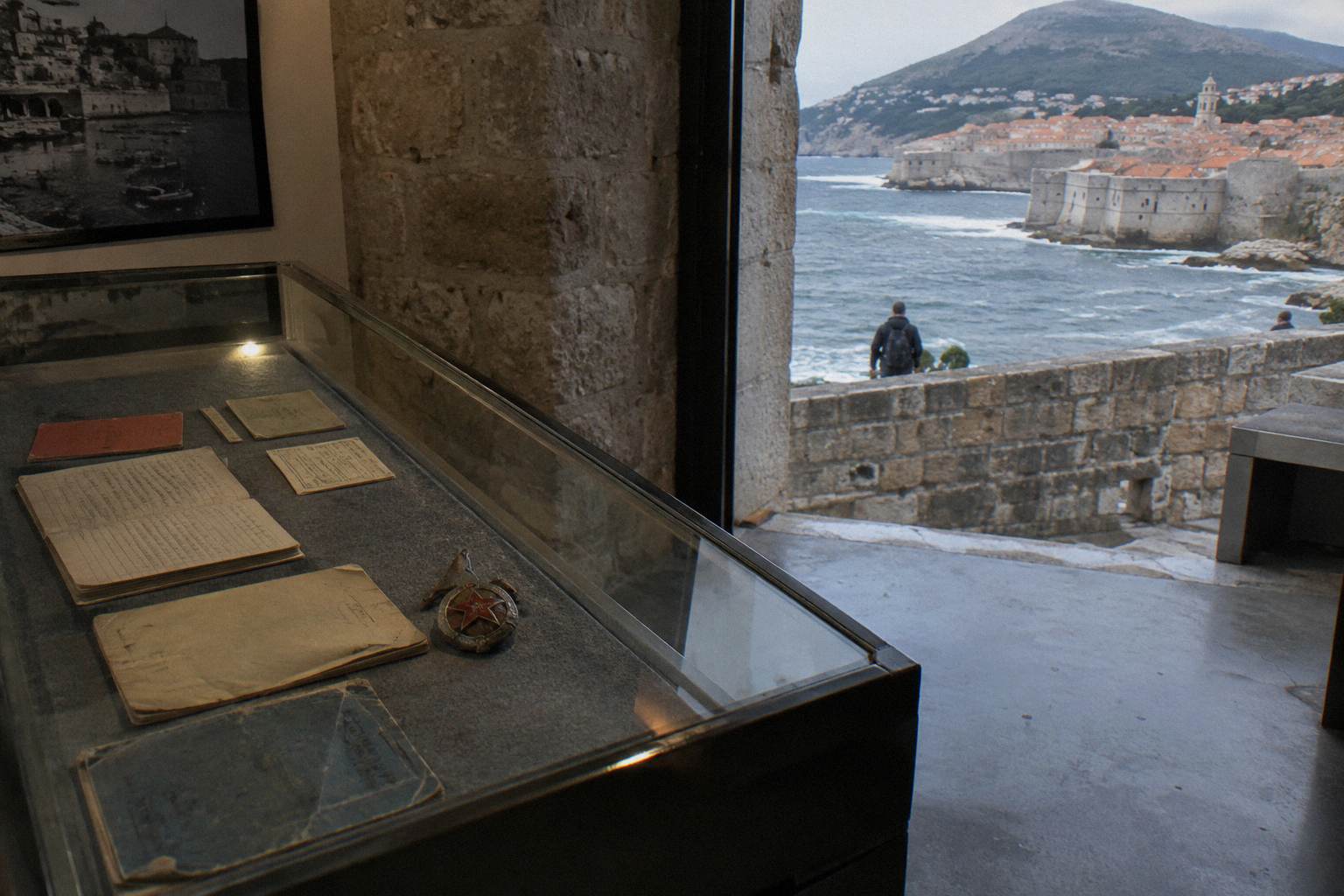
One more distinction worth making before you book anything: Mount Srd, Fort Imperial, the Homeland War Museum, War Photo Limited, the Red History Museum, Kupari and the Belvedere are seven different places, and tours mix and match them very differently. The museum on the hill is in Fort Imperial; the museum's official page lists adult tickets at €5, students €3 and under-7s free, with seasonal hours (roughly 08:30 to 22:00 from April to September, shorter in October and winter, so check the day before you go). None of that is at the Belvedere, and none of it is visible from the Belvedere. Decide whether you want ruins, museums or both, then pick the product that actually lists them.
Which Tours Cover The Belvedere And The War Ruins?
Two roster tours name the Belvedere: the Adriatic Vision private drive (from €150 per person, Belvedere listed as a stop) and the Amico Tours half-day (from €178 per person, Belvedere optional). A third, the INtours private driving tour from €180 per vehicle, covers the siege front lines without the hotel. Anything else you will see advertised as a Belvedere visit should be checked for what it actually promises.
The table above sets out the differences, but a few details only appear in the fine print of each booking page. The Adriatic Vision tour's listed inclusions are the tour guide alone, so museum entries along its route, such as the €5 Homeland War Museum ticket, are extra; it carries free cancellation up to 24 hours ahead and a minimum age of 10. The Amico Tours half-day is the only one of the three with museum entries included for both the Red History Museum and the Homeland War Museum, plus pickup and drop-off in air-conditioned Mercedes vehicles. The INtours drive is per vehicle, not per person, which can make it the economical choice for a family, and it is the only row whose guide credential is a former Croatian soldier who defended the city.
If the Belvedere is really a stand-in for "I want to understand 1991," the private walks deserve a look too. The Private Walk, 2h30 by My Dubrovnik Tours covers the Old Town's war-damage sites from Ploce to Pile with entrance to the Memorial Room of Dubrovnik Defenders included, led by a decorated war veteran who personally witnessed the war; it costs from €100 per person and is rated 5 across 8 reviews, a small number of reviews. The Walk With Vesna, Group Rate by Walk with Vesna is a two-hour private walk from €235 per group with a guide who was in the city during the siege, rated 5 across 5 reviews, again a small pool, with an optional cable car and Fort Imperial extension on request. Neither mentions the Belvedere, but both explain the war that emptied it.
For the shells-and-restoration angle specifically, the site's map of Old Town shell damage walks the streets where the 6 December 1991 shelling left marks still visible in the repaired rooftiles, and the Controversial History Private Walk by ROSOTRAVEL Croatia (two hours, from €129 per person, licensed private guide, free cancellation up to 24 hours ahead) covers those same scars in person. For the Yugoslav side of the ledger, the guide to communism and the Yugoslav era explains what the Red History Museum visit adds.
What Should You Know Before Booking A War Ruins Tour?
Three things: the Belvedere and Kupari are closed to the public, so any tour is an outside-the-fences experience; several of the museums on these routes keep seasonal hours, and War Photo Limited closes entirely from November to March; and the format you pick, private walk versus private drive versus guided group drive, changes the price basis from per person to per group to per vehicle, so the headline numbers are not directly comparable.
Start with seasonality, because it catches people out. War Photo Limited's own visitor page lists hours of 10:00 to 17:00 in April and October, 10:00 to 22:00 from May to September, and closure from November to March, with adult tickets at €10 and student tickets at €6. Both the Adriatic Vision drive and the Amico Tours half-day list War Photo Limited among their stops, which makes those tours seasonal in practice: book one in winter and the gallery leg will not happen as described. The cable car up Mount Srd also runs seasonal hours with some winter closures, at €30 adult return, €17 one way and €8 child return for ages 4 to 12 for a ride of about 4 minutes; check the day before you go, as the operator's timetable page notes fares can change.
| Trip-up | What actually happens |
|---|---|
| Expecting to enter the Belvedere | The ruins are closed; tours stop outside only |
| Booking a War Photo Limited stop in winter | The gallery is closed November to March |
| Comparing €180 per vehicle with €150 per person | Different bases; a vehicle price can cover several people |
| Assuming museum tickets are included | Only the Amico Tours half-day includes both museum entries |
| Trusting Belvedere closing dates online | No closing year or owner history is verified; none is printed here |
Then think about who is traveling. The Adriatic Vision drive sets a minimum age of 10, the Controversial History walk allows ages from 1, and the subject matter of any war tour is heavier than a standard Old Town walk; the site's guide to whether war tours suit kids works through that question in detail. If your dates are fixed and your group is larger, the per-vehicle and per-group rows (INtours from €180 per vehicle, Walk with Vesna from €235 per group) often work out cheaper per head than the per-person rows, though the prices themselves are never directly comparable. And if the siege timeline itself is what you want explained first, the 1991 to 1992 war history timeline gives the verified dates in order.
One habit worth keeping: read the inclusions list on whichever booking page you land on, not just the headline. On the Adriatic Vision drive, the guide is the listed inclusion and museum entries are extra. On the ROSOTRAVEL War Photo Limited, Lovrjenac private walk (three hours, from €140 per person), the gallery tickets are included along with skip-the-line Lovrjenac Fortress entry in the three-hour option. Same war, same city, very different fine print, and the differences only show up when you check availability for a real date.
Where Does The Belvedere Fit In Dubrovnik's War Story?
The Belvedere is a civilian ruin on the eastern edge of a siege whose center of gravity was elsewhere: the Old Town, bombarded worst on 6 December 1991 with about two thirds of its buildings damaged, and Mount Srd, where Fort Imperial now holds the Homeland War Museum. The hotel's role in that story is as evidence of the wider destruction, which is why the tours that pass it always pair it with those two anchors.
Standing outside the shell, the question most people ask is why a coastal hotel ended up in a war at all. The honest scope of this page is limited: Croatia declared independence on 25 June 1991, the siege began on 1 October 1991 and was lifted on 31 May 1992, and the eastern approaches to the city, where the hotel strip sits, were part of the contested ground. The fuller explanation of why the city was targeted is covered in the site's article on why Dubrovnik was bombed in 1991, and the restoration that followed is documented by the city's encyclopedic record, but for the Belvedere itself, damage in 1991 is the beginning and the end of what can be stated.
That is why the recommended route through this material is layered. Read the timeline. Walk the Old Town damage sites with the My Dubrovnik Tours private walk. Ride up to Fort Imperial, whether on the €30 return cable car or on a drive like the ROSOTRAVEL Homeland War Museum with Transport (three hours with private transport and skip-the-line tickets, from €268). Then let a drive pass the eastern hotel strip so the scale of the destruction outside the walls registers. The Belvedere makes more sense as the last stop of that sequence than as a destination in its own right.
The Kupari question travels with the Belvedere question, and it has a cleaner answer: the Grand Hotel is protected, the rest of the ruins were largely demolished in 2025, the site is under redevelopment and there is no public access. The site's coverage of why Kupari is still abandoned and what happened to the Belvedere dig into both. For the Belvedere, the story stays simple: an abandoned Yugoslav-era hotel, damaged in 1991, empty since, closed to the public, and best seen from the road with a guide who can tell the history the empty building no longer shows.
Two practical notes help when planning that layered route. First, the Homeland War Museum at Fort Imperial has hours that shift with the seasons: 08:30 to 22:00 from April to September, 09:00 to 20:00 in October, and 09:00 to 17:00 from November to March. The official site, mdrd.hr, carries the current schedule. The adult ticket is 5 EUR, which matters when comparing tours: on the private driving tour listed above, the museum ticket is paid extra rather than included, so budget it on top of the quoted price. Croatia has used the euro since 1 January 2023, so no currency conversion is needed at the ticket window.
Second, be aware that some war-history itineraries in the city also include War Photo Limited, and that venue is seasonal: it is closed entirely from November to March. If a tour description mentions it and you are visiting in winter, check what substitutes before booking.
One more point on Kupari, since the two sites are often confused on tours: it began life as a Yugoslav People's Army military resort, and it was plundered and damaged in 1991 rather than merely abandoned. That different origin is part of why its fate diverged, with demolition and redevelopment following, while the Belvedere still stands as it was left. Either way, both are seen from the road or a viewpoint only, and no reputable tour will promise entry to either one.
Common Questions About Hotel Belvedere Dubrovnik
What Is Hotel Belvedere Dubrovnik?
An abandoned Yugoslav-era hotel on Dubrovnik's eastern approaches, damaged in 1991 during the siege period and empty since. Its ruins are closed to the public.
Why Did Hotel Belvedere Close?
The verified cause is damage in 1991. No verified closing year, ownership history or redevelopment plan exists that this site can print, and rumors to the contrary should be treated with caution.
Can You Go Inside Hotel Belvedere?
No. The ruins are closed to the public. Guided drives such as the Adriatic Vision private war and heritage tour list the hotel as an outside stop only, from €150 per person.
Which Tours Include The Belvedere?
The Private War And Heritage Tour Of Mount Srđ by Adriatic Vision lists Hotel Belvedere among its stops, and the Half-Day Yugoslav War History by Amico Tours lists it as an optional stop. Both are driving tours viewing the site from outside.
Is Kupari The Same As The Belvedere?
No, they are different places. Kupari is a former Yugoslav People's Army resort whose ruins were largely demolished in 2025, with the protected Grand Hotel excepted; the Belvedere is a separate hotel ruin nearby.
Is War Photo Limited Open In Winter?
No. The gallery is closed November to March and open April to October with seasonal hours, which makes tours that include it, including the Belvedere drives, seasonal products.