Kupari Abandoned Hotels: What Is Left And How To See Them Safely
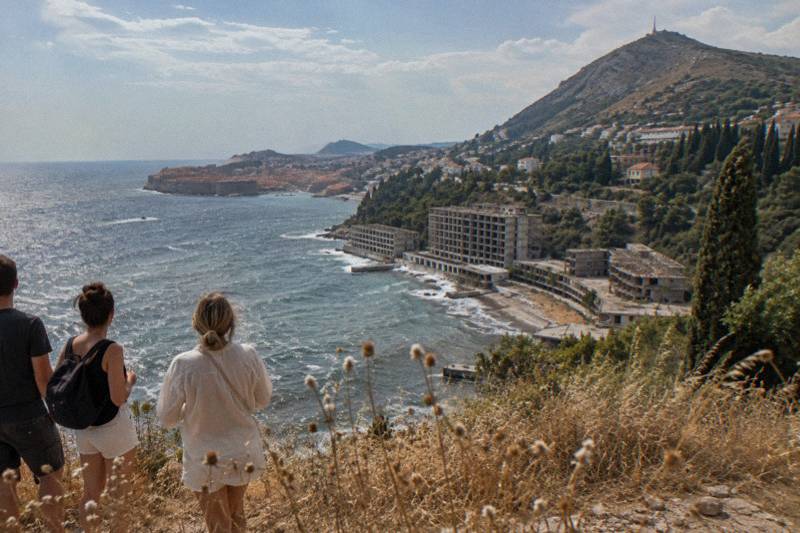
Kupari was once a holiday resort for the Yugoslav People's Army, nicknamed Tito's Hawaii. Looted and damaged in 1991, its ruins stood for three decades before most were demolished in 2025. The site is closed and under redevelopment, so today you see it from the road or a viewpoint, not inside.
Short answer
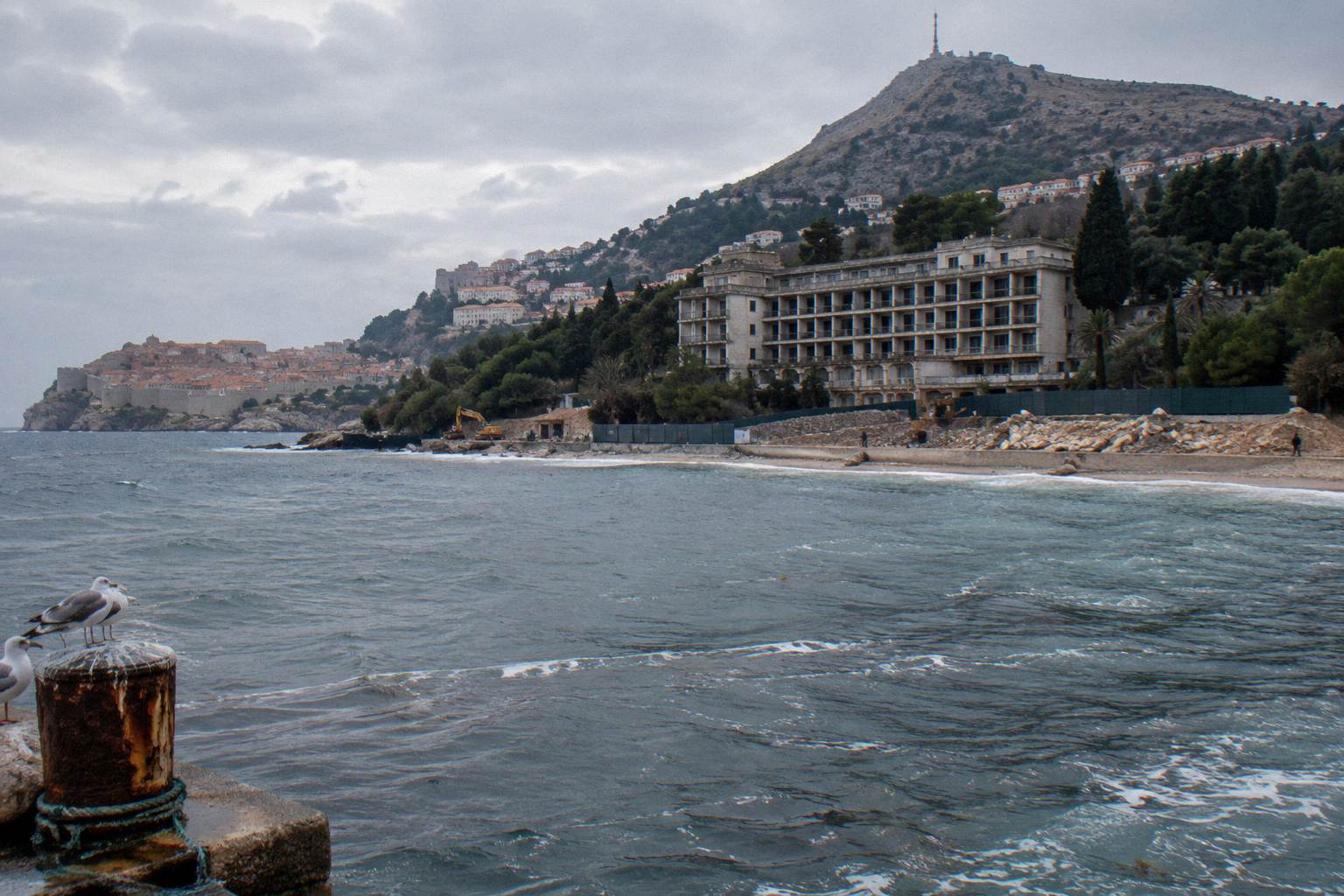
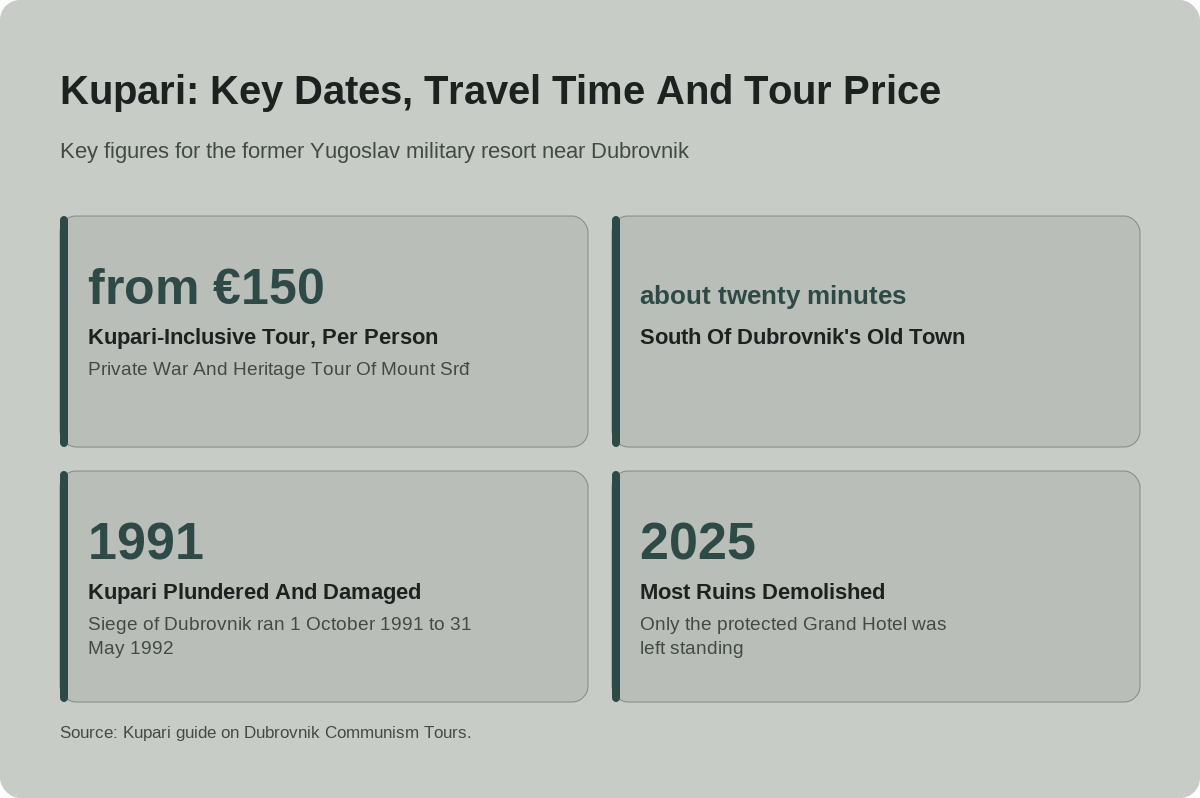
The Kupari hotel ruins near Dubrovnik are closed to the public. Most of the abandoned hotels were demolished in 2025, the protected Grand Hotel excepted, and the site is being redeveloped as a luxury resort. You cannot enter, but several Dubrovnik war tours include a viewpoint stop, from around €150 per person.
This page sits within the site's wider coverage of Dubrovnik's war and Yugoslav-era history at Dubrovnik Communism Tours; for the broader 1991 story, start with the siege of Dubrovnik explained in plain terms.
| Quick Fact | Detail |
|---|---|
| What Kupari was | Holiday resort of the Yugoslav People's Army (JNA), nicknamed "Tito's Hawaii" |
| What happened in 1991 | Plundered and damaged |
| What happened in 2025 | Ruins largely demolished, protected Grand Hotel excepted |
| Current status | Under redevelopment, no public access |
| How you see it today | From the road or a viewpoint on a war-history tour |
| Cheapest Kupari-inclusive tour | Private War And Heritage Tour Of Mount Srđ (Adriatic Vision), from €150 per person |
| Croatia's currency | The euro, since 1 January 2023 |
What Were The Kupari Hotels And Why Are They Abandoned?
The Kupari hotels were built as a military holiday resort for the Yugoslav People's Army, the force of socialist Yugoslavia, and were nicknamed "Tito's Hawaii" for their beachside setting. Croatia was one of the republics of socialist Yugoslavia, which Josip Broz Tito led after the Second World War. The resort was plundered and damaged in 1991, after Croatia declared independence on 25 June 1991, and the buildings stood open to the elements for over thirty years afterwards.
The story begins with Yugoslavia itself. Croatia was one of the republics of socialist Yugoslavia, and the Yugoslav People's Army ran holiday facilities for its personnel and their families at several coastal locations. Kupari, in a quiet bay between Dubrovnik and Mlini, was the showpiece: a cluster of grand hotels and villas around a pebbly beach, reserved for the army and popularly nicknamed "Tito's Hawaii". That nickname, and the resort's military ownership, are the two facts that make Kupari a genuinely Yugoslav-era site rather than simply an abandoned hotel complex. If you want the wider picture of life in socialist Croatia, the site's guide to everyday life in socialist Croatia covers the domestic side of the same period.
Then came 1991. Croatia declared independence on 25 June 1991, and the siege of Dubrovnik ran from 1 October 1991 to 31 May 1992, when it was lifted. Kupari was plundered and damaged in 1991. Unlike the Old Town, which was restored after about two thirds of its buildings were damaged, Kupari was never rebuilt. The hotels lost their roofs, their interiors, and eventually their windows, and for three decades they stood as a fenced-off ruin between the coastal road and the sea.
That long afterlife is what most photographs of "abandoned hotels in Dubrovnik" actually show: images from the years between 1991 and 2025, when the empty hotels were visible from the road and occasionally entered without permission. Those images are now out of date, which is the single most important thing to understand before you plan a visit.
Can You Visit The Kupari Ruins Today?
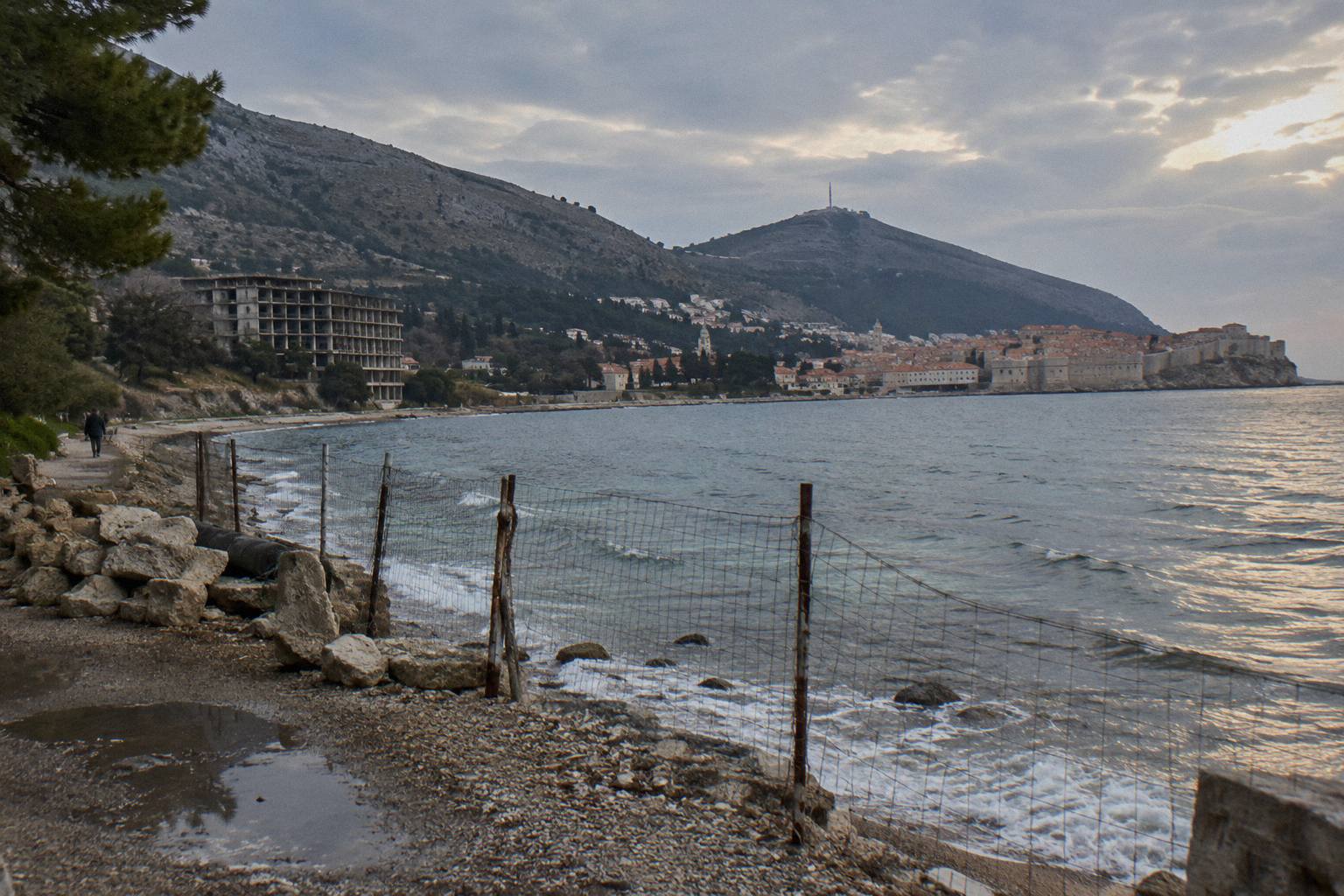
This is where most older blog posts and videos mislead people. For years, urban exploration content showed travellers walking through the Kupari hotels, and that imagery still circulates widely. It no longer matches reality on two counts. First, the site is being redeveloped and access is closed. Second, most of the buildings themselves no longer exist: the ruins were largely demolished in 2025, with only the protected Grand Hotel excepted, as local reporting on the Kupari redevelopment documents. The transformation from war ruins to a luxury resort project is underway, and a construction site is not a tourist attraction.
So what does a visit actually look like now? In practice, "seeing Kupari" means a stop on the coastal side of the bay or a viewpoint on the slopes above, where a guide explains what the resort was, what happened to it in 1991, and what is being built in its place. That is how the one roster tour that names Kupari words its own itinerary: the Private War And Heritage Tour Of Mount Srđ by Adriatic Vision lists the Hotel Belvedere and Kupari Resort among its stops, described from the road or a viewpoint as its listing words it, never as an entry. For the background on the neighbouring ruin that tour also covers, see the site's guide to the Hotel Belvedere and its current state.
There is a genuine reason to make the stop even without entry. Kupari is the clearest physical illustration in the Dubrovnik area of two stories at once: the Yugoslav military's privileged holiday culture, and the long unfinished aftermath of 1991. A viewpoint stop with a guide who explains both takes perhaps fifteen or twenty minutes and pairs naturally with the region's other war sites, all of which are covered in the site's overview of what a Dubrovnik war tour actually shows you.
For most travellers, the practical choice is whether to visit Kupari as part of a wider driving day. Only the featured Private War And Heritage Tour Of Mount Srđ lists Kupari on its route; the Half-Day Yugoslav War History tour by Amico Tours (museum entrances included, optional Belvedere Hotel ruins stop) and the Dubrovnik Panorama And War Bunkers Tour by Dubrovnik Tours & Transfers cover the wider war story without a Kupari stop. Compare formats and prices before deciding.
What Is Left Of Kupari After The 2025 Demolition?
Almost all of the hotel ruins at Kupari were demolished in 2025. The one survivor is the Grand Hotel, a protected building whose facade was spared, and the rest of the former resort grounds are a construction site for a new luxury development. The beach, the bay and the Grand Hotel's silhouette are still visible from the road and from viewpoints above, which is what tours now show.
The detail matters because so much of what circulates online describes five or six roofless hotels standing in a row. That was true until recently. It is no longer. The ruins were largely demolished in 2025, the protected Grand Hotel excepted, and the redevelopment of the site is a large-scale hotel project rather than a restoration of the old buildings. Nothing of the interior of the resort survives to visit, and nothing of the site is open to walk.
What the demolition does not erase is the historical significance of the place. Kupari remains the most concrete local link to the Yugoslav People's Army's presence on this coast, and the fact that the resort was plundered and damaged in 1991 places it squarely within the siege period, which ran from 1 October 1991 to 31 May 1992. The heaviest shelling of Dubrovnik's Old Town came on 6 December 1991, an event the city of Dubrovnik documents on its own history pages. Kupari's story runs parallel: damaged in the same conflict, but never restored.
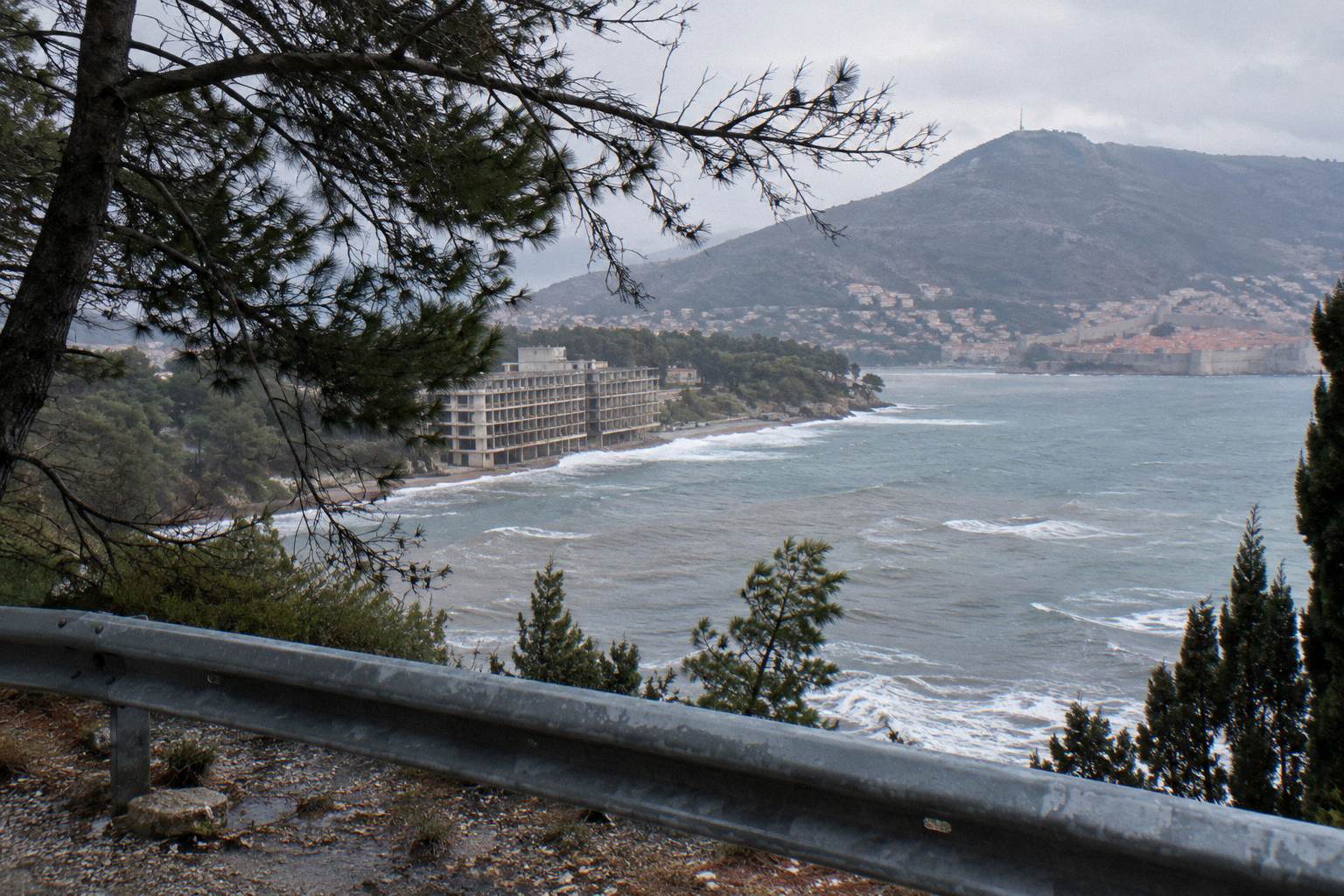
The Old Town comparison is worth pausing on. The UNESCO World Heritage Centre's record shows Dubrovnik's Old Town, inscribed in 1979, placed on the World Heritage in Danger list from 1991 to 1998, and about two thirds of its buildings were damaged before the restoration that returned it to its pre-war appearance. Kupari had no such restoration. Seeing both in one day, the rebuilt Old Town in the morning and the Kupari bay from a viewpoint in the afternoon, shows the two different fates of damaged places in this small region.
For travellers whose interest is specifically the Yugoslav side of the story, the museum that covers it properly is the Red History Museum in Dubrovnik, dedicated to everyday life in communist Yugoslavia. The Red History Museum Visit by the museum itself costs from €10 per person, includes admission, and is the most reviewed experience on this site, rated 4.8 across 206 reviews. It pairs naturally with a Kupari viewpoint stop: one explains the system that built the resort, the other shows what became of it.
Which Tours Include Kupari And How Do They Show It?
One tour on this site names Kupari directly: the Private War And Heritage Tour Of Mount Srđ by Adriatic Vision, from €150 per person, a 4 to 5 hour private driving tour that also visits Mount Srd, the fort war museum, the Old Town memorials and War Photo Limited. Several other tours cover the same war story without the Kupari stop, and the right choice depends on whether the abandoned hotels matter enough to shape the whole day.
Start with the tour that includes it. The Private War And Heritage Tour Of Mount Srđ by Adriatic Vision is a private driving tour, priced from €150 per person, running 4 to 5 hours in total, with a minimum age of 10. Its stops run from Mount Srd and the Imperial Fortress war museum down through the Hotel Belvedere and Kupari Resort to the Old Town memorials and War Photo Limited. Two cautions apply to that itinerary. The Kupari and Belvedere stops are viewpoint stops, described from the road as the listing words it, with no entry to either site. And War Photo Limited is seasonal: it is open April and October from 10:00 to 17:00 and May to September from 10:00 to 22:00, but closed November to March, as its own visitor page states, so in winter that portion of the tour changes. You can check availability alongside the site's full guide to Mount Srd's war history.
If you would rather have a guide with a personal connection to the war and can skip Kupari itself, the alternatives split by format. The Private Walk, 2h30 by My Dubrovnik Tours is the walking option: a 2 hours 30 minutes private walk from €100 per person, led by a decorated war veteran who personally witnessed the war, covering the Old Town's war-damage sites from Ploce to Pile and including entrance to the Memorial Room of Dubrovnik Defenders. It is rated 5 across 8 reviews, a small number of reviews. Free cancellation applies within 24 hours.
The driving alternative is the Driving Tour, Per Vehicle by INtours Dubrovnik, from €180 per vehicle, a 2 hour private drive to the Homeland War Museum in Fort Imperial and the front-line defence points of the siege, guided by a former Croatian soldier who defended Dubrovnik. Museum entry is not included and costs EUR 5 per adult at the museum. The museum's own official site lists seasonal hours, 1 April to 30 September 08:30 to 22:00, October 09:00 to 20:00 and 1 November to 31 March 09:00 to 17:00, so check the day before you go.
Finally, for the shared rather than private format, two group options complete the picture. The Half-Day Yugoslav War History tour by Amico Tours, from €178 per person for 4 hours, includes pickup, entrance to both the Red History Museum and the Homeland War Museum, and an audio guide in six languages, though it does not stop at Kupari. And the Red History Museum Visit, from €10 per person for 50 minutes to 1 hour 35 minutes, is the museum visit on its own, rated 4.8 across 206 reviews. Neither is a Kupari tour; both are cheaper ways to absorb the same history if the viewpoint stop is not essential to you. If you are weighing the two main formats against each other, the site's comparison of walking versus driving war tours lays out the trade-offs.
What Can You Combine With Kupari On The Same Day?
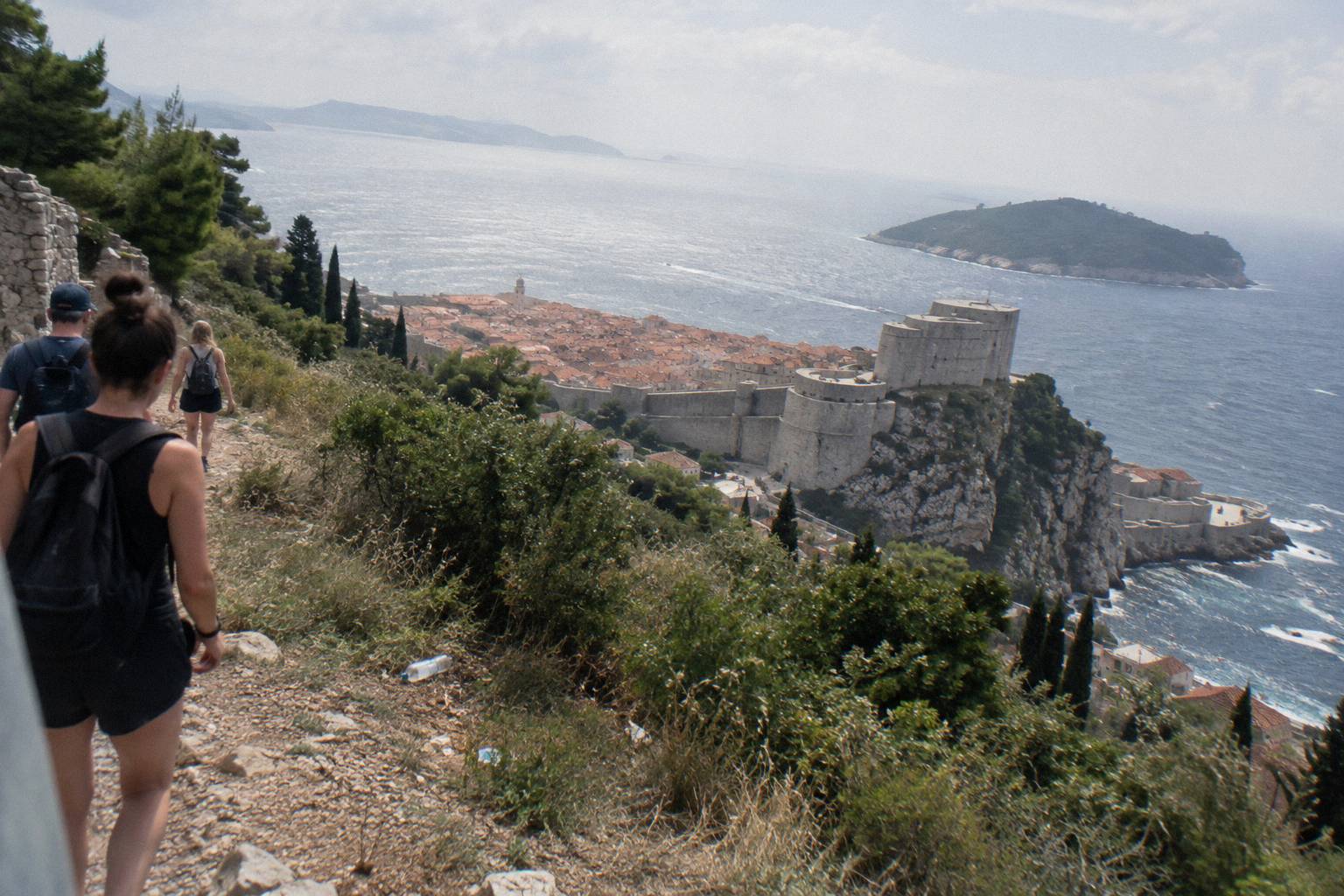
Kupari's viewpoint stop fits naturally into a day built around Mount Srd and its Homeland War Museum in Fort Imperial, the deepest war-history visit in the area, plus the Red History Museum for the Yugoslav background. The Old Town's war-damage walking route and, from April to October, War Photo Limited complete the set. A private driving tour ties these together; on your own, expect a full day by car.
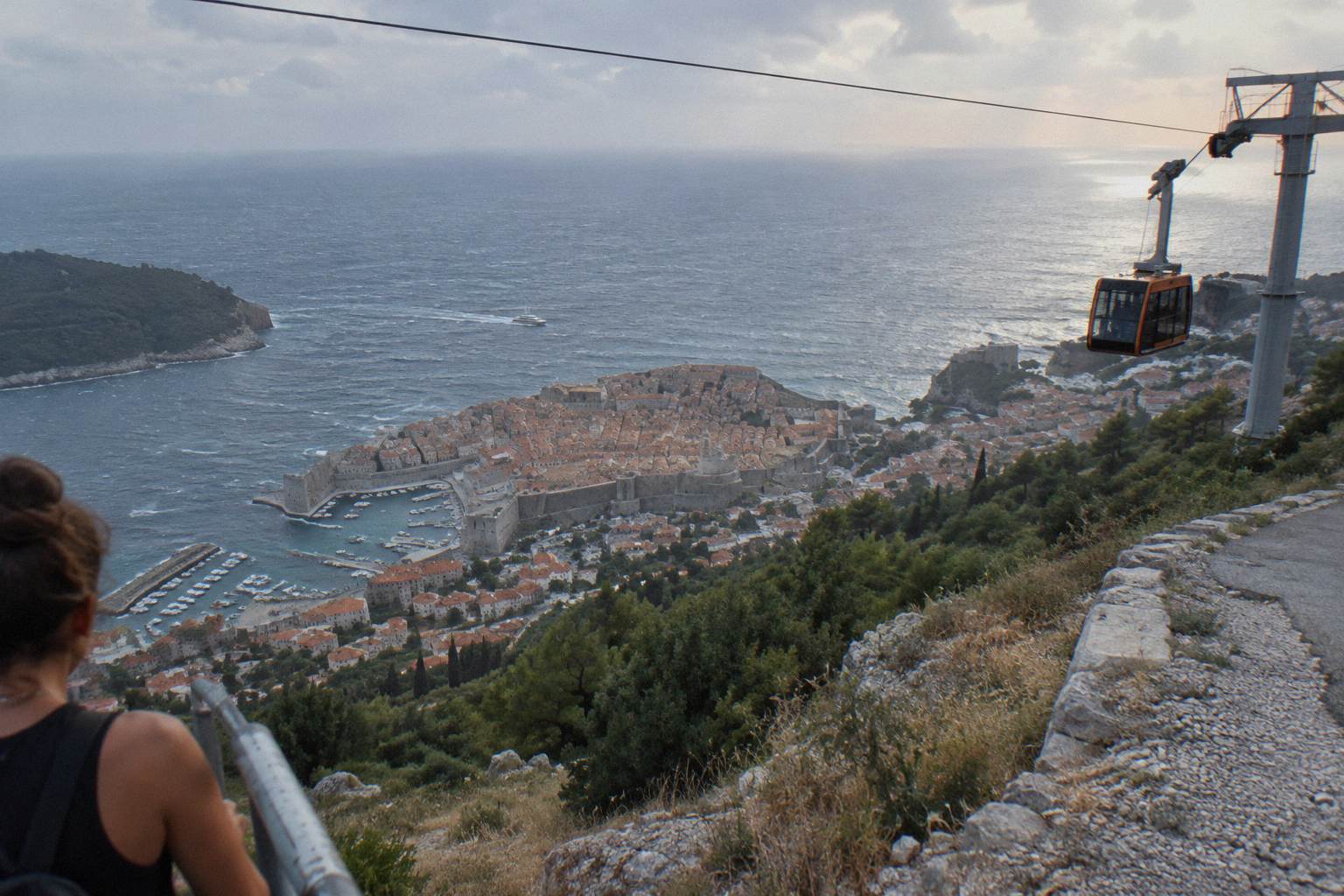
The logical anchor is Mount Srd, the hill above Dubrovnik where Fort Imperial houses the Homeland War Museum. Museum entry is EUR 5 for adults, EUR 3 for students and free for children under 7, with seasonal hours: check the day before you go. You can drive up or take the Dubrovnik Cable Car, which costs EUR 30 for an adult return, EUR 17 one way and EUR 8 for a child aged 4 to 12 return, with a ride of about 4 minutes and seasonal hours that include some winter closures; the cable car's own timetable page is the place to confirm fares, which change. The site's guide to whether Mount Srd is worth the trip covers that decision in full.
The pattern that works: Mount Srd and the museum in the morning, the Old Town's war-damage sites and memorials around midday, then the short drive south to the Kupari bay in the afternoon, with the Red History Museum filling any indoor gap. Several ready-made tours cover the Mount Srd and city parts of this circuit, though only the Adriatic Vision drive lists Kupari itself. The Half-Day Yugoslav War History tour by Amico Tours covers the Red History Museum, Fort Imperial and the Ombla River source in 4 hours from €178 per person with pickup included and both museum entrances covered, adding optional Belvedere Hotel ruins and War Photo Gallery stops. The Dubrovnik Panorama And War Bunkers Tour by Dubrovnik Tours & Transfers, from €200 per group for 2.5 hours with pickup included, takes in Mount Srd, the Franjo Tudjman Bridge, the Ombla River and historic war bunkers. And the Homeland War Museum, Transport tour by ROSOTRAVEL Croatia, from €268, delivers you to Fort Imperial with skip-the-line tickets and private transport in its 3-hour option.
| Tour | Operator | Format and length | From | Museums included |
|---|---|---|---|---|
| Private War And Heritage Tour Of Mount Srđ | Adriatic Vision | Private drive, 4 to 5 hours | €150 per person | Museum tickets not listed among inclusions |
| Half-Day Yugoslav War History | Amico Tours | Guided drive, 4 hours, pickup included | €178 per person | Red History Museum and Homeland War Museum |
| Dubrovnik Panorama And War Bunkers Tour | Dubrovnik Tours & Transfers | Private drive, 2.5 hours, pickup included | €200 per group | None included |
| Homeland War Museum, Transport | ROSOTRAVEL Croatia | Private drive, 3 hours | €268 | Skip-the-line Homeland War Museum tickets |
| Driving Tour, Per Vehicle | INtours Dubrovnik | Private drive, 2 hours | €180 per vehicle | Not included, EUR 5 per adult at the museum |
One scheduling note governs the whole plan: War Photo Limited, the war photography gallery in the Old Town, is closed November to March, so any itinerary or tour that includes it is effectively seasonal. In summer it is open daily 10:00 to 22:00 from May to September, with adult tickets at EUR 10 and student tickets at EUR 6. If your trip falls in the closed months, substitute more time at the Red History Museum, which focuses on the Yugoslav era that produced Kupari in the first place. The site's visitor guide to War Photo Limited has the full detail.
What Mistakes Do Visitors Make About Kupari?
The three common mistakes are planning to enter the ruins, trusting pre-2025 photos and videos, and assuming any Dubrovnik war tour includes the stop. The site is closed and under redevelopment, most of the buildings no longer exist, and only one tour on this site names Kupari in its itinerary. Checking the itinerary wording before booking is what separates a day that includes the bay from one that does not.
The first mistake is the safety-relevant one. Some older content frames Kupari as an urban exploration destination, and some visitors still arrive expecting to walk through the hotels. The site is closed to the public, actively under construction, and most of what would have been explored has been demolished. A construction site is not a place to wander, and no reputable tour will take you inside. The correct expectation is a viewpoint or roadside stop with commentary.
The second mistake is temporal. Search results for the abandoned hotels are dominated by images taken when the roofless hotels still stood in full. Any photo, video or blog post that shows travellers among the ruins predates the 2025 demolition. Nothing is wrong with those images as history, but they cannot be used to plan a 2026 visit, and tours that still advertise Belvedere or Kupari ruins describe them from the outside only.
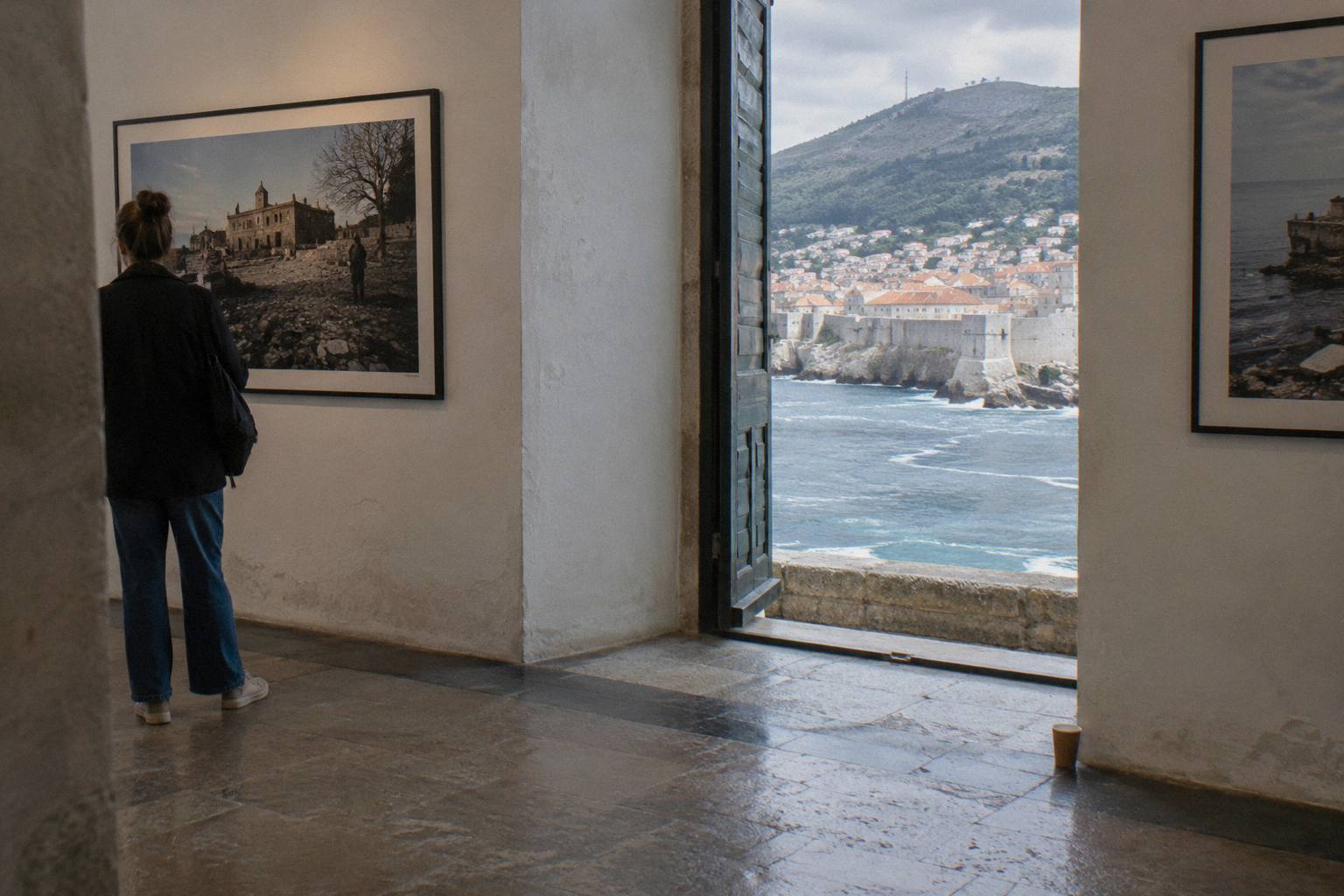
The third mistake is assuming coverage. Kupari appears in exactly one itinerary on this site, the Private War And Heritage Tour Of Mount Srđ by Adriatic Vision. The other nine tours tell the same regional story through the Old Town, Mount Srd and the museums without passing the bay. If Kupari matters to you, book the tour that lists it, or plan a self-driven pass along the coastal road with the understanding that you will see a bay and a facade, not a ruin field. For the fuller question of how long any of this takes, the site's answer on Dubrovnik war tour lengths helps with scheduling.
How Does Kupari Compare With Dubrovnik's Other War And Yugoslav Sites?
Kupari is the only site in the area that tells the Yugoslav military's story through a place, but it is the least visitable: closed, mostly demolished and viewable only from outside. The Homeland War Museum on Mount Srd is the deepest interior experience at EUR 5 entry, the Red History Museum covers communist Yugoslavia properly from €10, and the Old Town walking routes show the restored shell damage. Kupari is the supplement to those, not a substitute.
Each site answers a different question. If your question is "what was socialist Yugoslavia actually like?", the Red History Museum in Dubrovnik is the answer, an interactive museum with an augmented reality app covering everyday life in communist Yugoslavia, open on its own schedule which you should check directly, and included in the Red History Museum Visit from €10 per person, rated 4.8 across 206 reviews.
If your question is "what happened to Dubrovnik in 1991 and 1992?", the answers are the Homeland War Museum in Fort Imperial on Mount Srd (EUR 5 adult entry, seasonal hours, check the day before you go), the Old Town war-damage walks, and the War Photo Limited gallery, seasonal from April to October. The city's record of the destruction and restoration of the Old Town shows why the city looks intact today while Kupari does not.
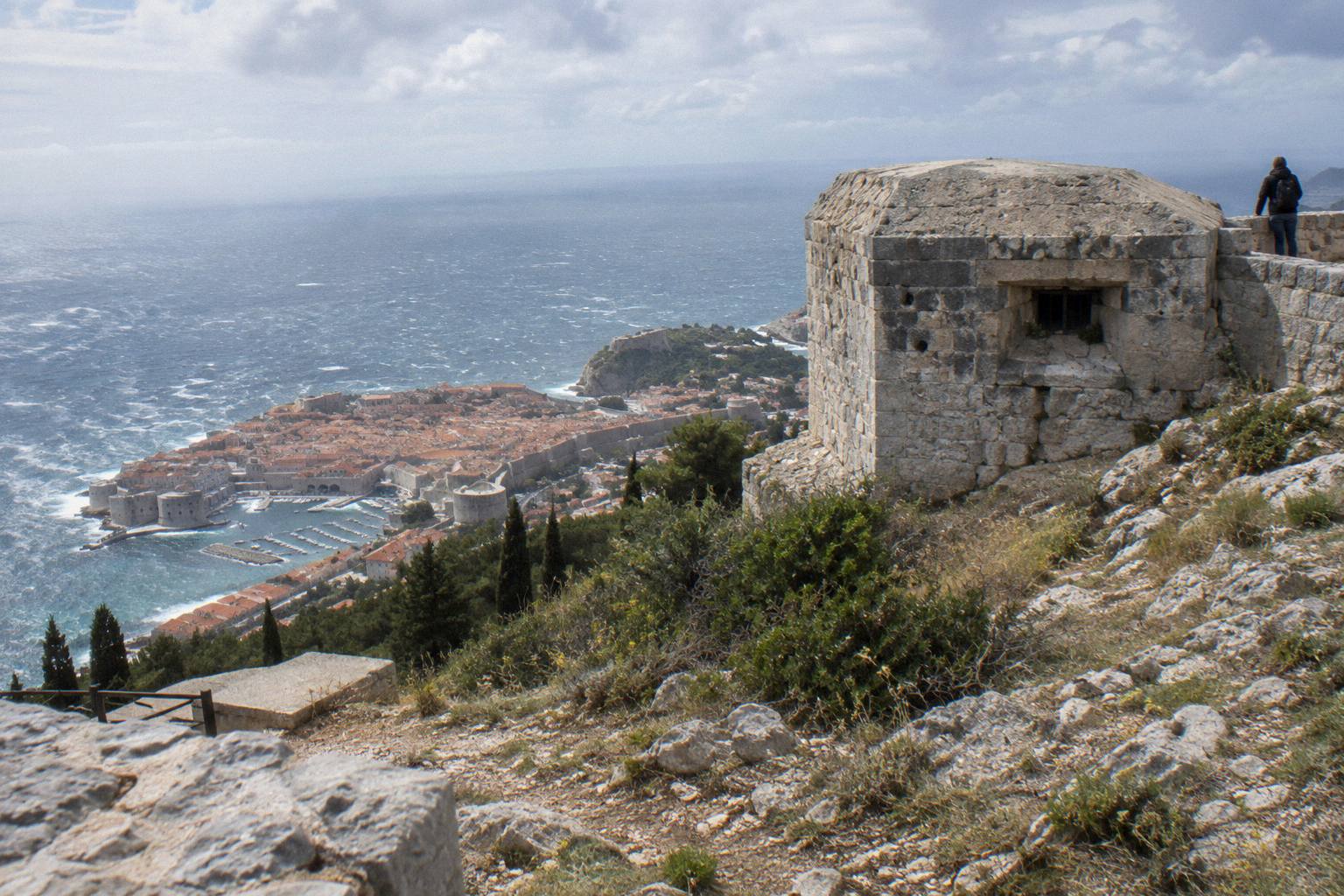
And if your question is "what happened to the Yugoslav army's own places after 1991?", Kupari is the answer, and only Kupari. The bay shows a resort built by and for the military of socialist Yugoslavia, damaged in 1991, left ruined for a generation, and now being rebuilt as something entirely different. That arc, from military privilege to abandonment to luxury redevelopment, is the most compressed history lesson on this coast, and you read it from a viewpoint in a few minutes with a guide who knows what to point at.
| Site | What it tells you | Access | Cost to visit independently |
|---|---|---|---|
| Kupari | The Yugoslav army's resort, its 1991 fate, its redevelopment | Viewpoint only, site closed | Free from the road |
| Homeland War Museum, Fort Imperial | The 1991-92 siege in the fort above the city | Interior museum | EUR 5 adult, EUR 3 student, under 7 free |
| Red History Museum | Everyday life in communist Yugoslavia | Interior museum | From €10 with the guided walk, admission included |
| War Photo Limited | War photography, rotating exhibitions | Interior gallery, closed Nov to Mar | EUR 10 adult, EUR 6 student |
| Old Town war-damage sites | The shelling of 6 December 1991 and the restoration | Streets and memorials, walkable | Free to walk, tours from €100 per person |
The practical conclusion: build your day around the museums and the Old Town, and treat Kupari as the half-hour that ties the Yugoslav story to the war story. The three tours below each make a sensible spine for that day, whether you want the Kupari stop itself, the two-museum half day with pickup, or the panorama drive with the war bunkers. Check availability for your dates before building the rest of the itinerary around one of them.
For the travellers who ask whether any of this suits children, the site's guide to whether a Dubrovnik war tour is suitable for kids addresses that question directly, noting among other things the minimum age of 10 on the Kupari-inclusive tour.
Common Questions About The Kupari Abandoned Hotels
Can You Go Inside The Kupari Hotels?
No. The site is closed to the public and under redevelopment, and most of the hotel ruins were demolished in 2025 with only the protected Grand Hotel left standing. Tours that include Kupari describe it from the road or a viewpoint, never as an entry.
What Happened To The Kupari Hotels In 1991?
The resort, which belonged to the Yugoslav People's Army, was plundered and damaged in 1991, after Croatia declared independence on 25 June 1991 and during the period of the siege of Dubrovnik, which ran from 1 October 1991 to 31 May 1992. Unlike Dubrovnik's Old Town, it was never restored.
Which Dubrovnik Tours Include Kupari?
One tour on this site names it: the Private War And Heritage Tour Of Mount Srđ by Adriatic Vision, from €150 per person, a 4 to 5 hour private driving tour that also covers Mount Srd, the fort war museum, the Old Town memorials and War Photo Limited. The Kupari stop is a viewpoint stop as the listing words it.
Is Kupari The Same As The Hotel Belvedere?
No. They are different places. Kupari is the former Yugoslav military resort bay; the Hotel Belvedere is a separate abandoned hotel nearby. Both are closed to the public, and the tour that lists them describes both from the road or a viewpoint.
What Does It Cost To See Kupari?
Seeing the bay from the road costs nothing on its own. The tour that includes the stop, the Private War And Heritage Tour Of Mount Srđ by Adriatic Vision, starts from €150 per person. Museum entries elsewhere on a Kupari day run from EUR 5 at the Homeland War Museum to EUR 10 at War Photo Limited.
Is Kupari Worth Visiting If You Cannot Enter?
For most visitors, yes, as part of a wider war-history day rather than a destination in itself. It is the only local site that shows the Yugoslav military's story through a place, and a short viewpoint stop pairs naturally with the Homeland War Museum on Mount Srd and the Red History Museum in the city.