Siege Of Dubrovnik 1991-1992: What Happened And Where To See It
The siege of Dubrovnik lasted eight months, from October 1991 to the end of May 1992. Here is what the verified record says, and how to see the places it touched.
Short answer
The siege of Dubrovnik began on 1 October 1991 and was lifted on 31 May 1992. The heaviest shelling of the Old Town came on 6 December 1991, and about two thirds of its buildings were damaged. The Homeland War Museum on Mount Srd costs EUR 5 for adults and tells the story in Fort Imperial.
In short: The siege of Dubrovnik ran from 1 October 1991 until it was lifted on 31 May 1992, with the heaviest shelling of the Old Town on 6 December 1991. About two thirds of the Old Town's buildings were damaged, and the city, inscribed by UNESCO in 1979, sat on the World Heritage in Danger list from 1991 to 1998. Croatia had declared independence on 25 June 1991, four months before the siege began. Today you can read that history in the restored rooftops of the Old Town, at the Homeland War Museum in Fort Imperial on Mount Srd, and at the Red History Museum. This guide sticks to the verified record and then points you to the tours that actually visit these places.
For a wider view of how these trips work in practice, see the guide to what a Dubrovnik war tour shows you.
| Quick Facts | Detail |
|---|---|
| Siege dates | 1 October 1991 to 31 May 1992 (lifted) |
| Heaviest shelling of the Old Town | 6 December 1991 |
| Old Town damage in 1991-92 | About two thirds of buildings damaged |
| Old Town UNESCO status | Inscribed 1979; World Heritage in Danger list 1991 to 1998 |
| Croatian independence declared | 25 June 1991 |
| Homeland War Museum (Fort Imperial, Mount Srd) | Adult EUR 5, students EUR 3, under 7 free |
| Cable car to Mount Srd | Adult return EUR 30, one way EUR 17, ride about 4 minutes |
| War Photo Limited | Adult EUR 10, student EUR 6; closed November to March |
What Was The Siege Of Dubrovnik?
Croatia was one of the republics of socialist Yugoslavia, the federation that Josip Broz Tito led from the end of the Second World War until his death. When Croatia declared independence on 25 June 1991, Dubrovnik found itself at the southern edge of the new state, and the siege followed that autumn. The city's own account of the destruction and the restoration that came after it is published by the City of Dubrovnik on its page on the destruction of the Old City, and that record is the basis for everything on this page.
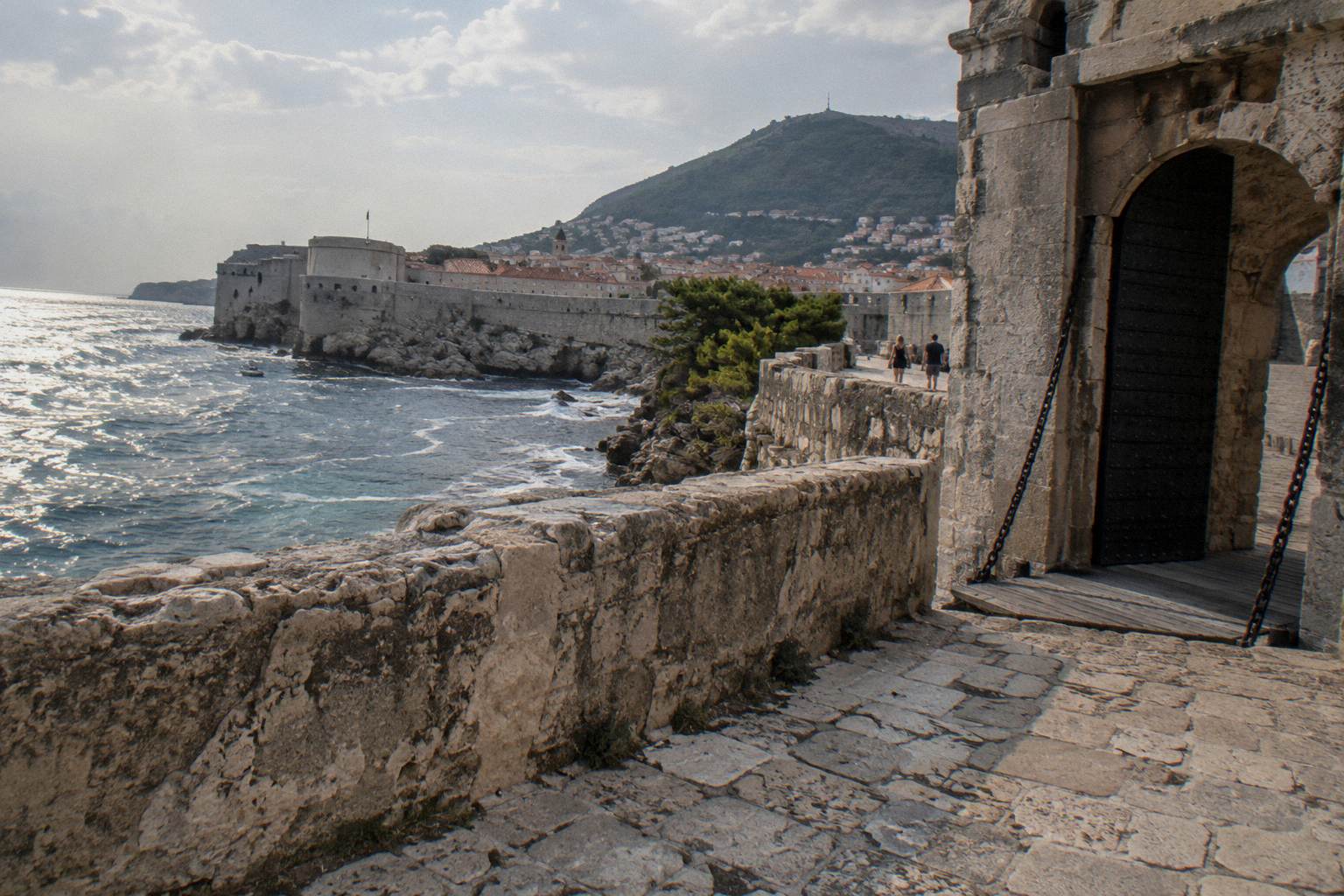
The siege is the central event in the city's modern history, and it shaped what you see when you walk through the Old Town today. The marble streets look centuries old, and most of them are, but many of the terracotta rooftiles above your head are younger than they look. Restoration work continued for years after 1992, and the city documents that process carefully because the Old Town had been inscribed as a UNESCO World Heritage Site in 1979, before the war.
For a fuller background on the Yugoslav period that preceded all of this, the page on communism and the Yugoslav era in Croatia covers the socialist decades, and the explanation of why Croatia split from Yugoslavia handles the political breakup in more depth. This page stays with the siege itself: the dates, the damage, and the places where you can see and understand it now.
How Badly Was The Old Town Damaged In 1991?
About two thirds of the Old Town's buildings were damaged during 1991 and 1992, with the worst damage on 6 December 1991, the day of the heaviest shelling. UNESCO placed Dubrovnik on its World Heritage in Danger list in 1991 and kept it there until 1998. The restoration that followed repaired the city's rooftops and facades, which is why the damage is now something you have to be shown rather than something that announces itself.
The numbers matter, but they only make sense with the UNESCO context. Dubrovnik's Old Town was inscribed on the World Heritage List in 1979, recognising it as one of the best-preserved medieval walled cities in Europe. When the war came, the damage to a site of that standing drew international attention, and UNESCO's own record shows the city on the List of World Heritage in Danger from 1991 until 1998, after restoration work was well underway.
The damage was spread across the Old Town rather than concentrated in one corner, which is why a guided walk adds so much here. Left to your own eyes, you will see a beautifully maintained old city. With someone pointing, you start to notice the newer rooftiles among the old ones, the repaired sections of wall, and the places where restoration had to rebuild rather than patch.
The Siege Of Dubrovnik Wikipedia overview and the City of Dubrovnik's documentation agree on the frame: siege from 1 October 1991, lifted 31 May 1992, heaviest shelling of the Old Town on 6 December 1991. This page deliberately stops there. Casualty figures, unit names and the politics of the conflict are not part of the verified record used here, and you will not find speculation standing in their place. For the detailed chronology, the Dubrovnik war history timeline walks through the verified dates month by month, and the guide to war damage in the Old Town maps where the shelling landed.
| What the record shows | Date or figure |
|---|---|
| Croatian independence declared | 25 June 1991 |
| Siege begins | 1 October 1991 |
| Heaviest shelling of the Old Town | 6 December 1991 |
| Siege lifted | 31 May 1992 |
| Old Town buildings damaged, 1991-92 | About two thirds |
| UNESCO World Heritage inscription | 1979 |
| World Heritage in Danger listing | 1991 to 1998 |
Seeing those places with a guide is the difference between walking past a street and understanding what happened on it. The three options below cover the two main approaches: a private Old Town walk focused on restoration traces, a private walk led by a decorated war veteran, and a driving tour up to Fort Imperial.
Where Can You See The Siege History In The Old Town Today?
The Old Town keeps the siege story in its repaired rooftops, walls and memorial spaces. Two private walks cover it: the Walk With Vesna tour, a 2-hour private walk from €235 per group with a guide who was in the city during the siege, and the Private Walk, 2h30 from My Dubrovnik Tours, from €100 per person, which includes entrance to the Memorial Room of Dubrovnik Defenders and is led by a decorated war veteran.
The Walk With Vesna, Group Rate tour is a 2-hour private walk from €235 per group, run by Walk with Vesna. The guide was in the city during the siege, as the tour describes, and the route covers the Old Town's restoration traces. An optional add-on, on request, takes the cable car up to Mount Srd and the Homeland War Museum in Fort Imperial, though museum tickets are not included in the base price. The tour is rated 5 across 5 reviews, a small number of reviews, so treat that as a promising signal rather than a broad verdict. Free cancellation applies up to 24 hours before the start, and you can check availability on the booking page if a guide who was in the city during the siege is what you want from the walk.
The Private Walk, 2h30 by My Dubrovnik Tours runs longer, at 2 hours 30 minutes, from €100 per person. Its route runs from the Pile gate on the west side of the Old Town to the Ploce gate on the east, stopping at war-damage sites along the way, and it includes entrance to the Memorial Room of Dubrovnik Defenders. The guide is a decorated war veteran who personally witnessed the war. This tour is rated 5 across 8 reviews, again a small pool. Cancellation is free up to 24 hours ahead. For help choosing between a private and shared format, the comparison of private versus group Dubrovnik war tours sets out the trade-offs.
The Controversial History Private Walk by ROSOTRAVEL Croatia is a third Old Town option, 2 hours from €129 per person, led by a licensed private guide fluent in your chosen language. Its focus is the shell scars still visible on rooftiles and walls from 1991, and the listing carries no rating, so there is no review signal to report. Entrance to museums is not part of this walk; it is a street-level history tour. Cancellation is free up to 24 hours before.
Whichever walk you pick, the underlying geography is the same: a compact medieval city where the damage was citywide and the repair was deliberate. A guide who knows which rooftiles are original and which date from the restoration turns a pretty stroll into a history lesson, and that is exactly what these three operators sell.
What Is The Homeland War Museum On Mount Srd?
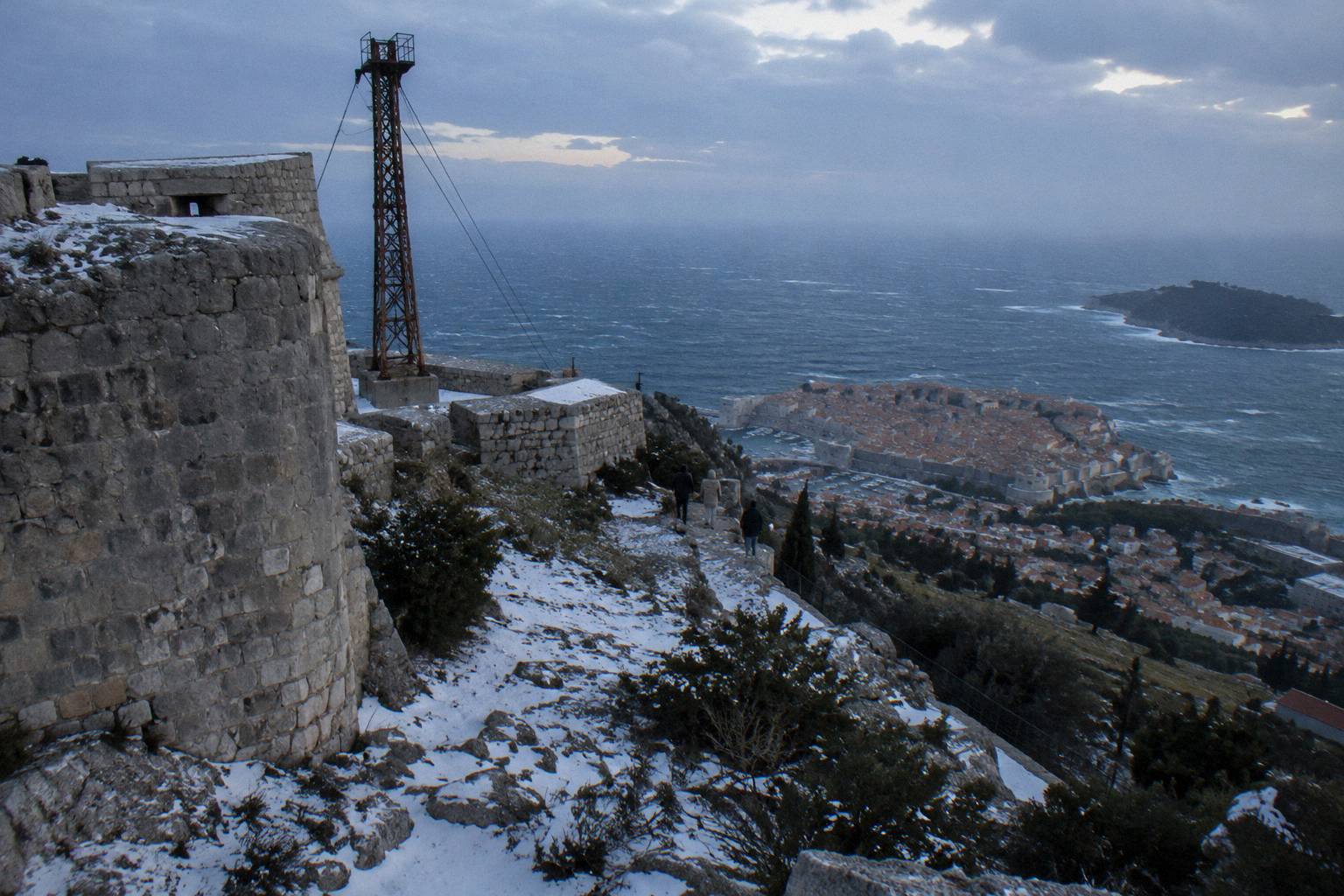
The Homeland War Museum sits inside Fort Imperial on Mount Srd, the fortress above the city. Entry costs EUR 5 for adults, EUR 3 for students, and children under 7 go free. Hours are seasonal: 08:30 to 22:00 from 1 April to 30 September, 09:00 to 20:00 in October, and 09:00 to 17:00 from 1 November to 31 March. Check the day before you go.
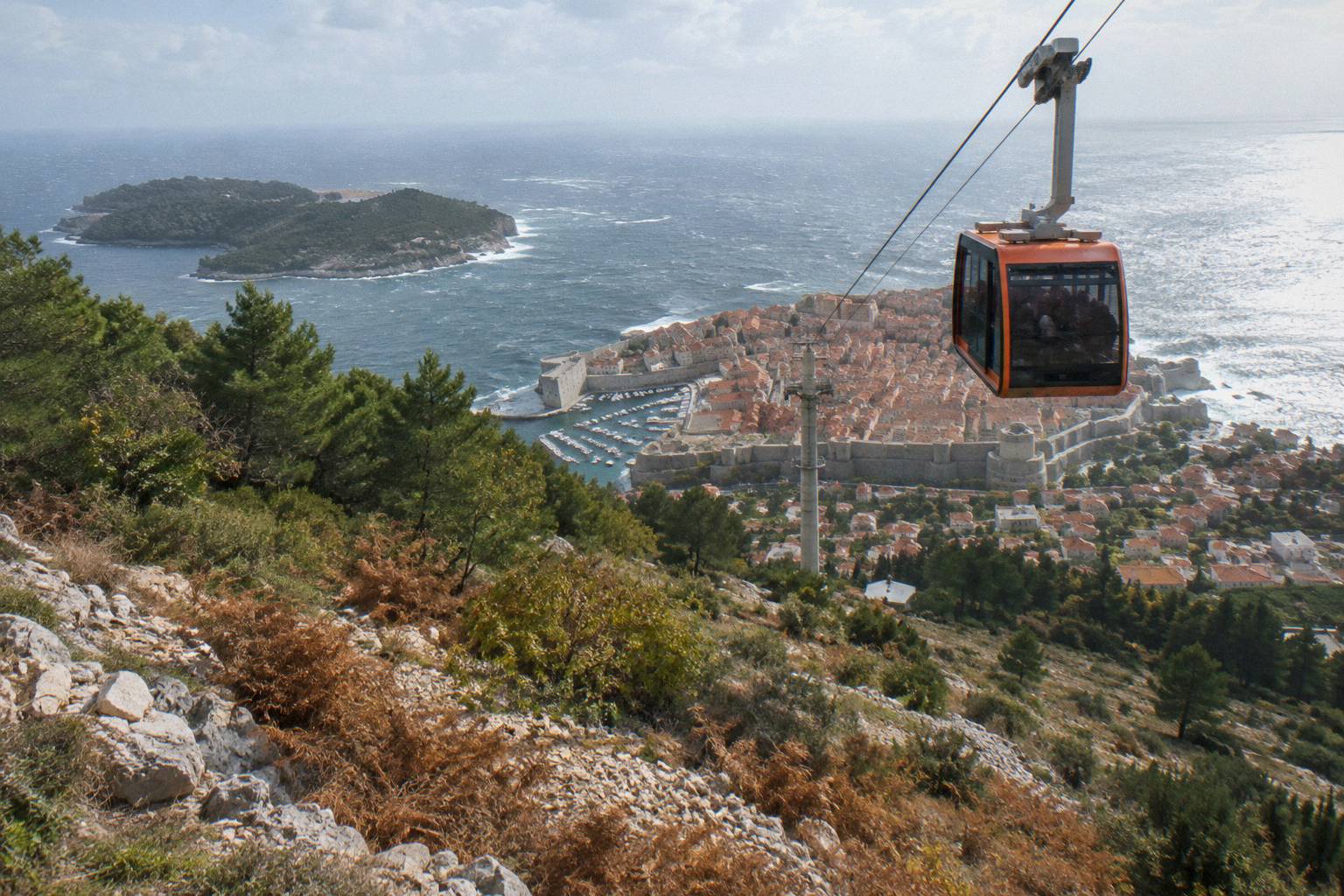
Fort Imperial is the Napoleonic-era fortress on the ridge above Dubrovnik, and it played a direct role in the city's defence during the siege. Today it houses the Homeland War Museum, whose exhibits cover the defence of Dubrovnik. The museum's own site at mdrd.hr carries the official opening hours and ticket prices, and its seasonal schedule means the visit you plan in July looks different from one in February.
Getting up the mountain is its own decision. The Dubrovnik cable car covers the ascent in about 4 minutes, with adult returns at EUR 30, one-way fares at EUR 17, and child returns (ages 4 to 12) at EUR 8. The cable car runs seasonal hours too, with some winter closures, so check the day before you go. Walking up is also possible, though steep.
| Getting to Fort Imperial | Cost |
|---|---|
| Cable car, adult return | EUR 30 |
| Cable car, adult one way | EUR 17 |
| Cable car, child 4 to 12 return | EUR 8 |
| Museum entry, adult | EUR 5 |
| Museum entry, student | EUR 3 |
| Museum entry, under 7 | Free |
Two tours cover Mount Srd with transport. The Driving Tour, Per Vehicle by INtours Dubrovnik runs 2 hours from €180 per vehicle, visits the Homeland War Museum in Fort Imperial and front-line defence points of the siege, and is guided by a former Croatian soldier who defended Dubrovnik. Museum entry is not included; the listing notes the EUR 5 per person ticket is paid at the museum. The Homeland War Museum, Transport tour by ROSOTRAVEL Croatia runs 3 hours from €268, includes skip-the-line museum tickets and private transport to and from Mount Srd, with a licensed guide. Both carry free cancellation up to 24 hours ahead. The dedicated page on the Homeland War Museum and Fort Imperial goes deeper on planning the visit itself, and whether Mount Srd is worth it answers the value question directly.
If you would rather combine Mount Srd with the rest of the siege story in one outing, the Half-Day Yugoslav War History tour by Amico Tours does exactly that. It runs 4 hours from €178 per person, includes pickup, visits the Red History Museum and the Homeland War Museum in Fort Imperial with both entrances included, and passes the Ombla River source, with optional stops at the Belvedere Hotel ruins and the War Photo Gallery. Audio guides are available in English, Spanish, French, Italian, Portuguese and German, and cancellation is free up to 24 hours ahead.
What About Kupari, Belvedere And War Photo Limited?
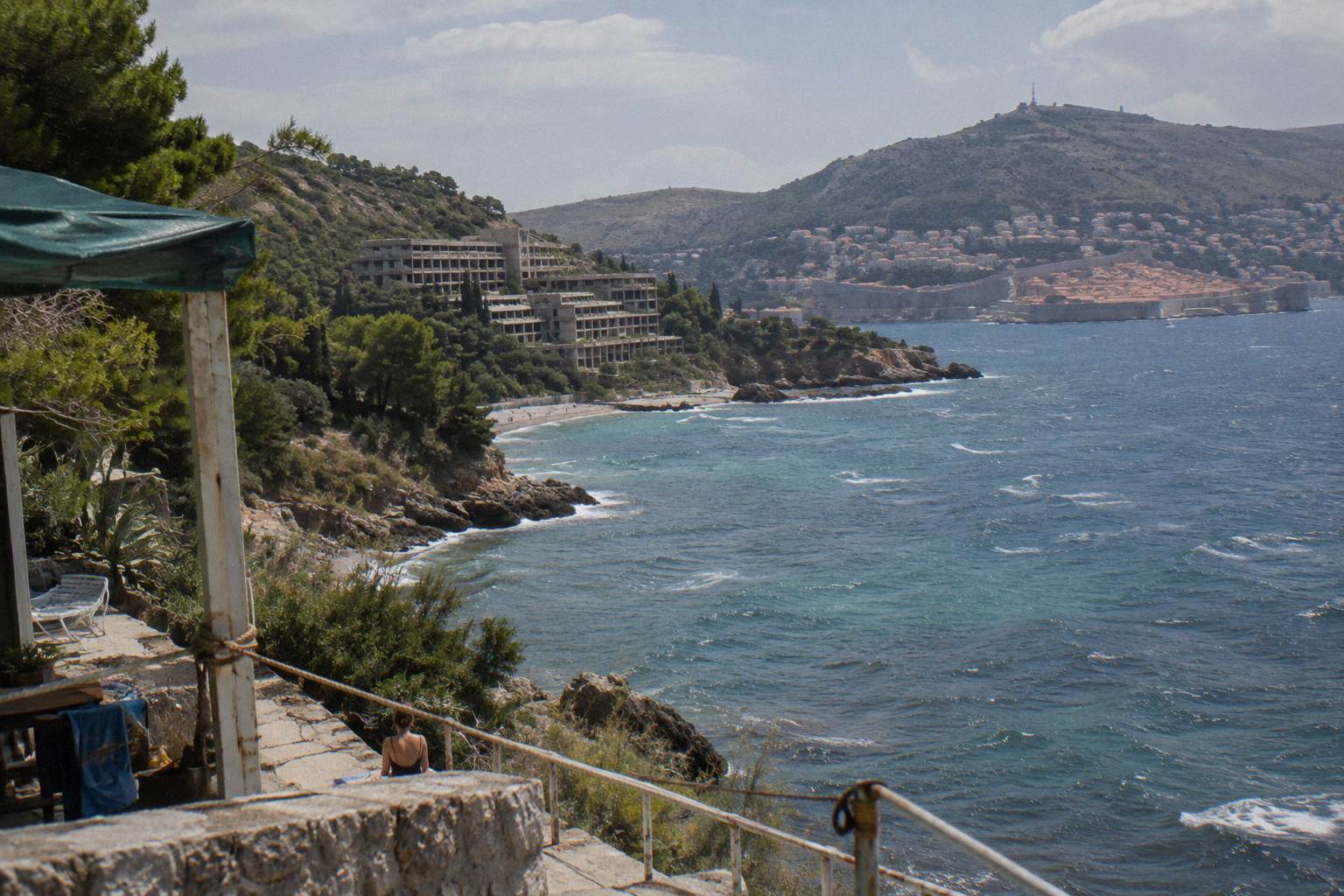
Kupari, the former Yugoslav People's Army military resort nicknamed Tito's Hawaii, was plundered and damaged in 1991, and its ruins were largely demolished in 2025, with the protected Grand Hotel excepted; the site is under redevelopment and closed to the public. War Photo Limited in the Old Town is open April to October only, with adult tickets at EUR 10. The Hotel Belvedere ruins are also off limits, so tours describe them from the road or a viewpoint.
Kupari deserves its warning. For years its ruined hotels were a well-known stop for photographers and war-tour visitors, and some tour descriptions still mention the ruins. The facts have changed: the ruins were largely demolished in 2025, the protected Grand Hotel was spared, and the whole site is being redeveloped, as local reporting on the Kupari redevelopment describes. There is no public access, and no tour can take you inside. The pages on Kupari's abandoned hotels and why Kupari sat abandoned for so long cover the history; the short version is to expect a viewpoint, never entry.
The Hotel Belvedere above the coast east of the Old Town falls under the same rule: no entry, no walk inside, and any tour that mentions it will describe it from a distance. The guide to Hotel Belvedere explains its story if you want it before you go.
War Photo Limited is different: it is a working museum in the Old Town, and a good one, but it keeps seasonal hours. Per its own visitor page, it opens 10:00 to 17:00 in April and October, 10:00 to 22:00 from May to September, and closes completely from November to March. Adult entry is EUR 10, students EUR 6. That closure matters for tour planning: any tour that includes War Photo Limited is effectively a spring-to-autumn product.
The War Photo Limited, Lovrjenac tour by ROSOTRAVEL Croatia, 3 hours from €140 per person, includes War Photo Limited tickets and, in the 3-hour option, skip-the-line entry to Lovrjenac Fortress, with a route through Minceta Tower, Buza Gate, Pile Gate and the West Harbour. Book it between April and October, when the museum is open. The broader guide to War Photo Limited and what to expect covers the museum on its own.
The Private War And Heritage Tour Of Mount Srđ by Adriatic Vision, 4 to 5 hours from €150 per person with a minimum age of 10, is the widest-ranging itinerary on that theme: Mount Srd and the Fort Imperial war museum, then Hotel Belvedere and Kupari from the road, Old Town memorials, and War Photo Limited. Read the Belvedere and Kupari stops as viewpoint stops, because that is what they are, and book it in season if you want the War Photo Limited portion.
Walking, Driving Or Museum: Which Tour Format Fits You?
Walking tours cover the Old Town's restoration traces and memorials in 2 to 2.5 hours and are the cheapest way in, from €100 per person. Driving tours reach Fort Imperial and the defence points outside the walls, from €180 per vehicle. Museum visits, like the Red History Museum Visit from €10 per person, cover the Yugoslav background that makes the war legible. Most visitors combine two of the three.
The formats answer different questions. A walk answers "what happened inside these walls?" A drive answers "how was the city defended from above and around?" A museum answers "what was Yugoslavia, and why did it break apart?" The siege only makes full sense with all three layers, which is why the combination tours exist.
| Format | Example tour | Length | From | What it covers |
|---|---|---|---|---|
| Private walk | Walk With Vesna, Group Rate | 2 hours | €235 per group | Old Town restoration traces |
| Private walk | Private Walk, 2h30 | 2h30 | €100 per person | War-damage sites, Memorial Room included |
| Driving | Driving Tour, Per Vehicle | 2 hours | €180 per vehicle | Fort Imperial museum, front-line defence points |
| Driving | Homeland War Museum, Transport | 3 hours | €268 | Fort Imperial with skip-the-line tickets |
| Combination drive | Half-Day Yugoslav War History | 4 hours | €178 per person | Red History Museum, Fort Imperial, pickup included |
| Museum visit | Red History Museum Visit | 50 min to 1h35 | €10 per person | Communist Yugoslavia, interactive exhibits |
The Red History Museum Visit, run by the Red History Museum itself, is the most reviewed tour on this site, rated 4.8 across 206 reviews, and it is also the cheapest way in at from €10 per person. It covers daily life in communist Yugoslavia with an interactive augmented-reality app, and admission is included. It does not cover the siege directly, but the Yugoslav background it gives you is what turns the war story from a list of dates into something you actually understand. The fuller case for starting there is in the guide to Yugoslavia history tours in Croatia.
One honest note on the format comparison: the per-person, per-group and per-vehicle prices above are not directly comparable. A €235 group price split four ways is competitive with a €100 per-person price; on your own, it is not. Work out the per-head cost for your actual party before deciding. The walking-versus-driving comparison in Dubrovnik war walking tours versus jeep and driving tours walks through that arithmetic in more detail.
What Mistakes Do Visitors Make When Planning A Siege History Trip?
The four mistakes that catch people out: assuming Kupari and the Belvedere ruins can be entered (they cannot, both are closed), booking a War Photo Limited itinerary between November and March (the museum is shut), skipping Mount Srd because of the cable car fare (the museum itself is only EUR 5), and walking the Old Town without a guide, which leaves the restoration traces invisible to most eyes.
The Kupari mistake is the most common, because older articles and some tour copy still describe the ruins as a walking destination. They are not. The site is under redevelopment and closed, and the demolition of 2025 removed most of what people came to photograph. Accept the viewpoint and move on.
The seasonality mistake follows close behind. War Photo Limited closes from November to March, the cable car has winter closures, and the Homeland War Museum shortens its hours in winter to 09:00 until 17:00. If your trip falls between November and March, favour the Old Town walks and the Red History Museum, both of which run year-round as indoor or low-altitude products.
The fare mistake is psychological. The cable car at EUR 30 return looks expensive next to a EUR 5 museum ticket, and some visitors skip Srd entirely on that basis. The museum is the point; the ride is the transport. Compare the cable car fare against the driving tours instead, since a per-vehicle tour from €180 includes the guide and the ride up as part of a single outing.
Finally, do not walk the Old Town cold. The damage is repaired; that is the whole achievement. Without a guide pointing out the newer rooftiles and shell scars, you will see a beautiful old city and miss the story written into it. Every walking tour named on this page exists precisely to close that gap, and each carries free cancellation up to 24 hours before the start, so booking ahead costs you nothing if plans change. This site, Dubrovnik Communism Tours, exists to make that comparison easy.
Whichever layer of the story you start with, the three tours below are the strongest entry points: the Old Town walk with a guide who was in the city during the siege, the veteran-led walk with the Memorial Room included, and the driving tour to Fort Imperial.
Common Questions About The Siege Of Dubrovnik
When Was The Siege Of Dubrovnik?
The siege began on 1 October 1991 and was lifted on 31 May 1992. The heaviest shelling of the Old Town occurred on 6 December 1991. Croatia had declared independence on 25 June 1991, about three months before the siege started.
How Much Of Dubrovnik's Old Town Was Destroyed?
About two thirds of the Old Town's buildings were damaged during 1991 and 1992. Restoration followed over the following years, and UNESCO kept Dubrovnik on its World Heritage in Danger list from 1991 until 1998 while the repair work was under way.
Can You Still See War Damage In Dubrovnik?
Yes, but you have to know where to look. Most damage was repaired, so what remains are shell scars on rooftiles and walls, newer tiles among old ones, and memorial spaces such as the Memorial Room of Dubrovnik Defenders. A guided Old Town walk, like the Walk With Vesna tour or the Private Walk, 2h30, is the practical way to find them.
What Is The Best Tour For Understanding The Siege Of Dubrovnik?
For the Old Town story, the Private Walk, 2h30 by My Dubrovnik Tours covers war-damage sites from gate to gate with a decorated war veteran as guide and Memorial Room entry included. For the defence of the city, the Driving Tour, Per Vehicle by INtours Dubrovnik reaches Fort Imperial and the front-line defence points. Both cost under €200 at their base rates and both offer free cancellation up to 24 hours ahead.
Is The Homeland War Museum Worth Visiting?
Yes, for most visitors with an interest in the siege. It sits in Fort Imperial on Mount Srd, the fortress that defended the city, and entry is EUR 5 for adults. Hours are seasonal, running from 08:30 to 22:00 in summer and 09:00 to 17:00 in winter, so check the day before you go.
Can You Visit The Abandoned Hotels At Kupari And Belvedere?
No. Kupari's ruins were largely demolished in 2025, with only the protected Grand Hotel left, and the site is closed for redevelopment. The Hotel Belvedere is also closed to the public. Tours that mention either place describe them from the road or a viewpoint, never inside.