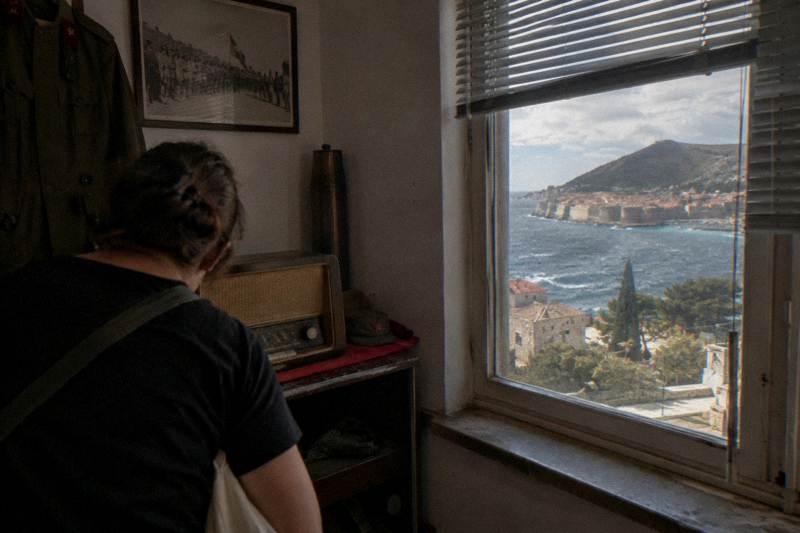
Yugoslav Nostalgia: Everyday Life In Socialist Dubrovnik
Croatia was one of the republics of socialist Yugoslavia, and visitors to Dubrovnik can still explore that era through the Red History Museum and the tours that build a day around it.
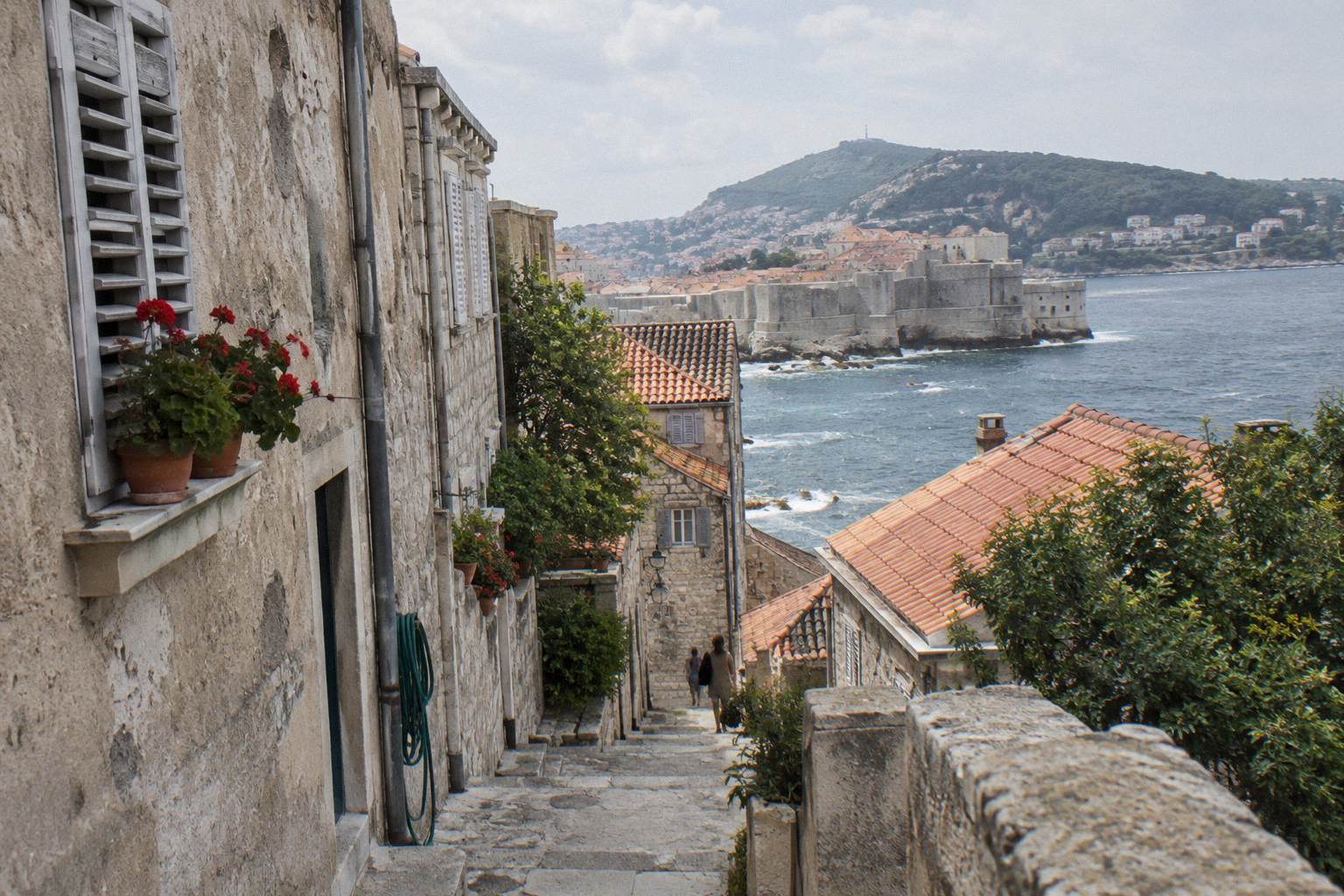
Short answer
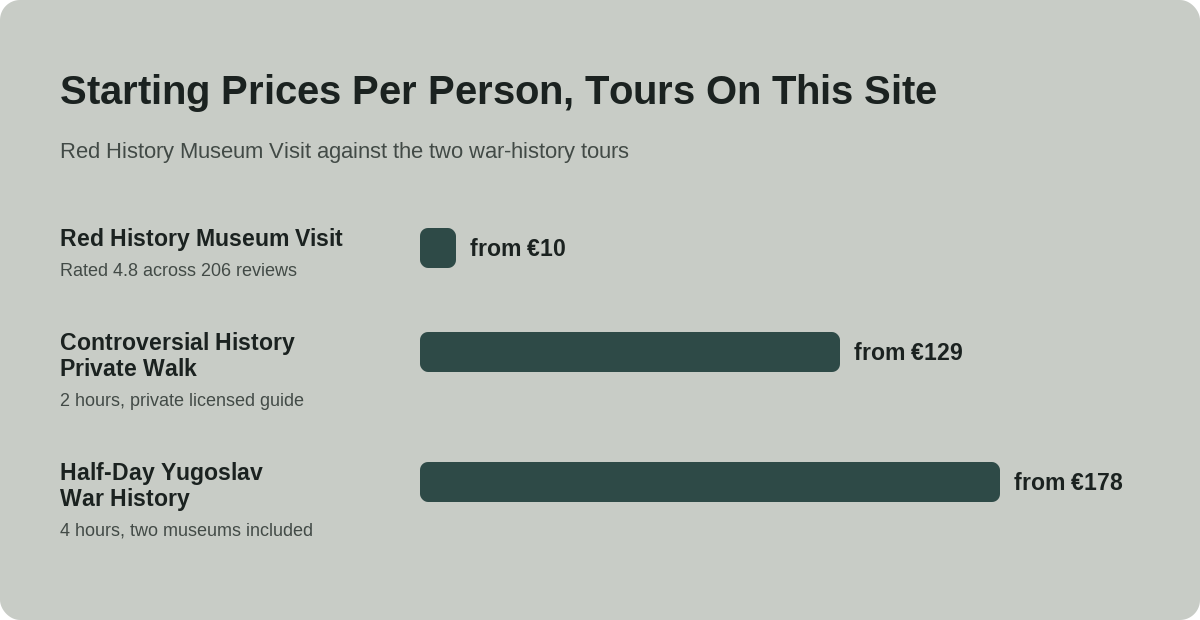
Yugoslav nostalgia in Croatia centers on everyday memories of socialist Yugoslavia, which Tito led after the Second World War. The clearest way to explore it in Dubrovnik is the Red History Museum walk (from €10 per person, rated 4.8 across 206 reviews) or the Half-Day Yugoslav War History tour from €178 per person.
Croatia was one of the republics of socialist Yugoslavia, the federation that Josip Broz Tito led after the Second World War. Croatia declared independence on 25 June 1991, and the siege of Dubrovnik followed, running from 1 October 1991 until it was lifted on 31 May 1992. Before all of that, ordinary life in a Yugoslav city had its own rhythm, and the memory of that rhythm is what people mean when they talk about Yugoslav nostalgia.
This page sits within the site's Yugoslavia coverage. For the war years themselves, the Dubrovnik war history timeline from 1991 to 1992 lays out the verified sequence of events, and for the deeper political story there is a separate article on why Croatia split from Yugoslavia.
| Fact | Detail |
|---|---|
| Socialist period in one line | Croatia was a republic of socialist Yugoslavia, led by Josip Broz Tito after the Second World War |
| Independence declared | 25 June 1991 |
| Siege of Dubrovnik | 1 October 1991 to 31 May 1992 |
| Cheapest window into the era | Red History Museum Visit, from €10 per person |
| Most reviewed tour on this site | Red History Museum Visit, 4.8 across 206 reviews |
| Full-day option | Half-Day Yugoslav War History, from €178 per person, 4 hours |
| Currency | EUR, in use since 1 January 2023 |
What Is Yugoslav Nostalgia, Exactly?
Yugoslav nostalgia is a wistful attachment to everyday life under socialist Yugoslavia: the federation of six republics, including Croatia, that Tito led after the Second World War. It is nostalgia for a lifestyle and an identity, not a political programme, and in Croatia it sits alongside, never instead of, the memory of the war that followed independence in 1991. Museums such as Dubrovnik's Red History Museum exist to present that everyday story with objects rather than slogans.
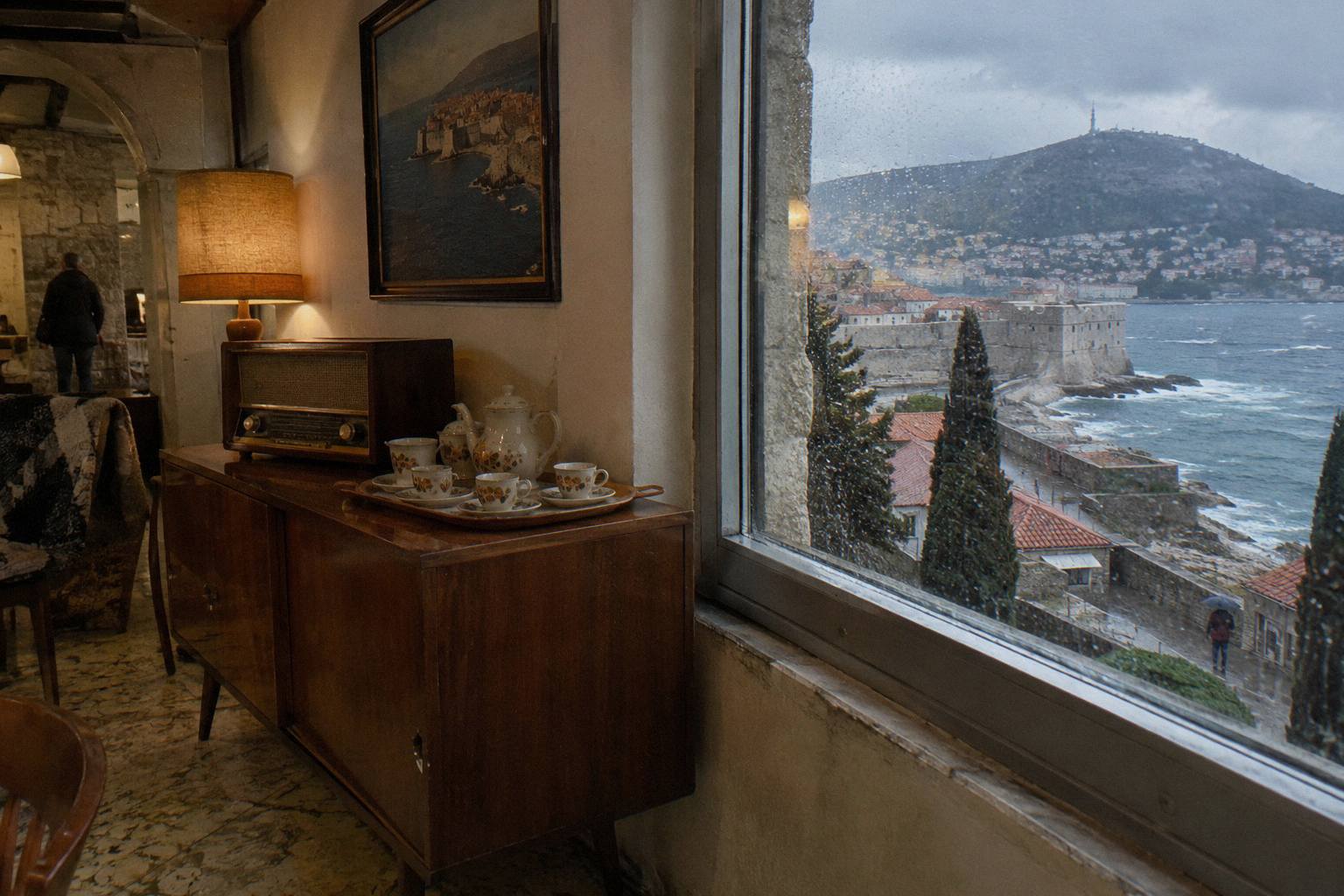
It helps to separate two things that get mixed up. The first is the historical Yugoslavia: a socialist state, and the political frame Croatia belonged to before independence. The second is nostalgia, which is a feeling held by people who lived through that state or grew up in its shadow. The feeling is real and widely discussed in the region, but it is not something a guidebook can measure for you, and this page does not attempt to. What it can do is point you at the places where the era is presented rather than merely remembered.
What a visitor can do is look at the material remains. The Red History Museum in Dubrovnik presents the socialist period through its collection, and its guided walk, run by the museum itself, is the most direct introduction: admission is included, the whole visit runs between 50 minutes and 1 hour 35 minutes, and it uses an interactive augmented-reality app as part of the experience. It costs from €10 per person and is rated 4.8 across 206 reviews, the largest review pool of any tour on this site. Because the museum is the operator, the walk stays anchored to the collection rather than drifting into general storytelling.
The same era has a darker edge, and any honest treatment says so. Croatia declared independence on 25 June 1991, and by October of that year Dubrovnik was under siege. The city's own record of the destruction and restoration of the Old Town describes how the end of Yugoslavia reached the city walls. Nostalgia for what came before is one thread; the war is another; a good tour holds both without collapsing one into the other.
Where Can You See Everyday Socialist Life In Dubrovnik?
The Red History Museum is the clearest window. Its guided walk, from €10 per person, includes admission and runs 50 minutes to 1 hour 35 minutes with an augmented-reality app, and it is rated 4.8 across 206 reviews. The Half-Day Yugoslav War History tour from €178 per person pairs the same museum with Fort Imperial, and the private Controversial History walk from €129 per person reads the era in the Old Town's stones.
Start with the museum because it is the only place in the city purpose-built for this story. The museum's own website describes a collection devoted to everyday life in socialist Yugoslavia, which is exactly the territory Yugoslav nostalgia lives in. The meeting point is the museum itself, at Ulica Svetog Križa 3 in the Nuncijata area, so there is no hunt for a guide with a flag. Free cancellation applies up to 24 hours ahead, which matters if Dubrovnik weather turns.
If you want the socialist story and the war story in one movement, the Half-Day Yugoslav War History tour by Amico Tours does that in 4 hours, from €178 per person. It visits the Red History Museum and the Homeland War Museum in Fort Imperial on Mount Srd, with entrance to both included, plus the Ombla River source and optional stops at the Hotel Belvedere ruins and War Photo Gallery. Pickup is included, and an audio guide is offered in English, Spanish, French, Italian, Portuguese and German. Note the seasonal catch: War Photo Limited is closed from November to March, so the optional gallery stop only works in the warmer half of the year.
For a private reading of the city itself, ROSOTRAVEL Croatia runs the Controversial History Private Walk, 2 hours from €129 per person, led by a licensed private guide. It focuses on the rooftops and walls of the Old Town, where the shell scars of 1991 are still readable. This is less about socialist everyday life and more about how the era ended, but it pairs well with the museum visit and carries free cancellation up to 24 hours ahead. You can read more about what such a walk covers in the guide to what a Dubrovnik war tour shows and how it works.
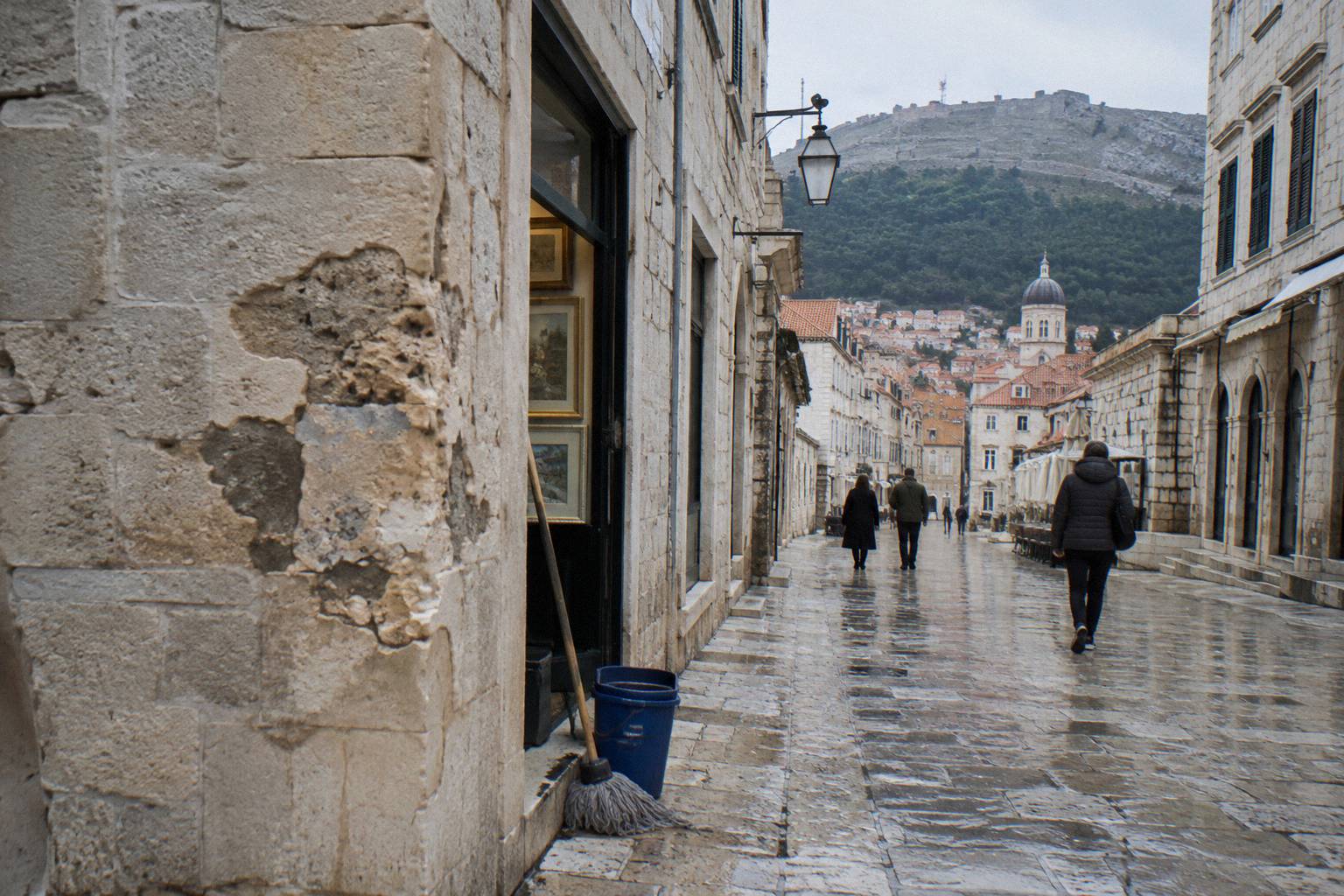
Is The Red History Museum Visit Worth It For Nostalgia Curious Visitors?
Yes, on the numbers it is the easiest yes on this site. From €10 per person with admission included, a visit of 50 minutes to 1 hour 35 minutes, free cancellation up to 24 hours ahead, and a rating of 4.8 across 206 reviews, it is both the cheapest per-person tour listed here and the most reviewed. No other tour on this site comes close to that review pool.
The value case is simple. You are paying museum-entry money and getting a guided, interactive visit on top, with the augmented-reality app layered over the collection. The museum is the operator, so the person leading you through the story is part of the institution that built it. And because the whole thing can take under an hour, it slots into a day that also holds the walls, the cable car or the beach without dominating it.
The same museum anchors the Half-Day Yugoslav War History tour from €178 per person, which is the choice when you want one booked day instead of self-assembled pieces. The differences are about scope, not quality: the half-day adds Fort Imperial, transport in an air-conditioned vehicle and pickup, and stretches to 4 hours. The museum walk stays inside one building on one subject, which is precisely its appeal for a first contact with the era.
One honest caveat: this page cannot verify claims about what everyday material life was like under socialism beyond what the museum and tour descriptions say. If a review on a booking page promises specific objects or exhibits, treat that as one visitor's account rather than a fixed exhibit list, and check the museum's own site before you go. If you are deciding between the formats, the comparison of private versus group Dubrovnik war tours walks through the trade-offs.
How Does Yugoslav Nostalgia Fit With The War Story?
They are two halves of one century, and Dubrovnik forces you to hold both. Yugoslavia after Tito's era ended in the 1990s wars; Croatia declared independence on 25 June 1991 and Dubrovnik was besieged from 1 October 1991 until the siege was lifted on 31 May 1992, with the heaviest shelling of the Old Town on 6 December 1991. Nostalgia for what came before and grief for what came after coexist in the same city.
The scale of the damage gives the context. About two thirds of the Old Town's buildings were damaged in 1991 and 1992, and a place inscribed by UNESCO in 1979 spent 1991 to 1998 on the World Heritage in Danger list. The restoration that followed is why the city looks whole today, and why you need a guide to point out where it is not. Standing on the Stradun, you are looking at a reconstruction that the war tours teach you to read.
That is where the Homeland War side of this site's coverage comes in, and it connects naturally to the nostalgia question. If the Red History Museum explains the world that ended, the war tours explain how it ended. My Dubrovnik Tours runs a Private Walk of 2 hours 30 minutes from €100 per person, covering war-damage sites from Ploce to Pile with entry to the Memorial Room of Dubrovnik Defenders included; it is led by a decorated war veteran who personally witnessed the war, and it is rated 5 across 8 reviews, a small number of reviews. Free cancellation applies up to 24 hours ahead.
Above the city, INtours Dubrovnik runs a private Driving Tour from €180 per vehicle to the Homeland War Museum in Fort Imperial and the front-line defence points of the siege, guided by a former Croatian soldier who defended Dubrovnik. The 2-hour tour excludes the museum's own entry fee, which is EUR 5 per person at the museum, and includes free cancellation up to 24 hours ahead. The museum's official site lists seasonal hours, so check the day before you go.
For the fullest route, Adriatic Vision's Private War And Heritage Tour Of Mount Srd runs 4 to 5 hours from €150 per person, with a minimum age of 10. It covers Mount Srd and the Imperial Fortress War Museum, the Hotel Belvedere and Kupari Resort, Old Town memorials and War Photo Limited, again making it seasonal, since that gallery closes November to March. Because both Kupari, largely demolished in 2025, and the Belvedere are closed to the public, expect these to be described from a viewpoint or the road rather than entered. War Photo Limited's own visitor page lists its April to October opening pattern and its EUR 10 adult ticket if you prefer to go independently.
What Happened To The Yugoslav-Era Places Around Dubrovnik?
The most striking Yugoslav-era site near the city is Kupari, a former Yugoslav People's Army military resort nicknamed Tito's Hawaii, plundered and damaged in 1991. Its ruins were largely demolished in 2025, the protected Grand Hotel excepted, and the site is now under redevelopment with no public access. Do not plan to walk among the buildings; the story today is told from the outside.
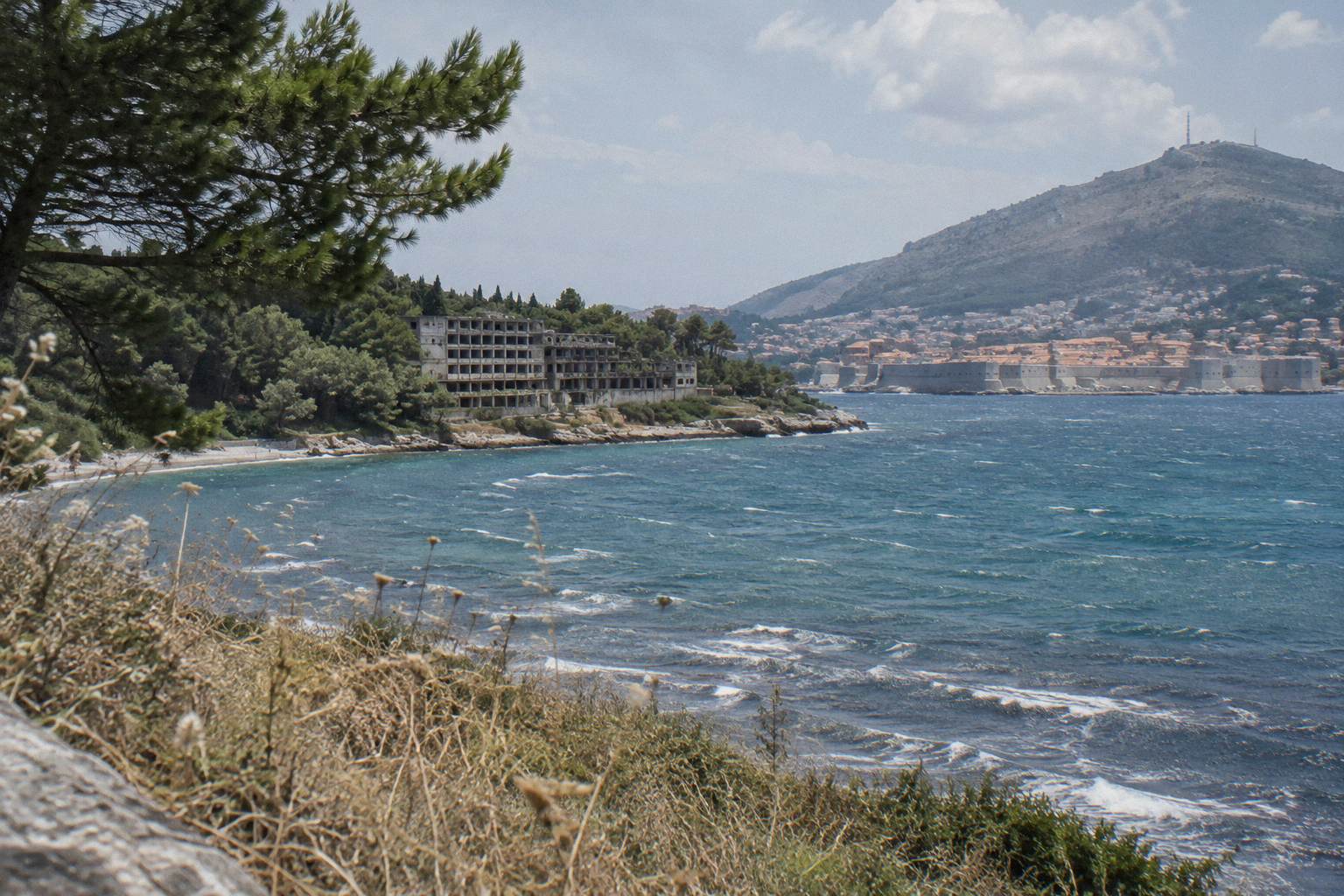
Kupari matters to the nostalgia story because it was built for the Yugoslav military, the army of the state whose everyday life the Red History Museum explores. It was damaged in 1991 and stood as ruins for three decades. Then came the change: as The Dubrovnik Times reported, the transformation of the site into a luxury resort began, with most of the ruins demolished in 2025 apart from the protected Grand Hotel. There is no public access, and no tour on this site promises entry.
The Hotel Belvedere, another 1990s ruin above the city, appears in the Adriatic Vision tour's itinerary alongside Kupari, but the same caution applies: listings describe these places from a viewpoint or the road, not inside. If the ruins themselves are what draw you, the guide to why Kupari is still abandoned and what changes now sets out the current state honestly, and the story of what happened to the Hotel Belvedere covers the sister site.
For context on why these sites exist at all: Croatia declared independence on 25 June 1991, and the siege of Dubrovnik ran from 1 October 1991 until it was lifted on 31 May 1992. The heaviest shelling of the Old Town came on 6 December 1991, and across the siege period about two thirds of the Old Town's buildings were damaged. Kupari and the Hotel Belvedere are part of that same chapter, which is why they tend to appear together in war-themed itineraries even though neither can be entered.
To go deeper on the war itself, the Homeland War Museum sits in Fort Imperial on Mount Srd (official site: mdrd.hr). It is open April to September from 08:30 to 22:00, October from 09:00 to 20:00, and November to March from 09:00 to 17:00. The adult ticket is 5 EUR, and on the private driving tour that stops there the ticket is paid extra rather than included in the tour price. Prices across the country are in euros generally, since Croatia adopted the currency on 1 January 2023.
One seasonal note if you are comparing tours: War Photo Limited is closed from November to March. Any tour listing that includes it is therefore a seasonal product, so check the calendar before booking a winter trip around it.
| Place | What it is | Access today |
|---|---|---|
| Kupari | Former Yugoslav People's Army military resort, plundered and damaged in 1991 | Closed to the public; ruins largely demolished in 2025, the protected Grand Hotel excepted |
| Hotel Belvedere | Ruined hotel that appears in some tour itineraries beside Kupari | Seen from the road or a viewpoint only, never entered |
| Homeland War Museum, Fort Imperial | War museum on Mount Srd | Open April to September 08:30 to 22:00, October 09:00 to 20:00, November to March 09:00 to 17:00; adult ticket 5 EUR |
| War Photo Limited | Seasonal gallery that some war-history tours include | Closed from November to March |
Private Or Guided: Which Format Suits A Yugoslav-Era Day?
The museum walk and the Amico Tours half-day are the guided options in this category; everything else listed here is private. Red History Museum's own walk runs from €10 per person; the private options run from €129 per person (Controversial History walk) up to €235 per group (Walk With Vesna). Pick the group walk for value and the private walks for control of pace and questions.
| Tour and operator | Format | Duration | Price | Ratings snapshot |
|---|---|---|---|---|
| Red History Museum Visit (Red History Museum) | Guided, museum | 50 min to 1 h 35 min | From €10 per person | 4.8 across 206 reviews |
| Half-Day Yugoslav War History (Amico Tours) | Guided, drive | 4 hours | From €178 per person | No verified rating |
| Controversial History Private Walk (ROSOTRAVEL Croatia) | Private walk | 2 hours | From €129 per person | No verified rating |
| Walk With Vesna, Group Rate (Walk with Vesna) | Private walk, per group | 2 hours | From €235 per group | 5 across 5 reviews |
| Driving Tour, Per Vehicle (INtours Dubrovnik) | Private drive, per vehicle | 2 hours | From €180 per vehicle | No verified rating |
Per-person, per-group and per-vehicle prices answer different questions, so do not line them up as if they were the same kind of number. The Walk With Vesna row, from €235 per group, covers the Old Town's restoration traces over 2 hours with a guide who was in the city during the siege; the cable car to Srd and the Homeland War Museum are optional on request and tickets are not included. Its rating is 5 across 5 reviews, a small number of reviews, so treat that as a promising signal from a handful of guests rather than a verdict. Free cancellation applies up to 24 hours ahead.
The INtours row is per vehicle, which changes the arithmetic completely for a family of four compared with a solo traveller. Neither per-vehicle nor per-group figures should be compared directly with the per-person rows; work out your own headcount and see which structure suits it. Every row in this table carries free cancellation up to 24 hours ahead, so a wrong guess costs nothing if you change your mind in time. A useful question to ask yourself: do you want to ask a guide your own questions for two hours, or would you rather pay museum money and listen?
What Mistakes Do Visitors Make With Yugoslav-Era Dubrovnik?
The common errors are treatable ones: assuming Kupari or the Hotel Belvedere can be entered, booking a War Photo Limited itinerary between November and March, expecting verified detail about socialist wages or consumer goods that no source on this page can confirm, and reading a rating from five reviews as a settled verdict. Each of these has a simple fix.
Plan around closures. War Photo Limited is open April and October from 10:00 to 17:00 and May to September from 10:00 to 22:00, and closed November to March; any itinerary that names it is seasonal. Kupari is under redevelopment with no public access, and the Belvedere is described from outside on the itineraries that mention it. Promising yourself a walk through either is setting up a disappointment.
Keep your nostalgia honest. The verified record on this page covers the outline of Yugoslavia after the Second World War, independence on 25 June 1991, and the siege from 1 October 1991 to 31 May 1992. Detail about everyday wages, goods or holidays is not verified here; the museum's own presentation is the right place to encounter it, not a blog paragraph. For the fuller narrative, the explanation of the 1991 siege of Dubrovnik keeps to the documented events.
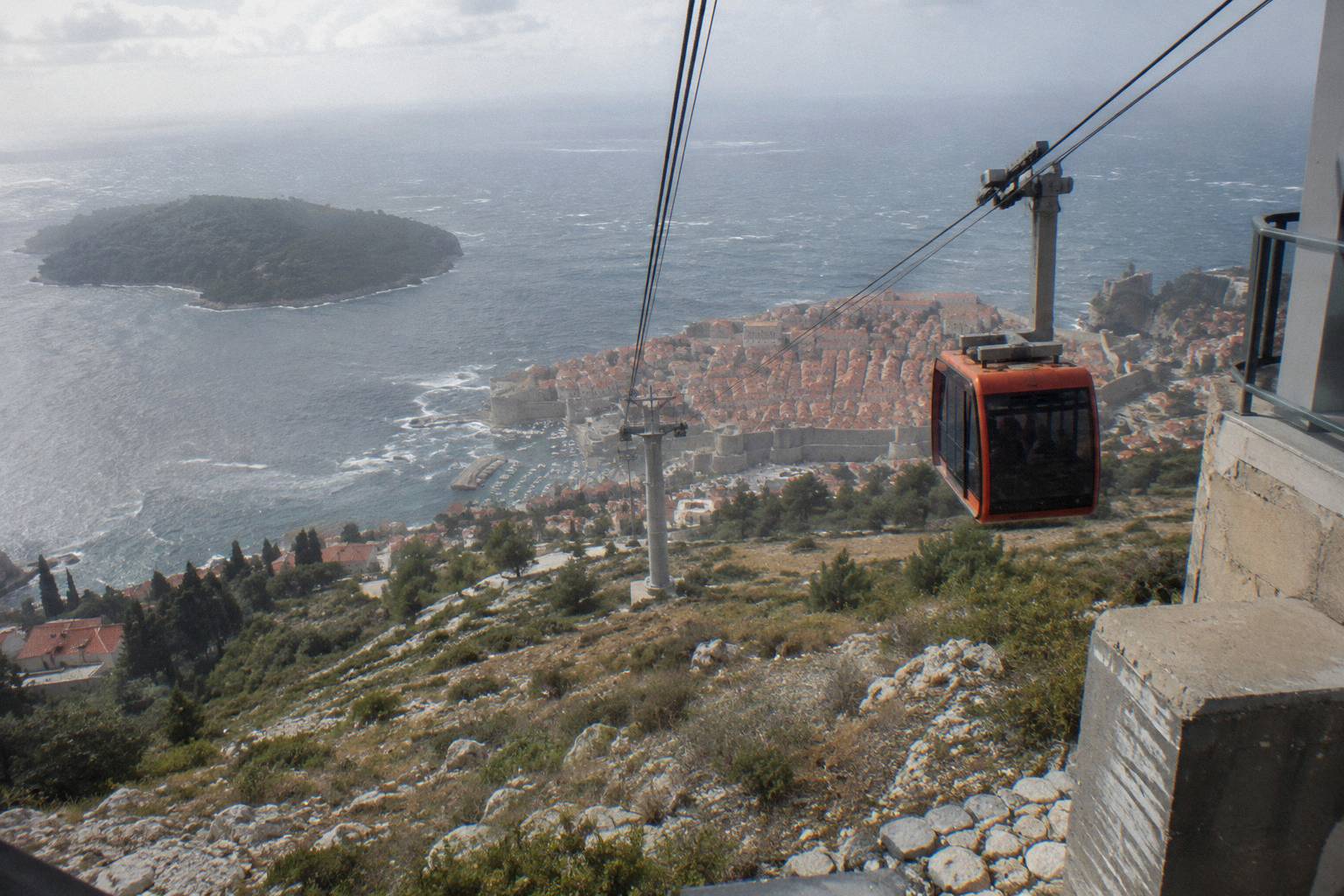
Finally, mind the season you are booking in. Cable car fares, currently EUR 30 adult return and EUR 17 one-way on the operator's timetable page, change, and winter closures happen; the same page's advice applies to every figure here: check the day before you go. The overview of Mount Srd's war history and the cable car helps you sequence a Srd visit around a museum morning.
This whole subject is the second pillar of Dubrovnik Communism Tours, and it is deliberately handled with care: the socialist past and the war that ended it are told side by side, from documented facts, and the tours that do it best are the ones above. Whether you give it an hour at the museum or a full day across two museums and a mountain fortress, go with the era's real texture rather than a souvenir version of it.
Common Questions About Yugoslav Nostalgia In Dubrovnik
What Is Yugoslav Nostalgia?
It is a mostly affectionate attachment to everyday life in socialist Yugoslavia, the federation that Tito led after the Second World War and of which Croatia was one republic. It is about lifestyle and identity rather than politics, and in Croatia it coexists with the memory of the 1990s war.
Where Can I Learn About Everyday Life In Socialist Yugoslavia In Dubrovnik?
The Red History Museum is the dedicated space. Its guided walk runs from €10 per person, includes admission, lasts 50 minutes to 1 hour 35 minutes and is rated 4.8 across 206 reviews. The Half-Day Yugoslav War History tour from €178 per person also includes museum entrance alongside Fort Imperial.
Is The Red History Museum Visit Worth It?
On the numbers, yes. It is the cheapest per-person tour on this site at from €10 and the most reviewed, with a 4.8 rating across 206 reviews. Admission and an augmented-reality app are included, and free cancellation applies up to 24 hours ahead.
Can You Visit Kupari Or The Hotel Belvedere?
No. Kupari, the former Yugoslav People's Army resort known as Tito's Hawaii, was largely demolished in 2025 apart from the protected Grand Hotel, and the site is under redevelopment with no public access. Tours that mention Kupari or the Belvedere describe them from a viewpoint or the road.
Is A Yugoslavia Tour With War Photo Limited Available In Winter?
War Photo Limited is closed November to March, so itineraries that include it, such as the Half-Day Yugoslav War History tour's optional gallery stop, are seasonal. The museum walk and the Old Town walks run independently of that gallery.
Which Tours Cover Both Socialist Yugoslavia And The Homeland War?
The Half-Day Yugoslav War History tour from €178 per person pairs the Red History Museum with the Homeland War Museum in Fort Imperial in one 4-hour day with pickup included. Adriatic Vision's Private War And Heritage Tour Of Mount Srd, from €150 per person, covers an even wider circuit over 4 to 5 hours.