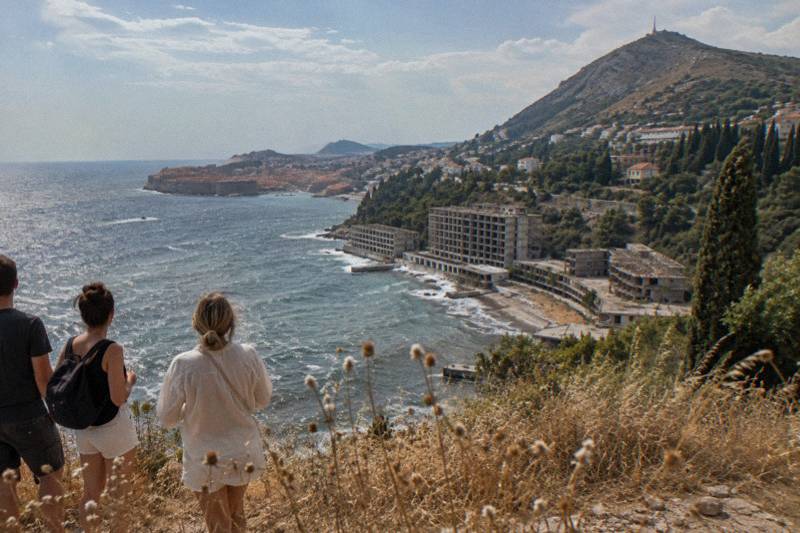
What Happened To Hotel Belvedere Dubrovnik?
What the Hotel Belvedere in Dubrovnik went through in 1991, why the ruins are closed, and which guided war tours explain the site from the road.
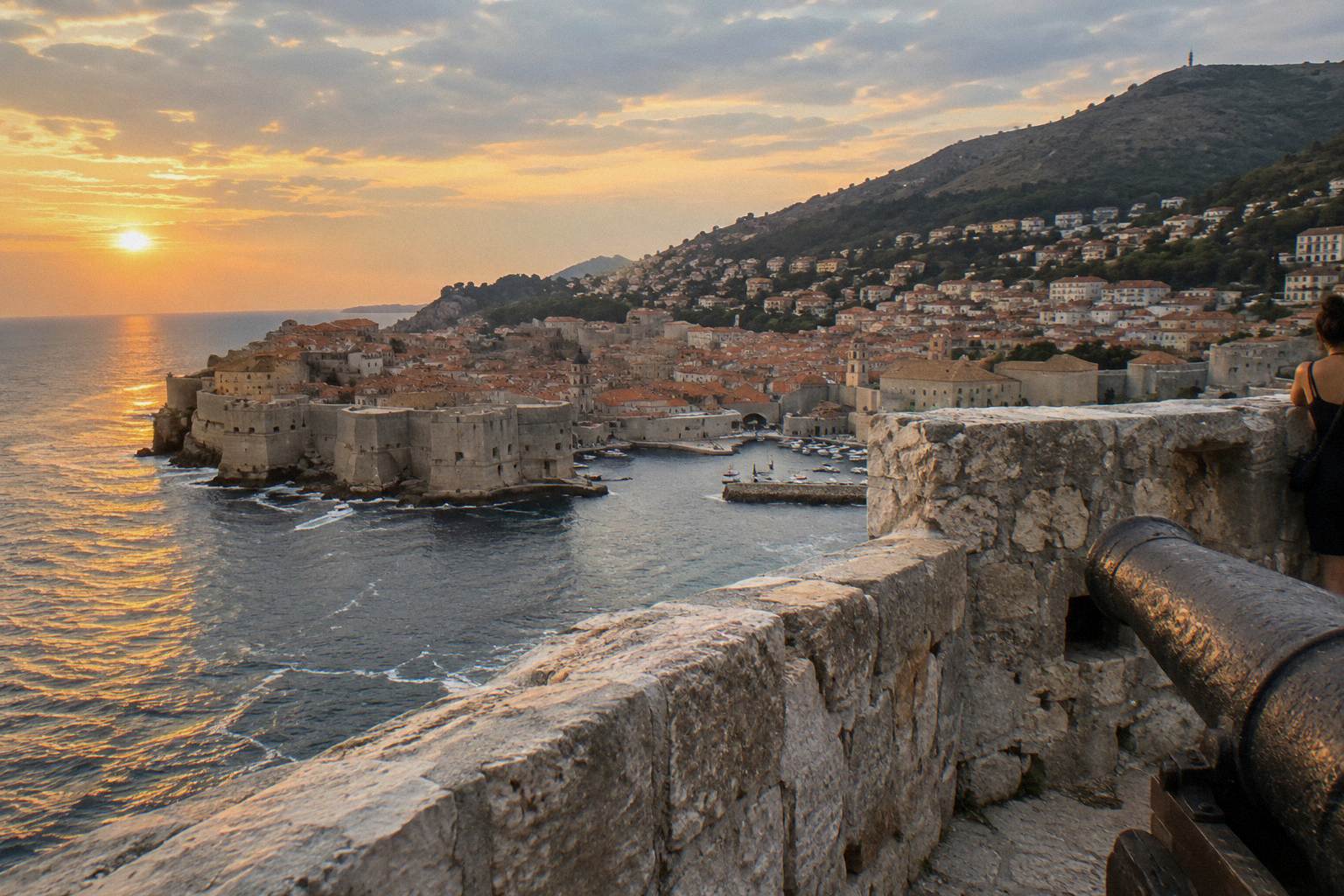
Hotel Belvedere, a large resort on the hillside above Dubrovnik, stood in the path of the siege, which ran from 1 October 1991 to 31 May 1992. Damaged and never reopened, it has remained a roofless concrete shell ever since, closed to the public and visible only from the road or a viewpoint.
The honest starting point for this question is a limit: there is no verified published history of the Belvedere itself that this page can responsibly print. What can be said with confidence is the frame around it. Croatia was one of the republics of socialist Yugoslavia, which Josip Broz Tito led after the Second World War. Croatia declared independence on 25 June 1991, and the siege of Dubrovnik followed, lasting from 1 October 1991 until it was lifted on 31 May 1992. The heaviest shelling of the Old Town came on 6 December 1991, and about two thirds of the Old Town's buildings were damaged across 1991 and 1992, as the city's own record of the destruction and restoration of Dubrovnik sets out.
The Belvedere sits on that same timeline as a building that never came back. Where the Old Town was repaired, block by block and roof tile by roof tile, the hotel on the hillside above the city was left as a concrete shell. For travelers arriving today, that contrast is the whole story in one image: a restored medieval city below, and above it a modern ruin that has been left to tell the other half of the account. The Old Town's UNESCO World Heritage inscription dates from 1979, and it spent 1991 to 1998 on the World Heritage in Danger list while repairs were made. The Belvedere had no such rescue.
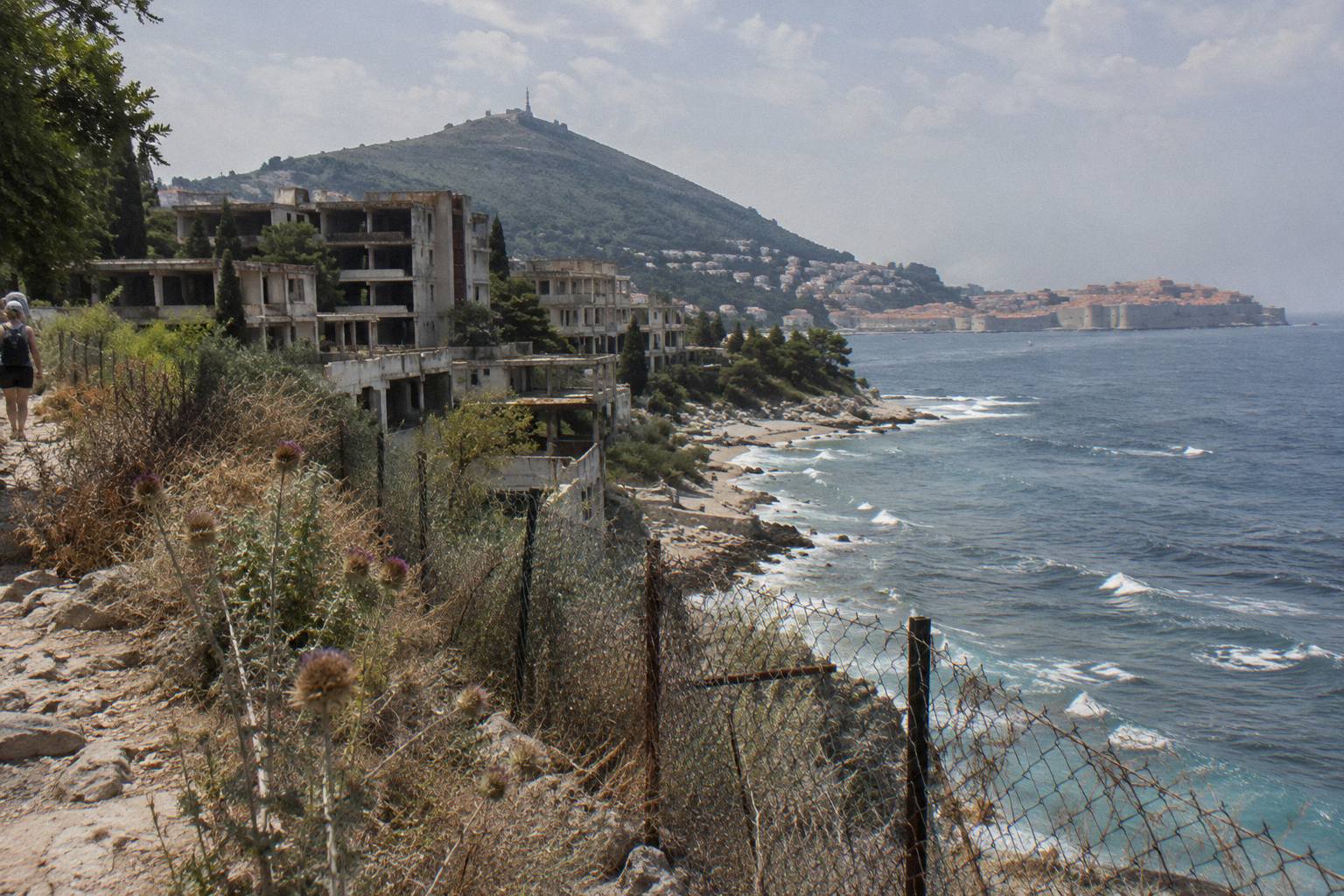
This page cannot print a year for the hotel's opening, an owner, a purchase price or a demolition date, because none of those figures have been verified for this site. What it can do is explain what is confirmed about the ruin's status, and route you to the guided tours that actually go there, since the building cannot be entered and should not be approached on foot. Several Dubrovnik Communism Tours itineraries pass the Belvedere as a road stop, and choosing between them is mostly a question of how much of the wider war landscape you want in one day.
Each stops at the Belvedere area or the roads around it rather than at the building itself, which is exactly what you should expect given the site's status. Read the rest of this page before picking, because the differences between them are mostly about scope: how many sites, how many hours, and whether museum tickets are folded in or left for you to buy.
Can You Go Inside The Belvedere Ruins?
No. The Hotel Belvedere ruins are closed to the public, and the wider abandoned resort landscape near Dubrovnik changed sharply in 2025, when the ruins at Kupari were largely demolished, with the protected Grand Hotel excepted. The Belvedere shell still stands, but there is no legal or safe way into it, and no tour on this site promises entry. Any itinerary that names the Belvedere describes it from the road or a viewpoint.
That answer surprises people who have seen older photos of urban explorers inside the hotel's empty floors. Those images belong to a past period. The direction of travel in the Dubrovnik area is firmly toward redevelopment: at Kupari, the former Yugoslav People's Army military resort nicknamed "Tito's Hawaii", the ruins were plundered and damaged in 1991, and the site is now under redevelopment with no public access, as local reporting on the Kupari transformation describes. The Belvedere is best understood as part of that same story, a damaged modernist hotel on a valuable hillside whose future is a redevelopment question rather than a preservation one.
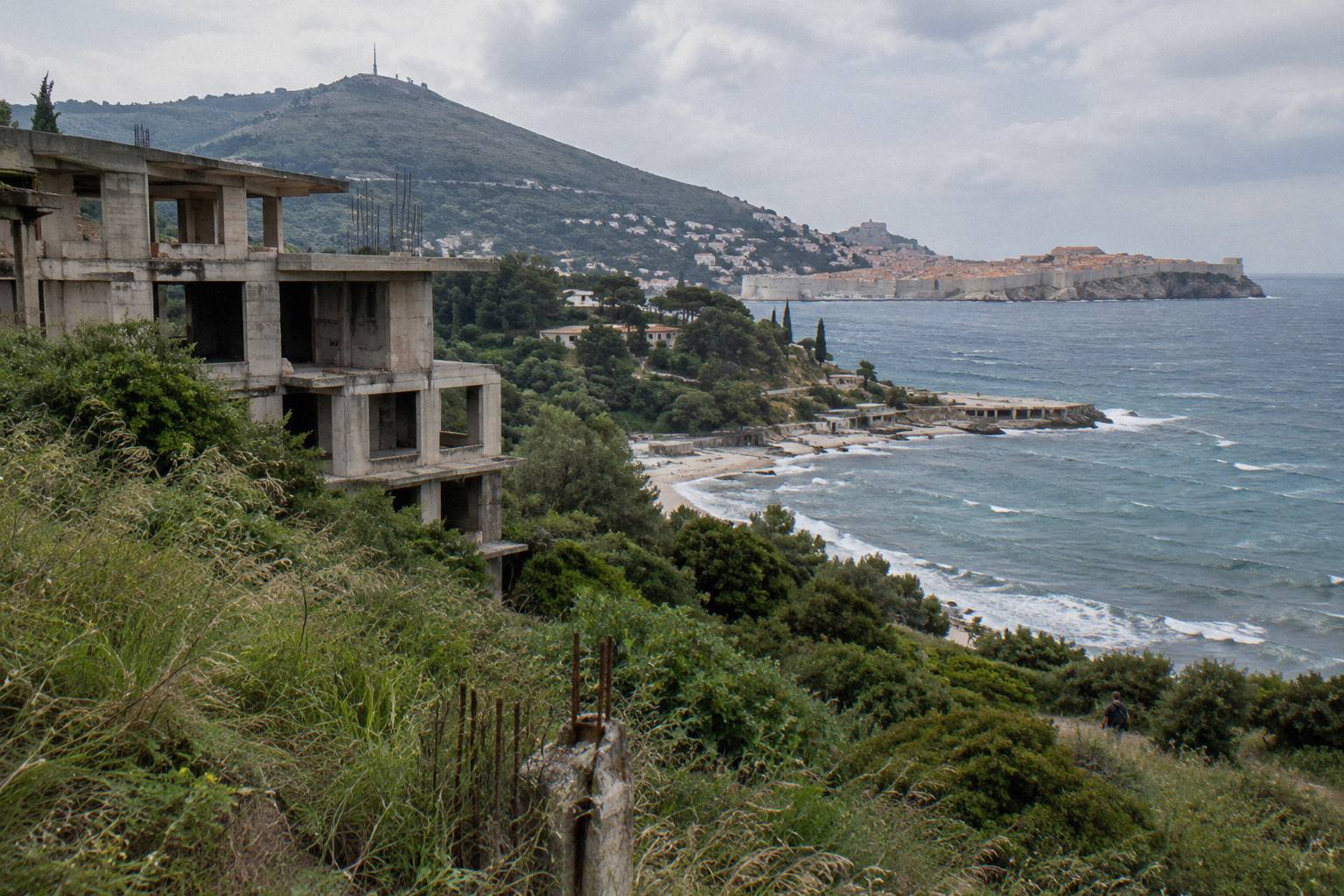
For you as a visitor, the practical rule is simple: look, do not enter. The structure has stood open to the weather for more than three decades. Floors, railings and stairwells in a building like that cannot be trusted, and the site is private property. Trespass advice is not something this page will give, and no responsible guide will either. If the Belvedere is the reason you are reading, book a driving tour that stops on the road above it, because that vantage is the one that shows the shell against the sea and the Old Town beyond it, which is the photograph most visitors actually want.
This is also where a guide earns the fee. Standing at a roadside looking at a concrete skeleton, you get a ruin. Standing there with someone narrating the siege, the hotel's place in the city's pre-war tourist economy and the rebuilding of Dubrovnik below, you get a story. The Private War And Heritage Tour Of Mount Srđ by Adriatic Vision names the Hotel Belvedere and Kupari Resort among its stops, alongside Mount Srd, the Imperial Fortress war museum, Old Town memorials and War Photo Limited, over 4 to 5 hours, from €150 per person. It is a private driving tour, and its listed inclusions are the tour guide alone, so museum entries are arranged separately. If that format appeals, Check availability, or read the deeper planning notes in the guide to the abandoned Hotel Belvedere.
What Does The Belvedere Look Like Today?
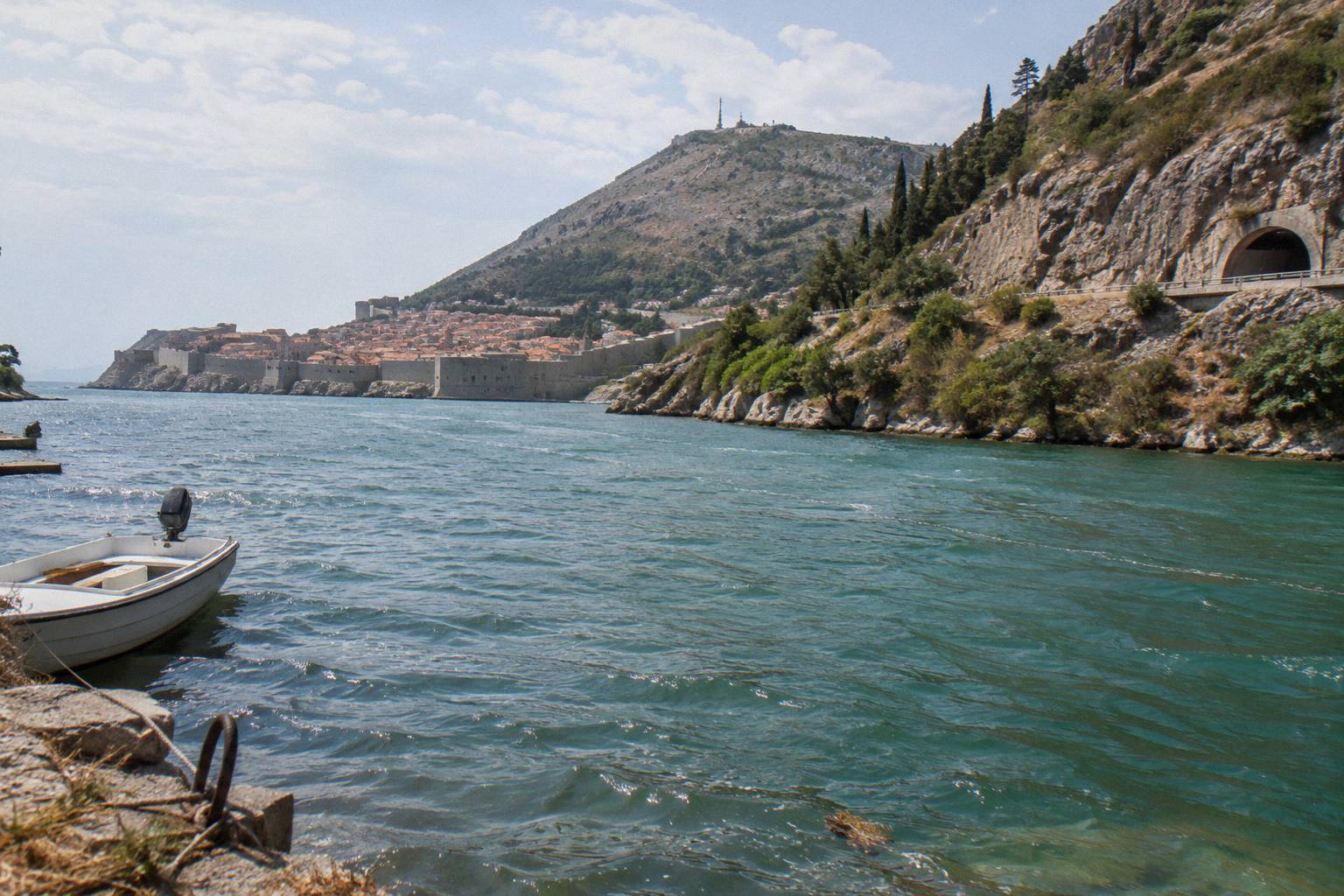
The Belvedere stands as an empty concrete frame on the hillside above Dubrovnik, with no glass, no roofs and no interiors, visible from the coastal road and from certain points above the city. Nothing about the shell suggests its former life as a resort. It reads as a relic of the early 1990s, and locals treat it as part of the landscape rather than an attraction in its own right.
Approaching from the direction of the Old Town, the first thing you notice is the scale. This was not a small guesthouse. The building was built to hold hundreds of guests in the era when Adriatic tourism was expanding along the whole Dalmatian coast, and the size of the frame is what makes the loss legible. Its balconies face the sea and the old city walls, the exact view that its guests once paid for. That view, incidentally, is one reason the site's long term future keeps coming up in local discussion: land like that above a UNESCO listed city does not stay as a ruin forever.
From the road, the shell is easy to photograph and hard to interpret without context. The concrete is streaked, the openings are empty, and vegetation has begun to claim the terraces. There is no plaque, no viewpoint platform and no visitor infrastructure, because the site is not managed as an attraction. Compare that with the Old Town below, where about two thirds of the buildings were damaged in 1991 and 1992 and the repair work was systematic enough that the city came off the danger list in 1998. The Belvedere is what non-repair looks like, three decades on.
That contrast is the real reason to go up there with a guide. The ruin is not a self-explanatory sight. Its meaning comes from the story around it: a city that was shelled, a hotel district that never recovered, and a wartime landscape that the road north of Dubrovnik still carries. The walking alternative inside the city is a different experience entirely; the Private Walk, 2h30 by My Dubrovnik Tours covers the war damage sites inside the Old Town from Ploce to Pile, led by a decorated war veteran who personally witnessed the war, from €100 per person, with entrance to the Memorial Room of Dubrovnik Defenders included. It is rated 5 across 8 reviews, a small number of reviews. That walk explains the city; the driving tours explain the hillside and the ruins beyond it.
Which Tours Actually Stop At The Belvedere?
Three driving itineraries cover the ground around the Hotel Belvedere. The widest is the Private War And Heritage Tour Of Mount Srđ by Adriatic Vision, 4 to 5 hours, from €150 per person. The Private Driving Tour Of The Croatian Homeland War by INtours Dubrovnik focuses on the front line at 2 hours, from €180 per vehicle. The Dubrovnik Panorama And War Bunkers Tour by Dubrovnik Tours & Transfers runs 2.5 hours from €200 per group, with pickup included.
The differences between them come down to scope and ticketing. The Adriatic Vision tour is the only one of the three that names the Hotel Belvedere and the Kupari Resort on its stop list, which makes it the natural pick if the abandoned hotel landscape is your priority. It pairs those road stops with the Homeland War Museum in Fort Imperial on Mount Srd, Old Town memorials and War Photo Limited. Note two practical wrinkles: the tour has a minimum age of 10, and its listed inclusions cover the tour guide only, so museum entries are extra. War Photo Limited is also seasonal, closed November to March, so in winter that stop drops out of what is possible.
The INtours Dubrovnik driving tour takes a different angle. It concentrates on the Homeland War Museum at Fort Imperial and the front-line defence points of the siege, in 2 hours, from €180 per vehicle, which can make it the better value for a couple or family sharing one car. The guide is a former Croatian soldier who defended Dubrovnik. The museum ticket is not included: the listing puts museum entry at 5 EUR per person, which matches the museum's own published adult price. Cancellation is free within a 24 hour window on all three of these tours.
The panorama option, from €200 per group, includes pickup, Mount Srd, the Franjo Tudjman Bridge, the Ombla River and historic war bunkers across 2.5 hours, with a professional driver-guide. No museum tickets are included on that row. If your group is four people, the per-group and per-vehicle rows work out very differently per head than the per-person rows, and this page will not do that arithmetic for you: the operators price their products on different bases, and the honest comparison is format against format. For a wider comparison of formats, see the guide to walking tours versus driving tours in Dubrovnik.
Beyond the hillside tours, two other formats connect to this story. The Half-Day Yugoslav War History tour by Amico Tours, from €178 per person, is a guided group drive that includes pickup and drops you into the city, covering the Red History Museum and the Homeland War Museum in Fort Imperial with entrance to both included, over 4 hours. It is the only row here that folds both museum entries into the price, and it runs with an audio guide in English, Spanish, French, Italian, Portuguese and German. For the Yugoslav-era half of the story, the Red History Museum Visit, from €10 per person, is the most reviewed experience on this site at 4.8 across 206 reviews, and it sits inside the city at Ulica Svetog Križa 3. Neither of those two goes to the Belvedere, but together with a driving tour they round out the picture: the country the hotels were built for, and the war that emptied them.
What Does A Visit Cost In Practice?
The tours that pass the Belvedere run from €150 per person to €200 per group, and each prices on its own basis, so read the basis before comparing. On top of the tour fee, budget for museum entries where they are not included: the Homeland War Museum is 5 EUR for adults, 3 EUR for students and free for under 7s, and War Photo Limited is 10 EUR for adults and 6 EUR for students when it is open.
Ticketing is the detail that trips most people up. Only one itinerary on this page, the Half-Day Yugoslav War History tour, includes entrance to both of its museums. On the three hillside driving tours, museum entries are paid separately. The Homeland War Museum in Fort Imperial, whose official site is at mdrd.hr, charges 5 EUR for adults, 3 EUR for students and admits children under 7 free. Its hours are seasonal: 08:30 to 22:00 from 1 April to 30 September, 09:00 to 20:00 in October, and 09:00 to 17:00 from 1 November to 31 March. Check the day before you go. War Photo Limited, at warphotoltd.com, charges 10 EUR for adults and 6 EUR for students, and is closed November to March, which makes any itinerary including it a seasonal product.
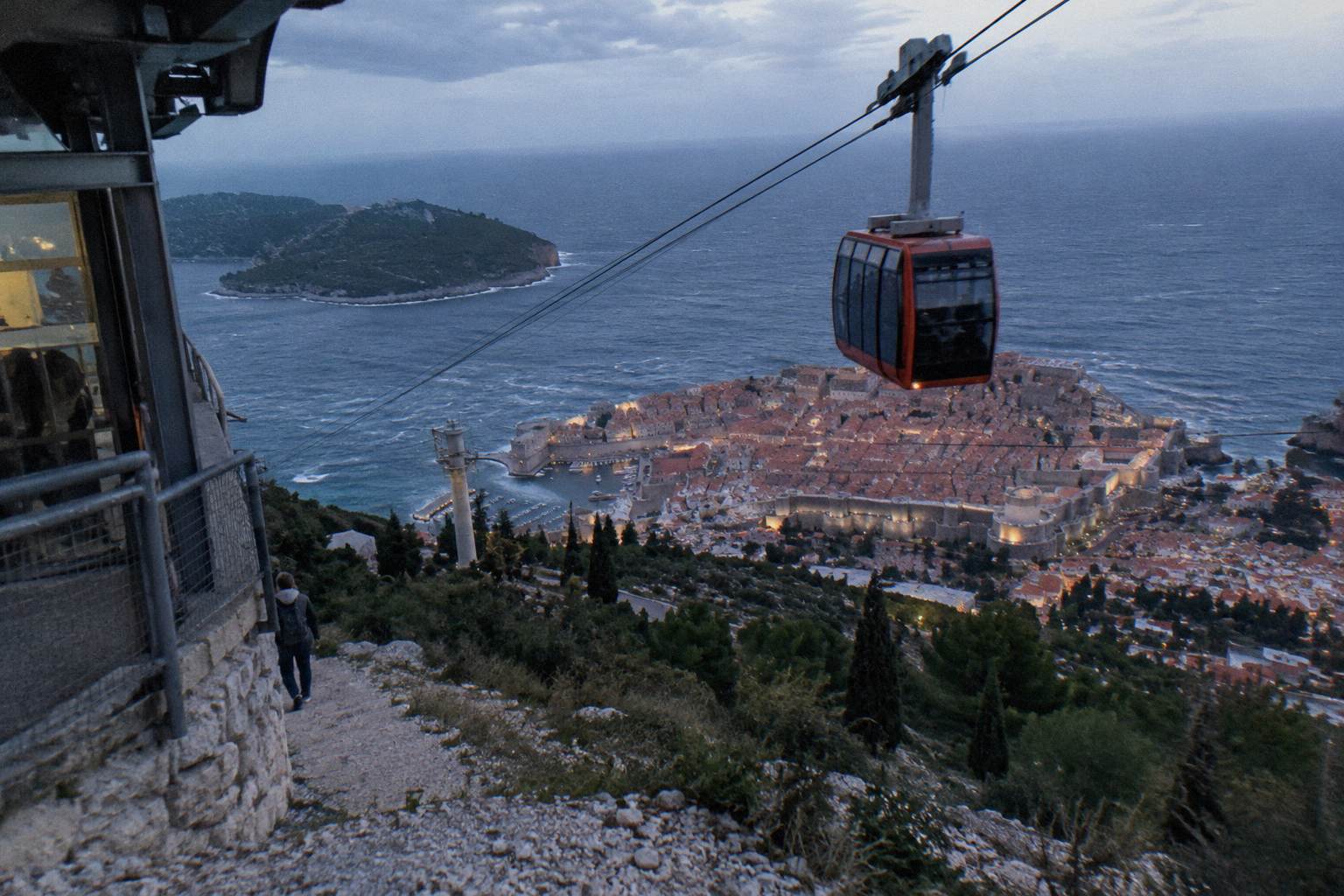
The cable car is a separate line item worth planning around if you want the Mount Srd view independently of a tour. Adult return fares are 30 EUR, one way 17 EUR, and a child return for ages 4 to 12 is 8 EUR, with a ride of about 4 minutes and seasonal hours that include some winter closures, per the official cable car timetable. Fares change, so check the day before you go. Croatia has used the euro since 1 January 2023, so all of these are cash-card simple. The table below pulls the figures together.
| Item | Price | Basis And Notes |
|---|---|---|
| Private War And Heritage Tour Of Mount Srđ (Adriatic Vision) | From €150 per person | 4 to 5 hours, private drive, guide only included, minimum age 10 |
| Driving Tour, Per Vehicle (INtours Dubrovnik) | From €180 per vehicle | 2 hours, private drive, museum entry 5 EUR per person extra |
| Dubrovnik Panorama And War Bunkers Tour | From €200 per group | 2.5 hours, pickup included, no museum tickets |
| Half-Day Yugoslav War History (Amico Tours) | From €178 per person | 4 hours, guided group, both museum entrances included, pickup included |
| Homeland War Museum entry | 5 EUR adults, 3 EUR students, under 7 free | Seasonal hours, check the day before |
| War Photo Limited entry | 10 EUR adults, 6 EUR students | Closed November to March |
| Cable car | 30 EUR adult return, 17 EUR one way | Child 4 to 12 return 8 EUR, ride about 4 minutes |
One more honest note on the Kupari angle. Some tour descriptions still advertise the Belvedere and Kupari ruins as walkable stops, reflecting an earlier era. The verified position is that Kupari's ruins were largely demolished in 2025, the protected Grand Hotel excepted, and the site is under redevelopment with no public access. The tours remain worth taking, because the roads and viewpoints still carry the story, but go in expecting to see change in progress, not a frozen ghost resort. For the fuller story, the guide to Kupari's abandoned hotels covers what is confirmed.
What Trips People Up When Visiting?
The most common mistakes are expecting to enter the Belvedere, expecting Kupari's ruins to still be standing in full, and forgetting that War Photo Limited and the cable car both run seasonally. None of these ruin a trip if planned for, but each one has disappointed visitors who read an older description of the area.
Expectation is the first trap. Social media has fixed an image of the Belvedere as an explorable ruin, complete with photographs taken inside it years ago. The building is closed, and a tour that stops at the roadside is giving you the current honest experience. Go up for the story and the view, not for an interior. The second trap is the season: if you travel between November and March, War Photo Limited is shut, and the cable car has winter closures, so an itinerary that lists both will be a reduced version of its summer self. Ask the operator what the winter route looks like before booking.
The third trap is ticket math. Only the Half-Day Yugoslav War History tour includes its museum entrances. On every other row mentioned here, entries are extra, and the extras are small in euro terms but worth knowing about: 5 EUR at the Homeland War Museum, 10 EUR at War Photo Limited. If you are a family, note the under 7 free policy at Fort Imperial and the student rate, and note the minimum ages: 10 on the Adriatic Vision tour, 1 on the Controversial History Private Walk by ROSOTRAVEL Croatia, a 2 hour private Old Town walk from €129 per person that traces 1991 shell scars on the rooftiles and walls with a licensed private guide. For families weighing all this, the post on whether a Dubrovnik war tour suits kids goes deeper.
The last trap is treating the ruin as the whole destination. The Belvedere is one stop in a landscape of memory. The Old Town's restored streets, the Memorial Room of Dubrovnik Defenders, the museum in Fort Imperial and the Red History Museum each hold a piece of the same account, and the tours that connect them are the ones visitors remember. Pick the format that matches your time: a 2 hour front-line drive, a 2.5 hour panorama, a 4 hour group day trip, or the full 4 to 5 hour private circuit. Any of them will get you to the road above the Belvedere with someone who can explain what you are looking at.
Whichever of the three you choose, all carry free cancellation within a 24 hour window, so plans can flex with the weather. Read each itinerary's stop list against what matters most to you: the Belvedere and Kupari road stops, the front line at Fort Imperial, or the panorama with the bunkers. The hillside above Dubrovnik explains the 1990s better than any single museum case, and a guide is what turns a concrete shell into an account worth hearing.
Common Questions About Hotel Belvedere Dubrovnik
What Happened To Hotel Belvedere Dubrovnik?
It was a large resort hotel on the hillside above the city that was damaged during the siege of Dubrovnik, which ran from 1 October 1991 to 31 May 1992, and it never reopened. The shell still stands and is closed to the public. Guided driving tours describe it from the road.
Can You Go Inside The Belvedere Ruins?
No. The site is closed to the public and there is no safe or legal entry. No tour on this site promises access; the itineraries that name the Belvedere stop on the road or at a viewpoint nearby.
Which Tours Pass The Hotel Belvedere?
The Private War And Heritage Tour Of Mount Srđ by Adriatic Vision names the Belvedere and Kupari area among its stops over 4 to 5 hours, from €150 per person. The INtours Dubrovnik driving tour and the Dubrovnik Panorama And War Bunkers Tour cover the same hillside roads from €180 per vehicle and €200 per group.
Is Kupari Still Standing?
Mostly no. The former Yugoslav People's Army resort was plundered and damaged in 1991, and its ruins were largely demolished in 2025, with the protected Grand Hotel excepted. The site is under redevelopment with no public access.
How Much Is The Homeland War Museum Ticket?
Adult entry is 5 EUR, students pay 3 EUR and children under 7 go free. Hours are seasonal, from 08:30 to 22:00 in the summer season down to 09:00 to 17:00 in winter, so check the day before you go.
Is War Photo Limited Open In Winter?
No. It is open April and October from 10:00 to 17:00 and May to September from 10:00 to 22:00, and closed November to March. Tours that include it are therefore seasonal.