Why Was Dubrovnik Bombed In 1991, And Where Does A War Tour Show It?
The documented sequence of the 1991 attack on Dubrovnik, what a war tour actually shows you in the Old Town and on Mount Srd, and which tours visit each place.
In short: Croatia declared independence on 25 June 1991, and the siege of Dubrovnik began on 1 October 1991, ending on 31 May 1992. The heaviest shelling of the Old Town came on 6 December 1991, and about two thirds of its buildings were damaged across 1991 and 1992. The motives behind the attack are still argued over, and this page does not settle them. What it does instead is map the documented sequence onto the places a war tour actually visits: the Old Town's shell scars, the Homeland War Museum in Fort Imperial on Mount Srd, and the former military resort at Kupari.
This article sits under the Dubrovnik Homeland War tour guide, which compares every tour format in one place. Dubrovnik Communism Tours publishes this site as a research resource for people planning a history-focused visit to the city.
A war tour shows this through the restored Old Town rooftops and walls, the Homeland War Museum in Fort Imperial on Mount Srd, and viewpoints near closed sites like Kupari.
Start with what is actually documented, because the record is firmer than most visitors expect. Croatia was one of the republics of socialist Yugoslavia, which Josip Broz Tito led after the Second World War. Croatia declared independence on 25 June 1991, and the siege of Dubrovnik followed, beginning on 1 October 1991 and lasting until 31 May 1992. The single worst day for the Old Town was 6 December 1991. Over the two years of fighting, about two thirds of the buildings inside the walls were damaged, and a city that had been inscribed as a UNESCO World Heritage Site in 1979 spent 1991 to 1998 on the World Heritage in Danger list. The city's own account of the destruction and the restoration that followed is published on the official Dubrovnik city page.
What the documented record does not do is settle why. The reasons for the attack are debated by historians, politicians and people who lived through it, and this page does not take a side, assign blame or summarise arguments it cannot verify. Anyone who wants the full political context should read a proper history of the period; what a visit to Dubrovnik can do is show you the physical consequences and the restoration, in the company of guides who know the city block by block.
That is where the tours come in, and the choice matters. Private walks such as the Walk With Vesna, Group Rate from Walk with Vesna (two hours, from €235 per group) and the Private Walk, 2h30 from My Dubrovnik Tours (from €100 per person) cover the Old Town's war-damage sites and restoration traces on foot. Driving tours such as the Driving Tour, Per Vehicle from INtours Dubrovnik (from €180 per vehicle) take you up to Fort Imperial on Mount Srd. The section below explains which format shows what.
Prices, durations and inclusions differ between them, so read the inclusions before booking rather than assuming museum tickets are included everywhere.
What Exactly Is Documented About The 1991 Attack?
What the record supports is the sequence itself, plus one detail the opening summary leaves out: the Old Town sat on the UNESCO danger list from 1991 to 1998. Motives, casualty figures and command decisions are outside what this page can confirm, so it sticks to dates and damage.
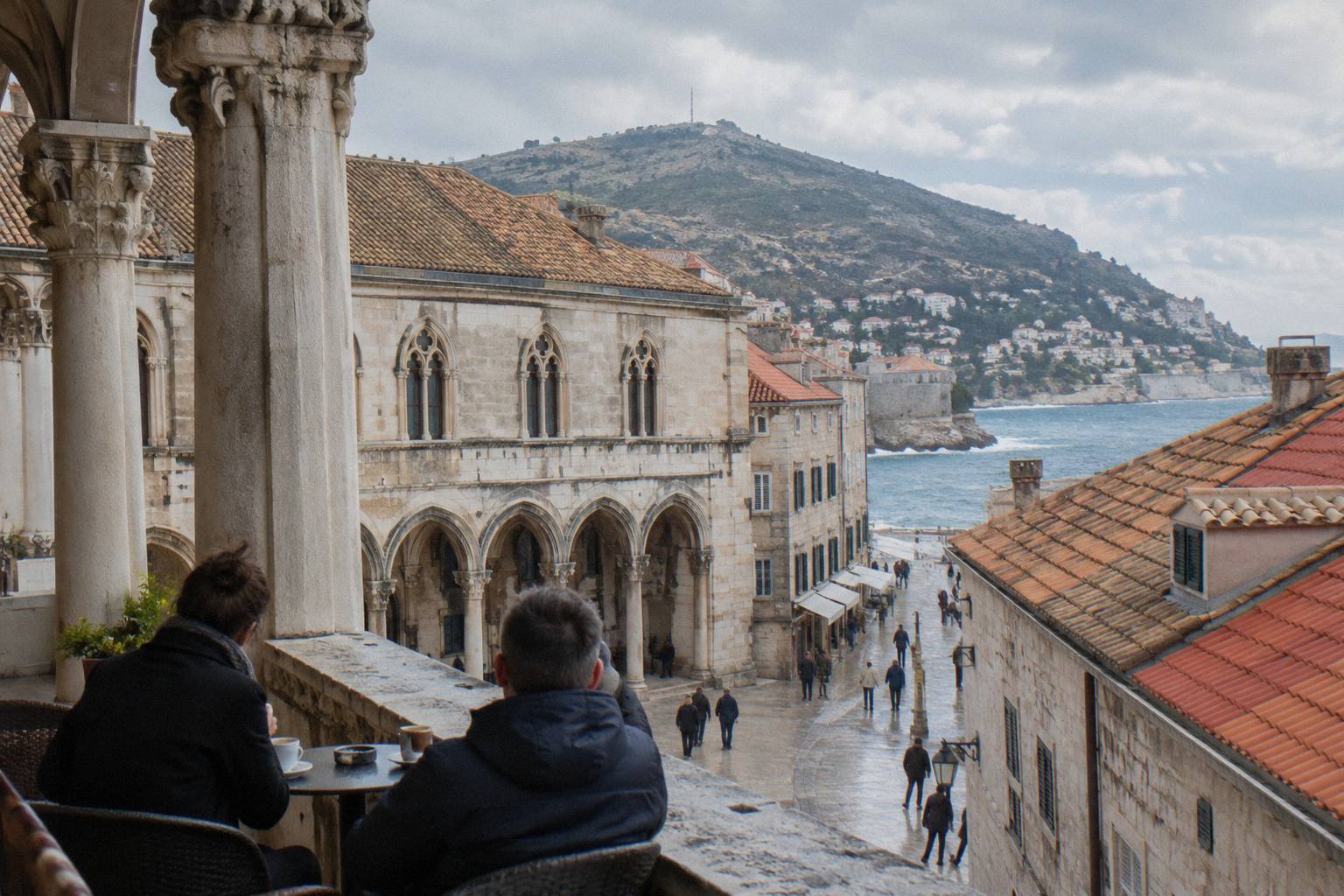
The value of visiting with a guide is that this bare timeline becomes visible in the streets. The 6 December 1991 shelling is the date every Old Town walk circles back to, because the repair work it necessitated is what you are looking at when you admire the rooftops. The uniform terracotta you see from the walls or the cable car is largely new; the mix of newer and older tiles is one of the quiet tells that a guide will point out.
Restoration is the other half of the story and the reason the Old Town looks complete today. The reconstruction of the damaged buildings was a years-long project, and the city's restoration record documents it building by building. A walk that covers the Old Town from the Ploce side to the Pile side, such as the Private Walk, 2h30 from My Dubrovnik Tours, includes the war-damage sites along that axis plus entrance to the Memorial Room of Dubrovnik Defenders. That tour is rated 5 across 8 reviews, a small number of reviews, and is led by a decorated war veteran who personally witnessed the war, at from €100 per person.
If you would rather read the full timeline before choosing a tour, the Dubrovnik war history timeline 1991-1992 lays out the same documented dates in order, and the siege of Dubrovnik 1991 explained goes deeper into how the siege unfolded.
The Walk With Vesna, Group Rate from Walk with Vesna is the natural fit for this question specifically, because its two-hour private walk is built around the Old Town's restoration traces, the visible afterlife of the 1991 shelling. The guide was in the city during the siege, and the tour is rated 5 across 5 reviews, a small number of reviews. It costs from €235 per group, runs two hours in total, and offers free cancellation up to 24 hours ahead. An optional cable car trip up to Srd and the Homeland War Museum can be added on request, with museum tickets not included. You can check availability once you know your dates.
Where Does A War Tour Show The Damage In The Old Town?
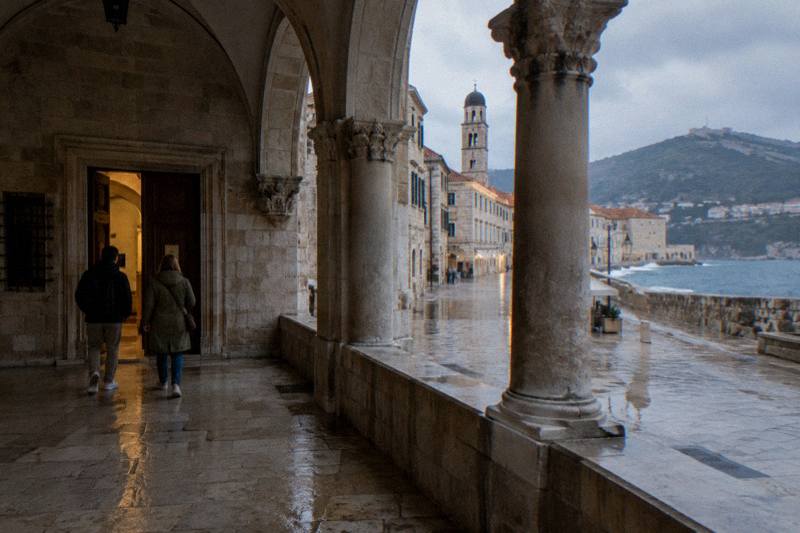
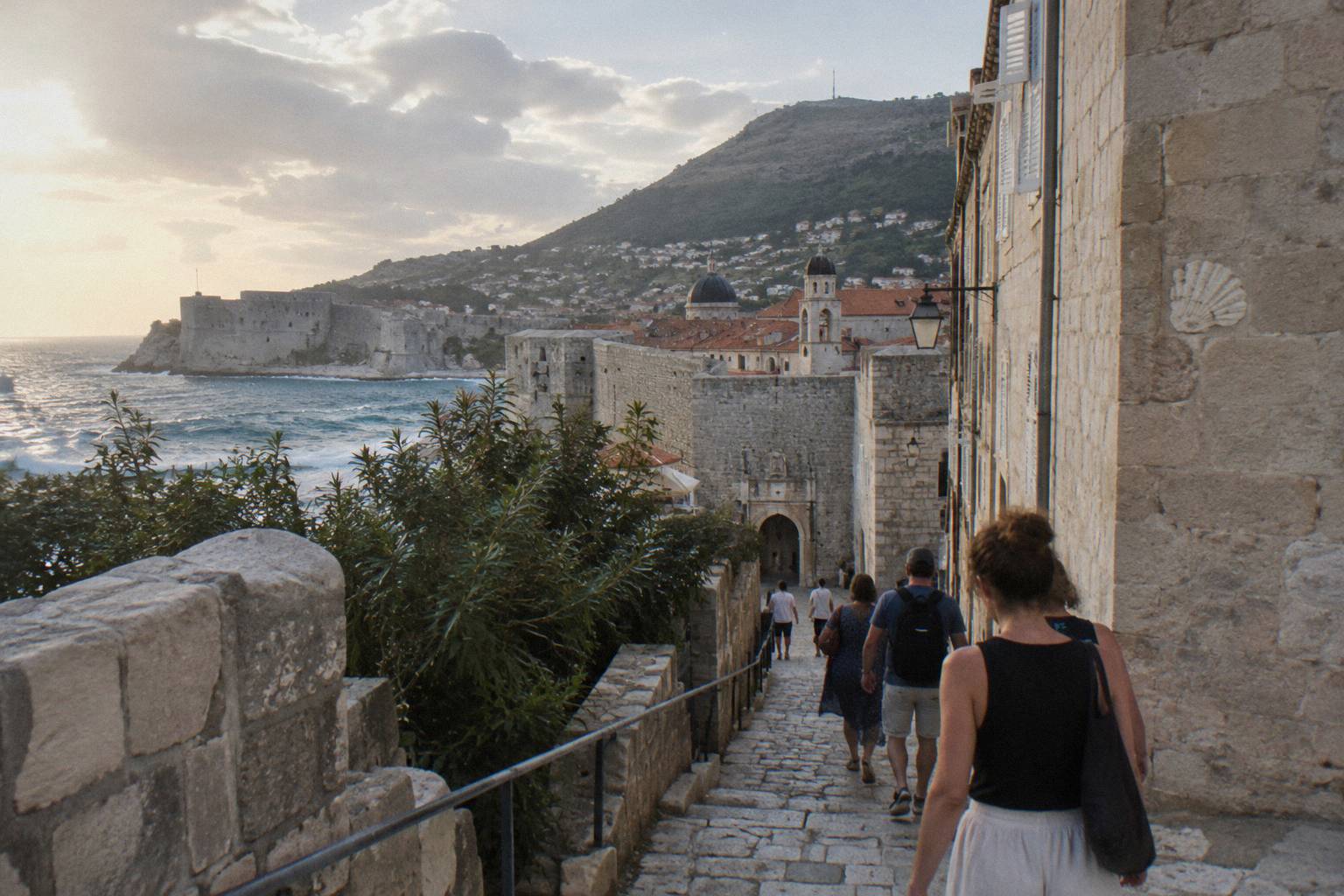
An Old Town war walk shows the damage as restoration: replaced rooftiles, patched walls and rebuilt facades, plus the shell scars that were deliberately left visible on some buildings. The Controversial History Private Walk from ROSOTRAVEL Croatia focuses on the rooftiles and walls that still carry 1991 shell scars, and the Memorial Room of Dubrovnik Defenders appears on the Private Walk, 2h30. Nothing in the Old Town requires a vehicle.
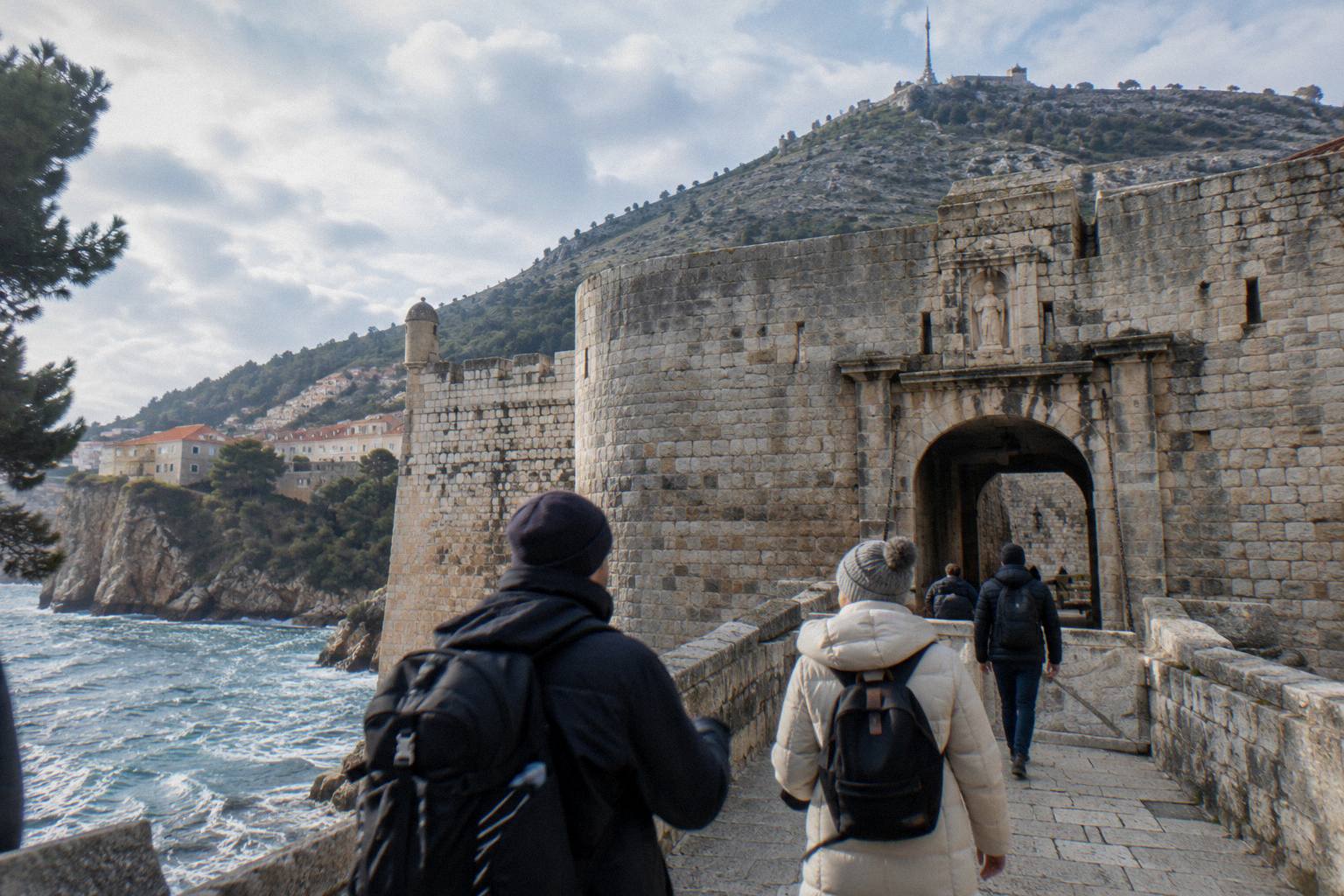
The Old Town is small enough that every war walking tour here covers it on foot, and the differences between them are about emphasis and depth rather than territory. The Controversial History Private Walk from ROSOTRAVEL Croatia is a two-hour private walk from €129 per person that concentrates on the physical evidence: the rooftiles and sections of wall that show 1991 shelling damage. A licensed private guide leads it, and it carries free cancellation up to 24 hours ahead, with a minimum age of 1.
The Private Walk, 2h30 from My Dubrovnik Tours takes a broader route from the east to west gates, covering war-damage sites between Pile and Ploce and including entrance to the Memorial Room of Dubrovnik Defenders. At two hours 30 minutes it is the longest of the pure Old Town walks, and its price of from €100 per person includes that Memorial Room entrance.
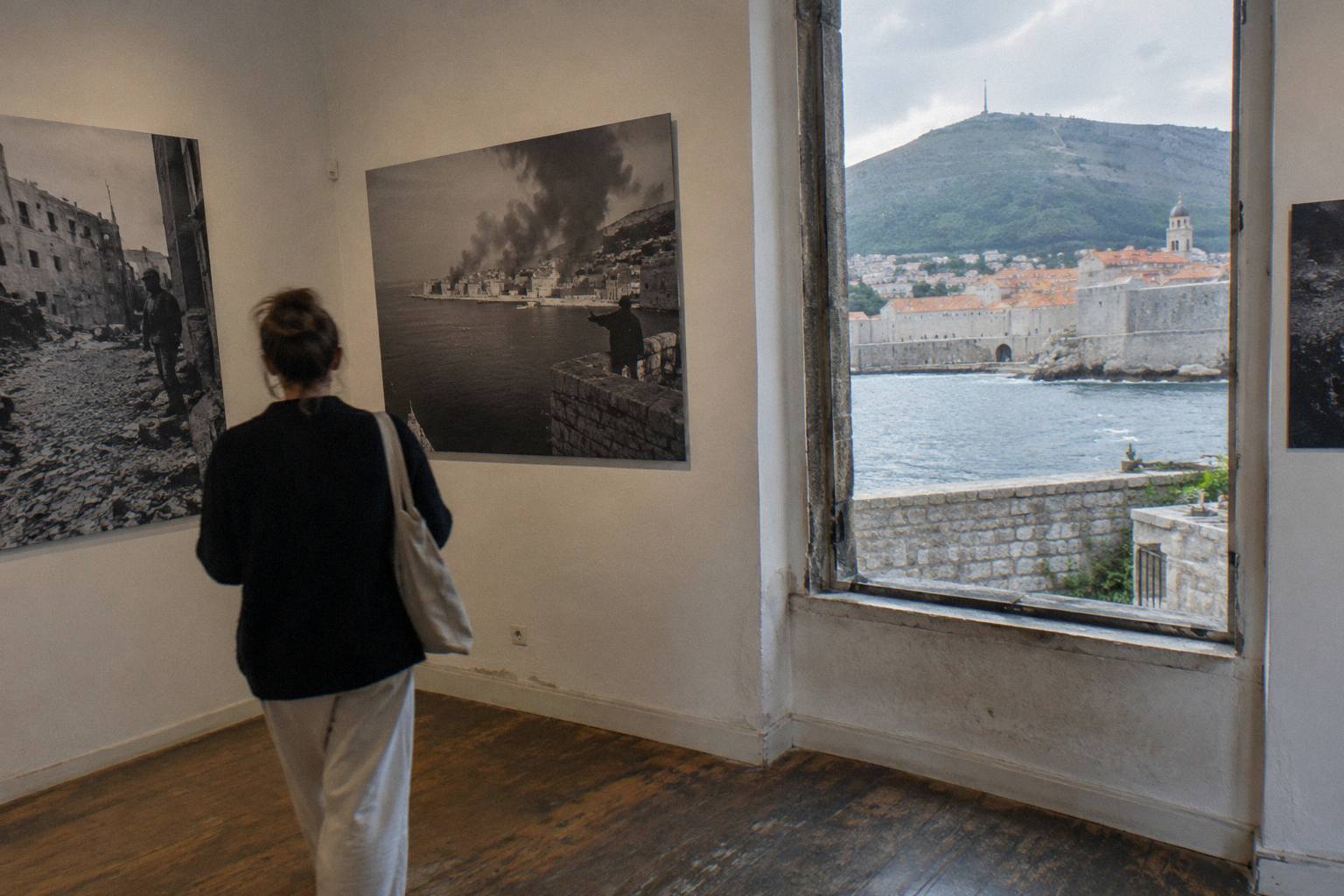
One thing to decide before booking is whether you want the photography dimension. The War Photo Limited, Lovrjenac tour from ROSOTRAVEL Croatia pairs the Old Town walk with tickets to War Photo Limited and, in its three-hour option, skip-the-line entry to Lovrjenac Fortress; it costs from €140 per person. Note that War Photo Limited is closed November to March (adult entry EUR 10, student EUR 6), so any itinerary that includes it is seasonal by nature.
For a fuller comparison of the formats, the guide to Dubrovnik war walking tours versus jeep tours breaks down who each one suits.
Which Tours Take You Up To Mount Srd And The Homeland War Museum?
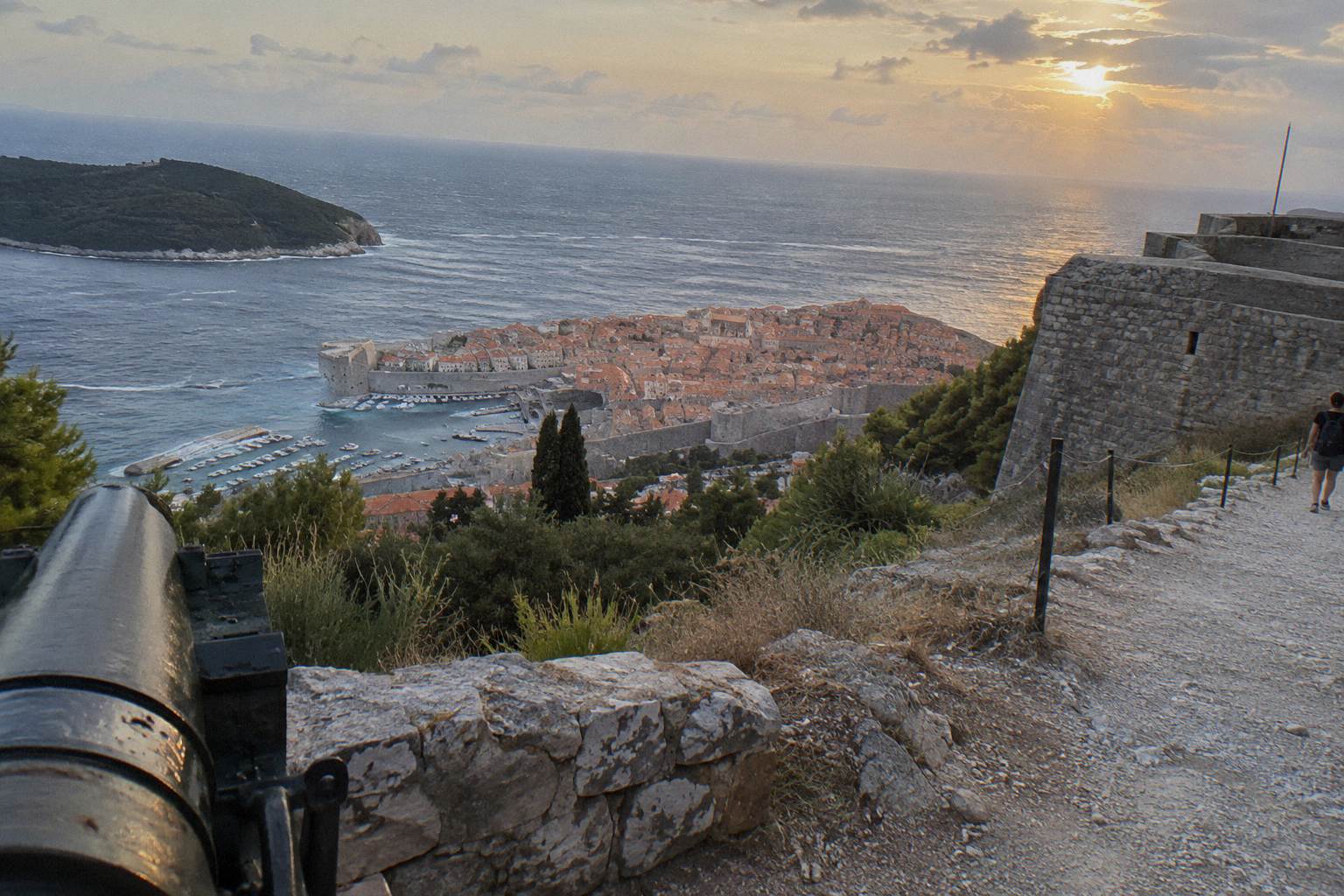
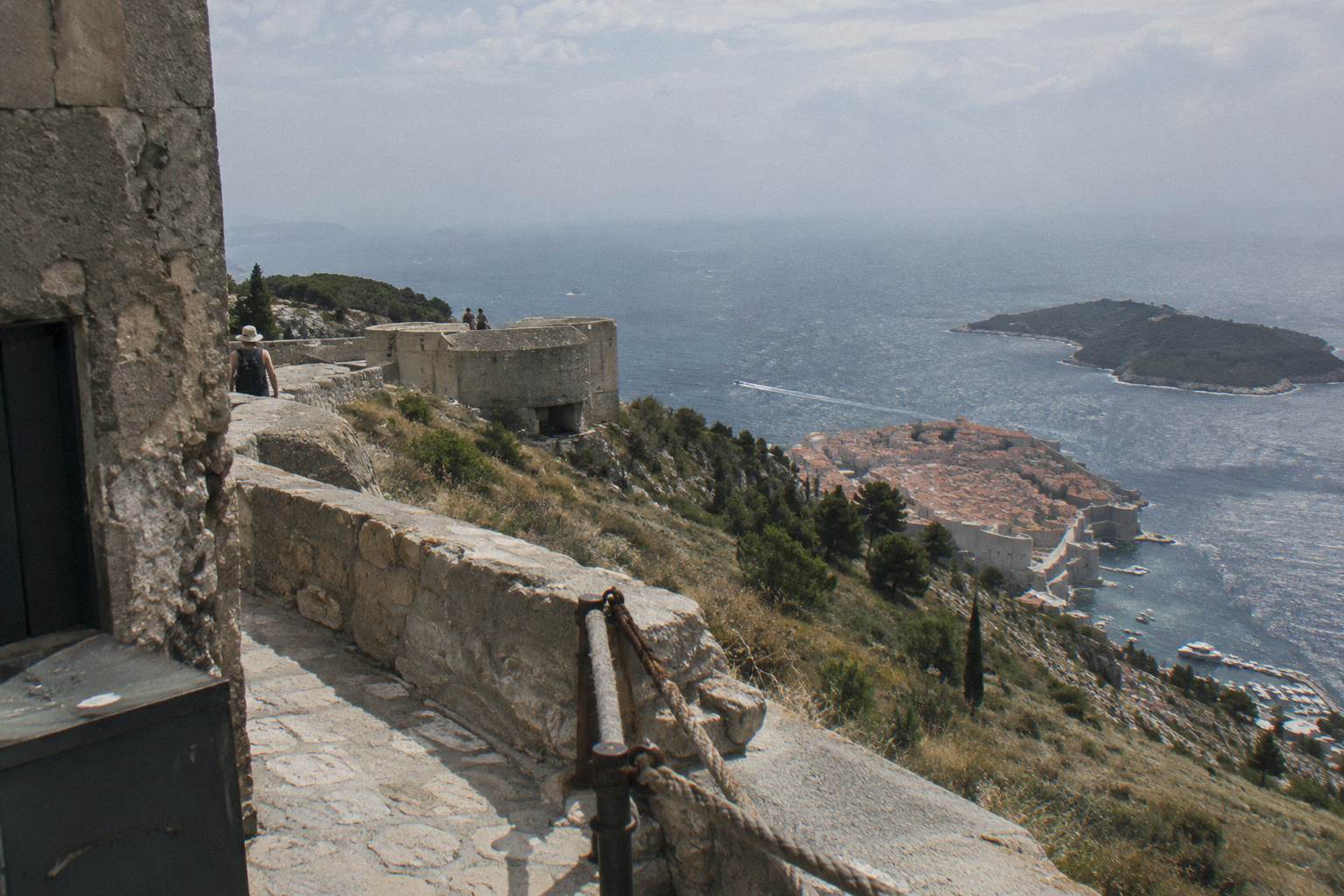
Driving tours reach Fort Imperial on Mount Srd, home of the Homeland War Museum, which walking tours only add on as an optional cable car ride. The Driving Tour, Per Vehicle from INtours Dubrovnik covers the museum and front-line defence points from €180 per vehicle, with museum entry of EUR 5 per person paid separately. Museum hours are seasonal, so check the day before you go.
Mount Srd is the hill that dominates every postcard of Dubrovnik, and Fort Imperial at its top holds the Homeland War Museum, whose official site is at mdrd.hr. Entry is EUR 5 for adults, EUR 3 for students and free for children under 7. Hours run seasonally: 08:30 to 22:00 from 1 April to 30 September, 09:00 to 20:00 in October, and 09:00 to 17:00 from 1 November to 31 March. Say it plainly to yourself before you go: check the day before you go, because hours shift with the season.
The tours divide by format here. The Driving Tour, Per Vehicle from INtours Dubrovnik is a two-hour private drive from €180 per vehicle, covering the Homeland War Museum in Fort Imperial plus the front-line defence points of the siege. Its driver-guide is a former Croatian soldier who defended Dubrovnik, and museum entry is not included; the EUR 5 per person ticket is paid at the museum. It carries free cancellation up to 24 hours ahead.
The widest itinerary belongs to the Private War And Heritage Tour Of Mount Srđ from Adriatic Vision, a four to five hour private drive from €150 per person that combines Mount Srd and the fortress war museum with the Hotel Belvedere and Kupari Resort, Old Town memorials and War Photo Limited. Its minimum age is 10, and because War Photo Limited closes November to March, the full itinerary is a spring-to-autumn proposition. Since Kupari and the Belvedere are closed to the public, expect those stops from the road or a viewpoint rather than inside the sites.
If you would rather make your own way up, the Mount Srd war history and cable car guide covers the logistics, and the Homeland War Museum Fort Imperial guide covers the museum itself.
Can You Visit Kupari And Hotel Belvedere Today?
No. Kupari, the former Yugoslav People's Army resort once nicknamed Tito's Hawaii, was plundered and damaged in 1991, and its ruins were largely demolished in 2025 with the protected Grand Hotel excepted. The site is under redevelopment with no public access, and the Hotel Belvedere is likewise off limits. Tours that list them describe them from the road or a viewpoint, never inside.
This surprises a lot of readers, because older articles and photographs online still show the ruins as an exploration destination. That era is over. The transformation now under way at Kupari is covered by The Dubrovnik Times, which reports the demolition of the ruins ahead of a luxury resort development, with the protected Grand Hotel building spared. There is no entry, no walk through the buildings and no access to the site.
So when a tour such as the Private War And Heritage Tour Of Mount Srđ from Adriatic Vision lists Hotel Belvedere and Kupari Resort among its stops, read that as an external viewpoint stop with context from the guide, not a visit. The same applies to the Half-Day Yugoslav War History from Amico Tours, which offers optional Belvedere Hotel ruins and War Photo Gallery stops on top of its core itinerary. The background on both sites is in why Kupari is still abandoned and what happened to the Hotel Belvedere.
The larger lesson for planning: on this subject, half the information online is out of date. Anything promising entry to Kupari or the Belvedere, or an open War Photo Limited in winter, is describing a Dubrovnik that no longer exists. The tour descriptions on the booking pages are the operative version of each itinerary, and the free cancellation windows (24 hours on every tour named on this page) mean you can adjust if a stop changes.
What Does The Yugoslav Era Have To Do With The 1991 Attack?
Croatia was a republic of socialist Yugoslavia before declaring independence on 25 June 1991, and the siege followed that October. Understanding the country Dubrovnik belonged to, and left, is the bridge between the 1991 events and the region's longer communist-era history, which the Red History Museum covers directly.
The one piece of background this page can state with confidence is short: Croatia was one of the republics of socialist Yugoslavia, which Josip Broz Tito led after the Second World War; Croatia declared independence on 25 June 1991, and the siege followed. Everything beyond that sequence, including the deeper question of why Croatia split from Yugoslavia, is argued over and belongs to the history books rather than a booking page.
For visitors who want the Yugoslav context made tangible, the Red History Museum Visit from Red History Museum is the most direct route and the most reviewed tour covered on this site: rated 4.8 across 206 reviews, from €10 per person, with admission included and a duration of 50 minutes to one hour 35 minutes. It is the cheapest per-person tour on this site by a wide margin, and it is a museum visit rather than a walk. More detail is in the guide to Dubrovnik communism and Yugoslav-era touring.
The one tour that stitches the whole century together is the Half-Day Yugoslav War History from Amico Tours: a four-hour guided drive from €178 per person, with pickup included, audio guides in six languages, and entrance to both the Red History Museum and the Homeland War Museum in the price. Its route runs from the Red History Museum up to Fort Imperial on Srd, past the Ombla River source, with the optional Belvedere and War Photo Gallery stops noted earlier. It is the most expensive per-person tour on this site with a clear price basis, and also the only group-format option that includes both museums.
Which Tour Should You Pick For This Question?
For the Old Town's shelling scars and restoration, book a private walk: the Walk With Vesna, Group Rate (from €235 per group) or the Private Walk, 2h30 (from €100 per person). For the fortress museum, book a driving tour such as the Driving Tour, Per Vehicle (from €180 per vehicle). For both plus the Yugoslav context, the Half-Day Yugoslav War History (from €178 per person) covers two museums in four hours.
The table below condenses the decision. Prices are "from" figures per person, group or vehicle exactly as each tour sells them, so they are not directly comparable across rows; per-person, per-group and per-vehicle prices answer different group sizes.
| Tour | Operator | Format and length | From | Museums included |
|---|---|---|---|---|
| Walk With Vesna, Group Rate | Walk with Vesna | Private walk, 2 hours | €235 per group | None; Srd and museum optional on request |
| Private Walk, 2h30 | My Dubrovnik Tours | Private walk, 2h 30 min | €100 per person | Memorial Room of Dubrovnik Defenders |
| Driving Tour, Per Vehicle | INtours Dubrovnik | Private drive, 2 hours | €180 per vehicle | None; museum entry EUR 5 per person paid on site |
| Half-Day Yugoslav War History | Amico Tours | Guided drive, 4 hours | €178 per person | Red History Museum and Homeland War Museum |
| Private War And Heritage Tour Of Mount Srđ | Adriatic Vision | Private drive, 4 to 5 hours | €150 per person | Not included; guide only |
| Red History Museum Visit | Red History Museum | Museum visit, 50 min to 1h 35 | €10 per person | Red History Museum admission |
If you are still weighing whether a history tour fits your group at all, whether a Dubrovnik war tour suits kids and how long a Dubrovnik war tour takes answer the two practical questions that come up most, and what to wear on a Dubrovnik war tour handles the rest of the packing question.
One practical note on money and timing: Croatia has used the euro since 1 January 2023, so the museum's EUR 5 ticket and the cable car's EUR 30 adult return fare are paid in cash or card like anywhere else in the eurozone, and the cable car has seasonal hours with some winter closures, so check its timetable and prices page the day before you ride.
Every tour named on this page offers free cancellation up to 24 hours ahead, so booking ahead costs nothing if your plans shift. Whatever you pick, go with the documented sequence in mind: independence in June 1991, the siege from that October, the Old Town's worst day on 6 December 1991, and a restoration you can still read in the rooftops.
Common Questions About The 1991 Bombing Of Dubrovnik
Why Was Dubrovnik Bombed In 1991, And Where Does A War Tour Show It?
Croatia declared independence on 25 June 1991 and the siege of Dubrovnik followed, running from 1 October 1991 to 31 May 1992; the motives are still argued over and are not settled here. A war tour shows the consequences in the Old Town's restored roofs and shell scars, at the Homeland War Museum in Fort Imperial on Mount Srd, and from viewpoints near closed sites such as Kupari.
When Was Dubrovnik Shelled The Hardest?
On 6 December 1991, during the siege that lasted from 1 October 1991 to 31 May 1992. About two thirds of the Old Town's buildings were damaged across 1991 and 1992, and the site was on the UNESCO World Heritage in Danger list from 1991 to 1998.
Can You Still See War Damage In Dubrovnik's Old Town?
Yes, mostly as restoration: replaced rooftiles, rebuilt facades and some deliberately preserved shell scars on walls and roofs. Private walks such as the Controversial History Private Walk from ROSOTRAVEL Croatia and the Walk With Vesna, Group Rate from Walk with Vesna are built around exactly this evidence.
Can You Visit Kupari Or Hotel Belvedere?
No. Kupari's ruins were largely demolished in 2025, with the protected Grand Hotel excepted, and the site is closed to the public while it is redeveloped. Hotel Belvedere is also off limits. Tours that list them stop at a viewpoint or describe them from the road.
How Much Does The Homeland War Museum Cost?
Entry is EUR 5 for adults, EUR 3 for students and free for children under 7. Hours are seasonal, from 08:30 to 22:00 in the summer season down to 09:00 to 17:00 in winter, so check the day before you go.
Is War Photo Limited Open In Winter?
No. It is closed November to March and open April to October with hours that vary by month; adult entry is EUR 10 and student entry EUR 6. Any tour that includes it, such as the War Photo Limited, Lovrjenac tour from ROSOTRAVEL Croatia, is therefore seasonal.